



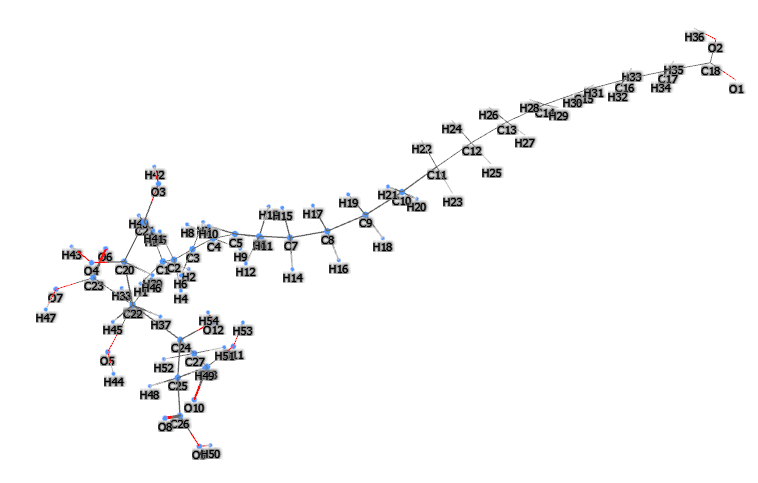
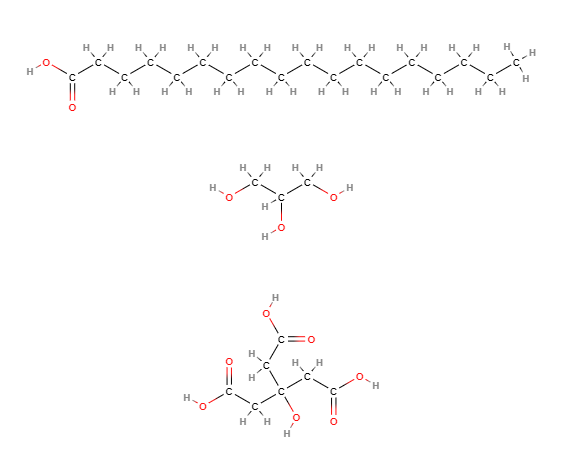
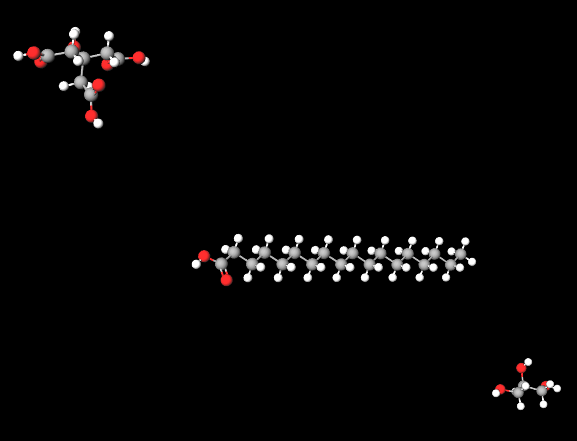
Glyceryl Stearate Citrate is a chemical compound, fatty acid monoglyceride, formed from glycerine, stearic acid (generally from soybean, rapeseed, canola and maize oils) and citric acid, glycerol stearate ester of citric acid and stearic acid. It is a monoglyceride of fatty acids of vegetable origin but esterified and therefore not 100 per cent natural. Anionic.
Glyceryl Stearate Citrate is an emulsifier commonly used in cosmetics and personal care products. It is derived from plant-based sources, such as vegetable oils, and is used to help blend water and oil-based ingredients in formulations. Known for its ability to improve the texture and stability of cosmetic products, Glyceryl Stearate Citrate also functions as a skin-conditioning agent, making it a versatile ingredient in skincare and haircare products.
Chemical Composition and Structure
Glyceryl Stearate Citrate is formed from the esterification of glycerin, stearic acid, and citric acid. The combination of these components results in an ingredient that serves as a mild emulsifier and stabilizer. Glycerin, known for its hydrating properties, is combined with stearic acid (a fatty acid) and citric acid to create a compound that helps emulsify and soften the skin.
Physical Properties
It is usually a white to off-white, waxy solid. It is oil-soluble but can disperse well in water when used in emulsions, making it ideal for use in lotions, creams, and other emulsified products. Its ability to blend and stabilize oil-in-water emulsions ensures a smooth, uniform texture in cosmetic formulations.
Production Process
The production of Glyceryl Stearate Citrate involves the esterification of glycerin (derived from vegetable oils) with stearic acid and citric acid. The process results in a stable emulsifying agent that can be used in various cosmetic formulations to help mix oil and water-based components, creating a smooth and homogenous product.
It appears as a white powder suitable for the production of oil/water emulsions, insoluble and dispersible in hot water, soluble in oil at high temperatures. Easily hydrolysed under conditions of strong alkalis or strong acids.

What it is used for and where
Cosmetics
- Skin conditioning agent - Emollient. Emollients have the characteristic of enhancing the skin barrier through a source of exogenous lipids that adhere to the skin, improving barrier properties by filling gaps in intercorneocyte clusters to improve hydration while protecting against inflammation. In practice, they have the ability to create a barrier that prevents transepidermal water loss. Emollients are described as degreasing or refreshing additives that improve the lipid content of the upper layers of the skin by preventing degreasing and drying of the skin. The problem with emollients is that many have a strong lipophilic character and are identified as occlusive ingredients; they are oily and fatty materials that remain on the skin surface and reduce transepidermal water loss. In cosmetics, emollients and moisturisers are often considered synonymous with humectants and occlusives.
- Surfactant - Emulsifying agent. Emulsions are thermodynamically unstable and are used to soothe or soften the skin and emulsify, so they need a specific, stabilising ingredient. This ingredient forms a film, lowers the surface tension and makes two immiscible liquids miscible. A very important factor affecting the stability of the emulsion is the amount of the emulsifying agent. Emulsifiers have the property of reducing the oil/water or water/oil interfacial tension, improving the stability of the emulsion and also directly influencing the stability, sensory properties and surface tension of sunscreens by modulating the filmometric performance.
- Skin conditioning agent. It is the mainstay of topical skin treatment as it has the function of restoring, increasing or improving skin tolerance to external factors, including melanocyte tolerance. The most important function of the conditioning agent is to prevent skin dehydration, but the subject is rather complex and involves emollients and humectants that can be added in the formulation.
Used as an oil/water emulsifier with medium/low viscosity even for PEG-free formulations and with an optimal oil-phase concentration of 25-35%. Possesses high hydrophilic-lipophilic balance (HLB)
Acts as a non-ethoxylated hydrophilic emulsifier and as a co-emulsifier for PEG-free formulations. Anionic surfactant, softening agent for softening skin, skin conditioner and fragrance (1), also for sensitive skin. It has the function of helping skin and hair retain moisture and tends to form a gel system in the aqueous phase of the emulsion. Emulsifiers have the property of reducing interfacial tension and also directly influence the stability, sensory properties and surface tension of sunscreens by modulating their filmometric performance.
Dosage: Glyceryl Stearate Citrate is included in cosmetic formulations in percentages between 0.25%, 2% (improves viscosity of rinse-off products that have difficulty thickening with sodium chloride) and 4%. When added to hot water it is not soluble, but must be stirred to obtain a cloudy liquid ready for emulsification.
Food
Emulsifier, fragrance.
Other uses
Double emulsions are promising delivery vehicles for the protective and programmed release of bioactive compounds. In the digestive phase Glyceryl Stearate Citrate forms a kind of crystalline shell and has been shown to decrease the rate of intestinal lipid digestion in the oil/water emulsion (2).
Safety. The purity level of commercial monoglyceric monoester is about 90 per cent, and impurities include fatty acids, monoglyceric diesters, mono-, di- and tri-glycerides.
Safety in Use
Glyceryl Stearate Citrate is considered safe for use in cosmetic products. It is non-irritating, non-toxic, and generally well-tolerated by the skin, making it suitable for sensitive skin types. Its plant-derived components and mild emulsifying properties make it a popular choice in natural and organic cosmetic formulations.
Allergic Reactions
Allergic reactions to Glyceryl Stearate Citrate are rare. It is a gentle ingredient, and its plant-based origins make it less likely to cause irritation. However, as with any cosmetic ingredient, individuals with sensitive skin should perform a patch test before using products that contain it.
Toxicity and Carcinogenicity
It has been thoroughly evaluated for safety and is approved for use in cosmetics and personal care products at concentrations that are considered safe for consumers.
Environmental and Safety Considerations
Glyceryl Stearate Citrate is biodegradable and does not pose significant environmental risks. It is derived from renewable, plant-based sources, making it an eco-friendly choice in cosmetic formulations.
Regulatory Status
Glyceryl Stearate Citrate is approved for use in cosmetics and personal care products by regulatory bodies such as the European Union and the Food and Drug Administration (FDA) in the United States. It is regulated to ensure safe use in a wide range of cosmetic formulations.
For more information:
Glyceryl Stearate Citrate studies
Typical commercial product characteristics Glyceryl Stearate Citrate
| Appearance | White powder |
| pH | 5.5-8.0 |
| Boiling Point | >260°C (500°F) |
| Melting Point | 58-64°C (136.4-147.2°F) |
| Acid value | 0,00-20,00 mg KOH/g |
| HLB value/range | 12 |
| Shelf life | 2 Years |
| Storage | dry place, protected from direct sunlight, heat |
| Chemical safety | 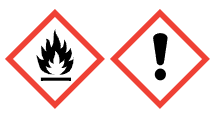 |
 |  |
 |  |
Prezzo
100g $5
- Molecular Formula C28H54O12 C23H46O6
- Molecular Weight 582.7
- Exact Mass 582.361511
- CAS 39175-72-9 55840-13-6 86418-55-5
- UNII WH8T92A065
- EC Number 259-855-5
- DSSTox Substance ID DTXSID00204440
- IUPAC 3-(carboxymethyl)-3-hydroxypentanedioic acid;octadecanoic acid;propane-1,2,3-triol
- InChl=1S/C18H36O2.C7H10O7.C3H8O3/c1-2-3-4-5-6-7-8-9-10-11-12-13-14-15-16-17-18(19)20;8-4(9)1-7(14,2-5(10)11)3-6(12)13;4-1-3(6)2-5/h2-17H2,1H3,(H,19,20);14H,1-3H2,(H,8,9)(H,10,11)(H,12,13);3-6H,1-2H2
- InChl Key HFJHNGKIVAKCIW-UHFFFAOYSA-N
- SMILES CCCCCCCCCCCCCCCCCC(=O)O.C(C(CO)O)O.C(C(=O)O)C(CC(=O)O)(CC(=O)O)O
- ChEBI 176146
Synonyms:
- 3-(carboxymethyl)-3-hydroxypentanedioic acid;octadecanoic acid;propane-1,2,3-triol
- Stearyl monoglyceridyl citrate
- 1,2,3-Propanetricarboxylic acid, 2-hydroxy-, ester with 1,2,3-propanetriol monooctadecanoate
- Monostearin citrate
- Glycerol stearate citrate

