



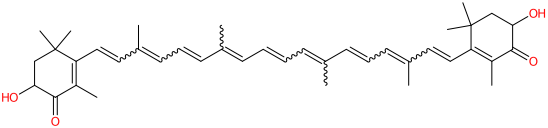
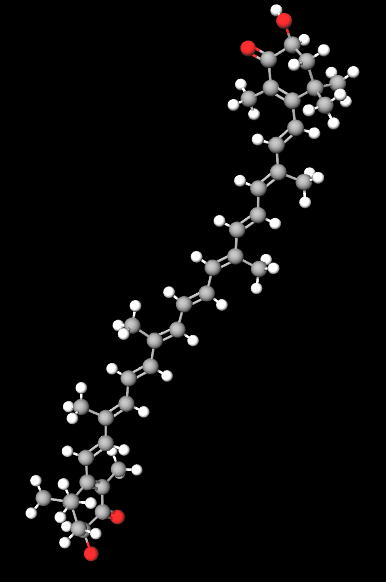
Astaxanthin is a red pigment, fat-soluble natural ketocarotenoid (belongs to a group of carotenoids called xanthophylls, which include zeaxanthin, beta-cryptoxanthin, lycopene, beta-carotene), a synthetic chemical compound of xanthophyll, a carotenone consisting of beta,beta-carotene-4,4'-dione. It is found in the marine environment, biosynthesised by the green microalgae Haematococcus pluvialis, the red yeast Phaffia rhodozyma, crustacean by-products and phytoplankton. It was first discovered in lobster and accumulates in zooplankton, fish, crustaceans. It can also be extracted from salmon, trout, sea bream, krill, shrimps, various algae. Today, due to high demand, most astaxanthin is produced chemically from ketoisophorone derived from oil, while only a small amount is extracted from algae or yeast.
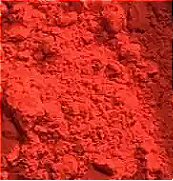
It appears in the form of a red powder.
What it is used for and where
Medical
The first synthetic astaxanthin preparation was produced in Switzerland in 1980 by Hoffmann La Roche under the name CAROPHYLLPink and commercial use was granted by the Food and Drug Administration (FDA) in 1995.
Astaxanthin does not possess the vitamin A activity typical of carotenoids. It does, however, possess such anti-inflammatory, antioxidant activities that it has caused sales of nutraceutical products containing it to soar in recent years. Health benefits have been noted with its intake, ranging from boosting the immune system to preventing cardiovascular disease and cataracts. To date, research and clinical studies on astaxanthin have been carried out mainly at the pre-clinical or in vitro level (1).
This study by researchers at the University of Tokyo focuses on astaxanthin as a bioactive compound believed to inhibit low-density lipoprotein (LDL) oxidation and to increase high-density lipoprotein (HDL) levels. However, even this study finds that, although the current results are promising, the therapeutic potential of this natural compound in humans remains to be established (2).
The biological activity of astaxanthin after ingestion depends on the rate of absorption, and some studies believe that the best results are achieved by adding lipids to the diet.
Generally speaking, looking at the clinical studies published so far, it is reasonable to believe that astaxanthin possesses antioxidant activity, as most carotenes have been shown to possess, and therefore science believes that there may be free radical scavenging, anti-cancer and anti-ageing effects that will, however, have to be confirmed not only by in vitro tests. Believing astaxanthin to be the most powerful antioxidant today, as one reads in some articles on the Internet, seems decidedly exaggerated.
Food
Astaxanthin is mainly used in the production of feed for aquarium fish and large ornamental fish, for the feeding of laying hens as it gives a redder colour to the egg yolk and improves the skin and fleshy tissues of chicken carcasses. The production cost of 1 kg of astaxanthin produced chemically from high-quality components is about $1,000, whereas astaxanthin produced naturally from algae or bacteria or yeasts costs about 7 times (3).
Used are the algae Haematococcus pluvialis, Chlorococcum sp, microorganisms such as Phaffia rhodozyma, Xanthophyllomyces dendrorhous and bacteria such as Paracoccus carotinifaciens, Agrobacterium aurantiacum, Brevibacterium, Mycobacterium lacticola and others. The price depends on the components used, so astaxanthin can be found from China even at $25/30 per kg.
In the European Union, synthetic astaxanthin is entered in the register of food additives as E161j, colour. It is sold commercially in degrees of purity: 1% 3% 4% 5% 10%.
Cosmetics
In recent times, natural astaxanthin is sought after for more expensive cosmetic formulations. This study examined 30 healthy female subjects for 8 weeks who took a certain dose of natural astaxanthin and applied it daily topically. The results confirmed an improvement in skin condition with a reduction in wrinkles (4).
Safety
As far as its safety is concerned, astaxanthin has been analysed by numerous clinical studies since 1997, which have addressed this question and found it to be safe and without genetic toxicity or carcinogenicity. Although it has been shown to cause some pigmentation in animal skin, it has shown no adverse effects on coagulation, fibrinolysis and platelets.
For more information: Astaxanthin studies
Typical commercial product characteristics Astaxanthin synthetic
| Appearance | Red powder |
| Boiling Point | 774.0±60.0°C at 760 mmHg |
| Melting Point | 215-216ºC |
| Flash Point | 435.8±29.4°C |
| Density | 1.1±0.1 g/cm3 |
| Solubility | 1 mM 1.6755 mL 8.3775 mL 16.7549 mL 5 mM 0.3351 mL 1.6755 mL 3.3510 mL 10 mM 0.1675 mL 0.8377 mL 1.6755 mL |
| PSA | 74.60000 |
| LogP | 8.16 |
| Refraction Index | 1.595 |
| Vapor Pressure | 0.0±6.0 mmHg at 25°C |
| Loss on drying | ≤5.00% |
| Heavy metals | ≤10ppm |
| Ash | ≤3.00% |
| As | 1.0ppm Max |
| Pb | 3.0ppm Max |
| Hg | 0.1ppm Max |
| Cd | 0.1ppm Max |
| Bacteria | ≤1000cfu/g |
| E.Coli | ≤100cfu/g |
| Fungi and yeast | ≤100cfu/g |
| Storage | -20°C 3 years |
 |  |
 |  |
Price Astaxanthin (synthetic)
1 kg $150.00 - $300.00
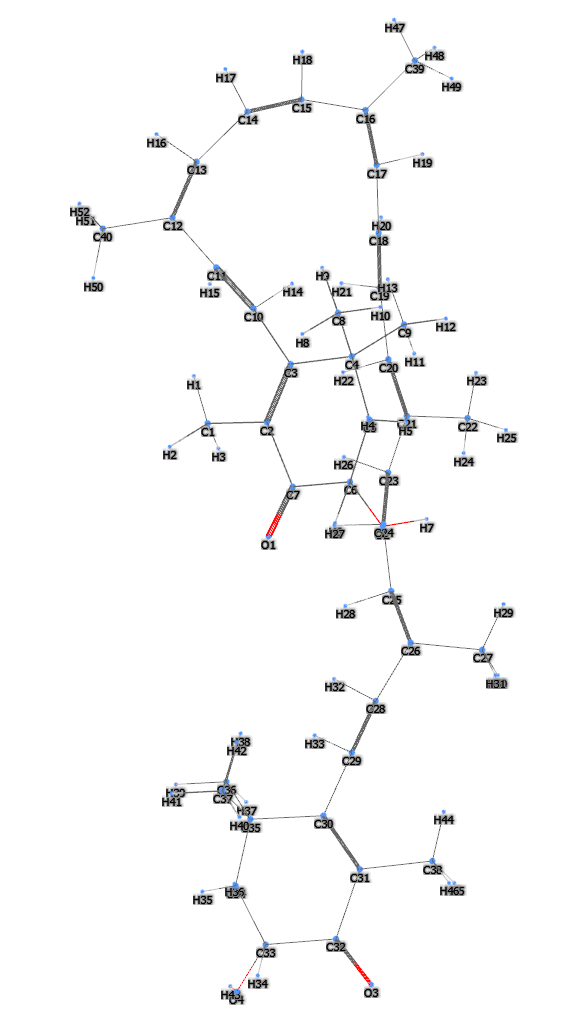
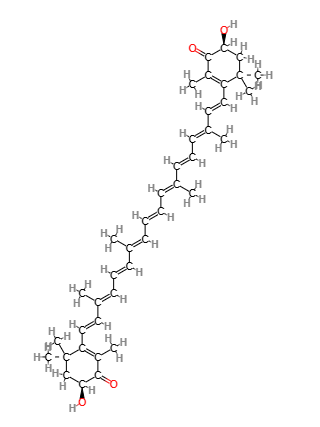
- Molecular Formula C40H52O4
- Molecular Weight 596.8
- Exact Mass 596.386536
- CAS 472-61-7
- UNII 8XPW32PR7I
- EC Number 207-451-4
- DSSTox Substance ID DTXSID00893777
- IUPAC (6S)-6-hydroxy-3-[(1E,3E,5E,7E,9E,11E,13E,15E,17E)-18-[(4S)-4-hydroxy-2,6,6-trimethyl-3-oxocyclohexen-1-yl]-3,7,12,16-tetramethyloctadeca-1,3,5,7,9,11,13,15,17-nonaenyl]-2,4,4-trimethylcyclohex-2-en-1-one
- InChI=1S/C40H52O4/c1-27(17-13-19-29(3)21-23-33-31(5)37(43)35(41)25-39(33,7)8)15-11-12-16-28(2)18-14-20-30(4)22-24-34-32(6)38(44)36(42)26-40(34,9)10/h11-24,35-36,41-42H,25-26H2,1-10H3/b12-11+,17-13+,18-14+,23-21+,24-22+,27-15+,28-16+,29-19+,30-20+/t35-,36-/m0/s1
- InChl Key MQZIGYBFDRPAKN-UWFIBFSHSA-N
- SMILES CC1=C(C(CC(C1=O)O)(C)C)C=CC(=CC=CC(=CC=CC=C(C)C=CC=C(C)C=CC2=C(C(=O)C(CC2(C)C)O)C)C)C
- MDL number MFCD00672621
- PubChem Substance ID 329756132
- ChEBI 40968
Synonyms
- (3S,3'S)-Astaxanthin
- Astaxanthin(3,3-Dihydroxy-Beta,Beta-Carotene-4,4-Dione)
- BioAstin
- BioAstin oleoresin
- 3,3'-Dihydroxy-β,β-carotene-4,4'-dione
- Lucantin Pink
- AstaREAL
- Carophyll Pink
- β,β-Carotene-4,4'-dione, 3,3'-dihydroxy-, (3S,3'S)-

