



Aloe barbadensis (Miller) or Aloe Vera is one of the 400 or more species of Aloe. It is a cactus, a slow-growing perennial succulent plant belonging to the Aloeaceae family (some include it in either the Liliaceae or Asphodelaceae families) that evolved in the arid environments of North Africa.
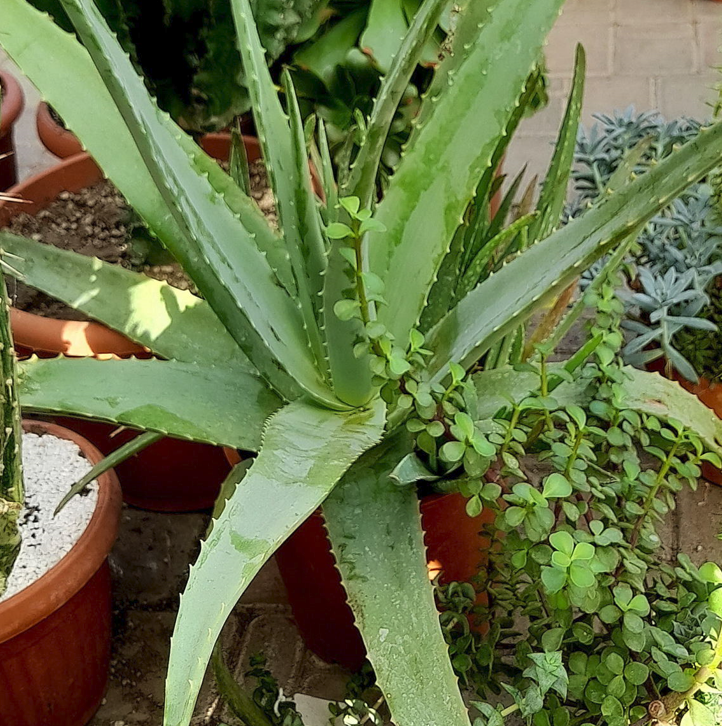
The most common aloes used in medicine and cosmetics are :
- Aloe barbadensis
- Aloe ferox
- Aloe greatheadii
It can reach 1.5 m in height with a very thick root. The leaves are white-green with spiny teeth on the margins. It matures at 4 years of age and at that age weighs about 1.5 kg, living about 12 years.
The use of herbs is a well-established method for treating certain diseases, but herbs can trigger side effects and can interact with other herbs, supplements or medications. For these reasons, one should only proceed with caution when taking them with the assistance of a doctor (1). In any case, it is important to set quantities and frequency of intake that only a doctor can prescribe.
Latex and gels are made from the plant with a long history of topical and local therapy, as a treatment for burns, wounds, skin irritation and constipation, and in Ayurvedic medicine it is used against skin diseases, however ingestion has been associated with several physical ailments (2).
It abounds in anthraquinones, plant enzymes and useful tricyclic aromatic secondary metabolites, including aloe emodin and chrysophanol (3).
It contains antioxidant vitamins (A, C, E, B12), niacin, riboflavin and folic acid and, used as a laxative stimulant, anthelmintic. It also contains potassium, calcium, magnesium, copper, zinc, chromium, iron and magnesium lactate (4) as well as polysaccharides (glucomannans), amino acids, fatty acids (lupeol and campesterol), lipids, plant sterols, tannins and enzymes (amylase, catalase and peroxidase) used as herbal medicines.
Cosmetics
Skin conditioning agent. An ingredient that is the mainstay of topical skin treatment by restoring, increasing or improving skin tolerance to external factors, including melanocyte tolerance. The most important function of the conditioning agent is to prevent skin dehydration, but the subject is rather complex and involves emollients and humectants.
CAS 85507-69-3 94349-62-9
EC number 287-390-8 305-181-2
Medical
Aloe vera improved epithelialisation and granulation tissue of burn wounds in patients with superficial second degree burns (5) and significantly increased skin elasticity index (6) and collagen levels (7).
Digestive system
Aloe has been used for the treatment of diseases affecting the digestive system and in particular has been closely associated with gastroprotection having demonstrated the potential to alleviate alcohol-induced acute gastric injury (8).
Diabetes
Aloe vera administration has been shown to restore blood glucose levels to normal with a concomitant increase in insulin levels, thereby exerting antidiabetic effects, improving insulin secretion, pancreatic β-cell function and restoring pancreatic islet mass (9).
Bones
The results of this study indicate that Aloe is an excellent source of antioxidant and anti-osteoporotic phytochemicals (10).
Teeth
Aloe vera may prove to be an effective mouthwash due to its ability to reduce dental plaque (11).
The most relevant studies on this ingredient have been selected with a summary of their contents:

