



Orange (Citrus aurantium dulcis) seems to have originated in China and was brought to the Mediterranean by Italian navigators around 1450. The tree belongs to the Rutaceae family and the fruit is used industrially by food, cosmetic and pharmaceutical companies. It contains numerous components of interest to human health such as flavonoids, terpenes, linalool, vitamin C, folic acid, with antioxidant properties.
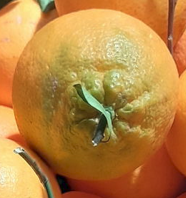
Citrus aurantium dulcis, commonly known as the sweet orange, is a widely cultivated fruit tree renowned for its juicy, sweet-tasting citrus fruit. Native to Southeast Asia, it is now grown in tropical and subtropical regions around the world. The sweet orange is a major commercial crop and is used in a variety of culinary, medicinal, and cosmetic applications.
Botanical Classification:
- Kingdom: Plantae
- Order: Sapindales
- Family: Rutaceae
- Genus: Citrus
- Species: Citrus aurantium
- Variety: Citrus aurantium dulcis
Plant Characteristics:
- Growth Form: The sweet orange tree is an evergreen that typically grows to a height of 4-10 meters (13-33 feet) and has a dense, rounded canopy. It is characterized by its glossy green leaves and fragrant white flowers.
- Leaves: The leaves are ovate to elliptical, with a shiny, dark green surface and a pointed tip. They are aromatic when crushed and measure about 7-12 cm (2.7-4.7 inches) in length.
- Flowers: The tree produces fragrant white flowers with five petals, arranged in clusters or singly. They bloom in spring and summer, and their scent is a hallmark of the sweet orange tree.
- Fruit: The fruit is round to oval, with a bright orange, smooth rind. It typically measures about 7-10 cm (2.8-4 inches) in diameter. The flesh is juicy, sweet, and segmented, with a high vitamin C content.
Chemical Composition and Structure:
- Essential Oils: Sweet orange essential oil is extracted from the peel and contains key compounds such as limonene (a major component), myrcene, and linalool. These compounds contribute to its characteristic citrus aroma and have various therapeutic benefits.
- Vitamin C: The fruit is rich in ascorbic acid (vitamin C), an essential nutrient known for its antioxidant properties, which helps in the repair of tissues and immune function.
- Flavonoids: Sweet oranges contain flavonoids like hesperidin, narirutin, and eriocitrin. These compounds have antioxidant and anti-inflammatory effects.
- Citric Acid: The fruit is high in citric acid, which contributes to its tart flavor and acts as a natural preservative and acidulant in foods and beverages.
How to Cultivate It:
- Soil: Sweet oranges prefer well-drained, sandy loam soils with a slightly acidic to neutral pH (pH 6-7). They can tolerate a range of soil types as long as drainage is adequate.
- Climate: The tree thrives in tropical and subtropical climates with warm temperatures and plenty of sunlight. It requires protection from frost and can be grown in USDA hardiness zones 9-11.
- Watering: Regular watering is essential, especially during dry periods. The soil should be kept consistently moist but not waterlogged. Drip irrigation is often used in commercial orchards.
- Fertilization: Sweet orange trees benefit from balanced fertilizers with an emphasis on potassium and magnesium. They should be fertilized during the growing season to support healthy growth and fruit production.
- Propagation: The tree is commonly propagated through grafting onto rootstocks to ensure desired fruit characteristics and disease resistance. It can also be grown from seeds, but this is less common due to variability in fruit quality.
Uses and Benefits:
- Culinary: Sweet oranges are widely consumed fresh or juiced. The fruit is used in cooking, baking, and as a flavoring agent in beverages and desserts. Orange zest is also used to add flavor to dishes.
- Health Benefits: The high vitamin C content supports immune function, skin health, and antioxidant protection. Sweet oranges also provide dietary fiber and various phytonutrients that contribute to overall health.
- Cosmetic: Sweet orange essential oil is used in skincare products for its refreshing and uplifting properties. It is also included in products for its antiseptic and astringent benefits.
Applications:
- Food and Beverage: Sweet oranges are used in a variety of culinary applications, including fresh consumption, juices, marmalades, and flavorings for dishes and desserts. Orange oil is also used in flavoring and scenting.
- Cosmetics and Personal Care: The essential oil and extracts are included in skincare products, such as cleansers, masks, and lotions, for their brightening and revitalizing effects. They are also used in aromatherapy for their uplifting and energizing properties.
- Household: Sweet orange essential oil is utilized in cleaning products due to its natural antibacterial properties and pleasant citrus scent. It is used in air fresheners and as a natural degreaser.
Environmental and Safety Considerations:
- Environmental Impact: The cultivation of sweet oranges can have environmental impacts, including water usage and pesticide application. Sustainable farming practices and integrated pest management can help mitigate these effects.
- Safety: Sweet oranges are generally safe for consumption and topical application. However, essential oils should be used with caution and diluted properly to avoid potential skin irritation. It is advisable to consult a healthcare provider before using essential oils for therapeutic purposes.
Studies
An orange contains on average:
- from 45 to 52 calories
- Proteins 07 / 1.3 g
- Carbohydrates 12 / 12.7 g
- Fibers 0.5 g
- Calcium 42 mg
- Phosphorus 20 mg
- Iron 0.5 mg
- Potassium 200 mg
- Vitamin A 200 IU
- Thiamine 0.10 mg
- Vitamin B2 Riboflavin 0.04 mg
- Niacin 0.4 mg
- Vitamin C 50 mg
- Sodium 1 mg
Almost everything is used in the plant:
- Pulp: juices
- Peel: perfumes, sweets, paint resins
- Seeds: oil, soap, plastic, fertilization
- Flowers and leaves: perfumes
- Wood: walking sticks, cabinet making
In the medical field used against:
- Temperature
- Catarrh
- Diseases of the skin
- Acne
- Capillary fragility
- Intestinal disorders
From the orange peel we obtain an essential oil that is interesting for health, the Citrus aurantium dulcis peel oil.
Citrus aurantium dulcis peel oil is an oil obtained with a chemical process from the orange peel, it is a sesquiterpene with antioxidant properties.
It is used as aroma in food, beverages, in cosmetics and in body cleansers with a function:
- Tonic
- Astringent
- Revitalizing
Extraction and antioxidant activity
The current method used in most countries for the production of cold-pressed orange oil is the simultaneous extraction of an emulsion of juice and oil from the whole fruit. Cold pressed orange oil contains waxes, pesticide residues and carotenoids (1). The current method used in most countries for manufacturing cold-pressed orange oil is simultaneous extraction of a juice and oil emulsion from the whole fruit. Cold-Pressed orange oil contains waxes, pesticide residues and carotenoids. For this reason it would be appropriate to adopt a molecular distillation method to remove them as this oil can be used in the clinical treatment of patients with malignant brain tumors (2), to inhibit angiogenesis, metastasis and cell death in human colon cancer cells (3).
In this study, the orange peel of 12 cultivars of Citrus sinensis from central-eastern Sicily was employed to obtain essential oils and extracts. The ones were extracted through steam distillation, the others through extraction in hexane. Chemical constituents were evaluated in terms of qualitative and quantitative analyses by gas chromatography/mass spectrometry. Fifty-four components were identified in the steam essential oils and 44 in the extracts. In all the cultivars, the main component is d-limonene (73.9-97%); discrete percentages of linalool, geraniol and nerol were also found. Cluster analysis based on essential oils composition showed a certain degree of affinity between cultivars of the same type. The antimicrobial activity was investigated against three micro-organisms (Staphylococcus aureus, Listeria monocytogens and Pseudomonas aeruginosa). 'Sanguinello' and 'Solarino Moro' essential oils are significantly active against L. monocytogenes, while 'Valencia' hexanic extract against all the tested micro-organisms(4).
Acute otitis media (AOM) animal model was built and diet containing orange peel essential oil microcapsules were administrated to AOM animals. Pharmacological test showed that orange peel essential oil treatment could decrease serum and cochlea malondialdehyde (MDA), immunoglobulins A (IgA), immunoglobulins G (IgG), immunoglobulins M (IgM) levels and increase antioxidant enzymes activities. It can be concluded that orange peel essential oil treatment could decrease oxidative injury in acute otitis media rats.
Typical chemical composition of an orange essential oil
Twenty four compounds, accounting for 97.9% of the total oil, were identified based on their mass spectra. The main components were terpenic molecules, and the oil was composed of 97.3% monoterpenes (which include 19.0% oxygenated monoterpenes) and 0.5% sesquiterpenes. The main constituents were limonene (74.6%), limonene 1,2-epoxide (3.5%), cis-p-mentha-2,8-dien-1-ol (3.2%) and (E)-carveol (2.4%) (6).
CAS: 8008-57-9 Orange peel oil

