



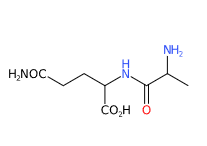
Alanyl glutamine is a dipeptide, a conditionally essential amino acid with a dietary supplement function, formed from L-alanyl and L-glutamine residues, which can play a role as a metabolite and is an important energy substance for immune cells (1). In the human body, the amino acids released from the breakdown of this dipeptide are stored and subsequently metabolised.
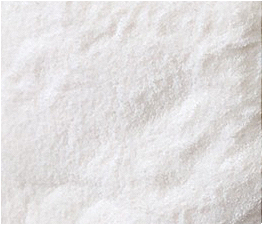
Industrially it occurs as a white, stable, odourless, hygroscopic powder, soluble in water, in glacial acetic acid, almost insoluble or insoluble in methanol or ethanol.
What it is used for and where
It can be used for parenteral nutrition support.
Medical and Pharmaceutical
The role of Alanyl glutamine in the efficacy and treatment reliability of nutritional support therapy for patients with sepsis, an infection of the bloodstream that causes lower blood pressure, fever and increased heart rate, was investigated. Results have shown that Alanyl glutamine can provide nutritional support for lymphocytes and maintain antioxidant reserves in body tissues (2). It has also been shown that dietary glutamine supplementation improves intestinal function (3) by protecting the function of the intestinal barrier (4) and can improve weight gain in children at risk of environmental enteropathy in the short term (5).
Alanyl glutamine also has an anti-inflammatory action that improves wound healing. This study considers that Alanyl glutamine administered in the form of a dipeptide or in the form of free glutamine could promote neovascularisation and improve the survival of skin flaps in laboratory animals (6). This other study found a positive metabolic effect of Alanyl glutamine on skin burns (7).
Typical commercial product characteristics Alanyl glutamine
| Appearance | White crystalline powder |
| Boiling Point | 353.5±52.0°C at 760 mmHg |
| Melting Point | 215°C |
| Flash Point | 167.6±30.7°C |
| Density | 1.5±0.1 g/cm3 |
| Loss on drying | ≤2.0% |
| Residue on ignition | ≤0.1% |
| Sulphated ash | ≤0.5%/g |
| Heavy metals | ≤10 ppm |
| Water | ≤1.0% |
| Total impurities | ≤0.5% |
| PSA | 106.41000 |
| LogP | -1.28 |
| Index of Refraction | 1.564 |
| Vapor Pressure | 0.0±1.8 mmHg at 25°C |
| Storage | 2-8°C |
 |  |
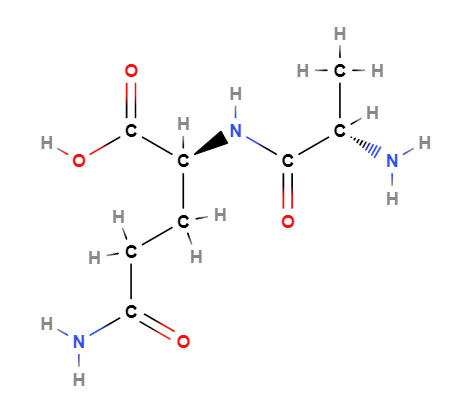 | 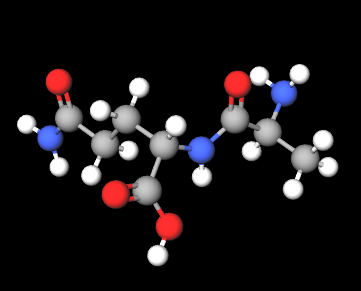 |
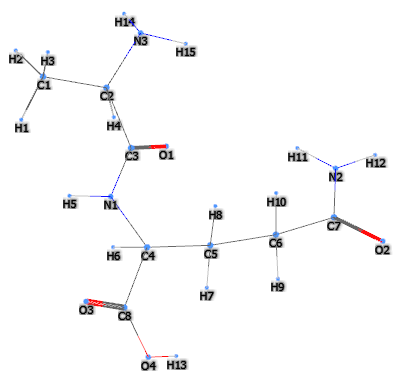
- Molecular Formula C8H15N3O4
- Molecular Weight 217.22
- CAS 39537-23-0
- UNII U5JDO2770Z
- EC Number 609-717-9
- DSSTox Substance ID DTXSID20192658
- IUPAC (2S)-5-amino-2-[[(2S)-2-aminopropanoyl]amino]-5-oxopentanoic acid
- InChI=1S/C8H15N3O4/c1-4(9)7(13)11-5(8(14)15)2-3-6(10)12/h4-5H,2-3,9H2,1H3,(H2,10,12)(H,11,13)(H,14,15)/t4-,5-/m0/s1
- InChl Key HJCMDXDYPOUFDY-WHFBIAKZSA-N
- SMILES CC(C(=O)NC(CCC(=O)N)C(=O)O)N
- MDL number MFCD00133046
- PubChem Substance ID 24891211
- ChEBI 73788
- FEMA 4712
- JECFA 2121
- NCI C127908
Synonyms
- l-Alanyl-l-glutamine
- Glutamine-S
- H-Ala-Gln-OH
- alanylglutamine
- Ala-gln

