



Mentha arvensis (Lamiaceae) corn mint
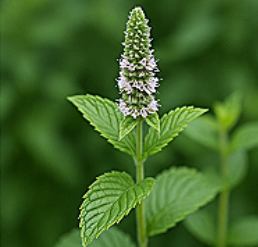
Mentha arvensis, commonly known as cornmint or corn mint, is a perennial herb of the family Lamiaceae and one of the most widespread wild mint species across temperate Eurasia. It typically exhibits a stoloniferous, spreading growth habit, with square, erect to ascending stems that usually reach 20–60 cm in height. The leaves are opposite, ovate to elliptic, finely toothed and rich in glandular trichomes from which the characteristic fresh, penetrating mint aroma is released when crushed. During summer, the plant produces dense whorls of small flowers (verticillasters), usually pale pink, lilac or whitish, which are highly attractive to pollinating insects.
From an ecological perspective, Mentha arvensis favours moist to semi-moist habitats such as damp meadows, field margins, irrigation canals, stream banks and periodically flooded soils. At the same time, it shows considerable ecological plasticity, being able to establish on moderately clayey, sandy or compacted soils, provided that prolonged drought is avoided. Its vigorous vegetative spread via stolons allows it to form dense stands that contribute to ground cover, erosion control and nectar resources for bees and other insects, thereby supporting local biodiversity in agricultural and semi-natural landscapes.
 |  |
Chemically, Mentha arvensis is notable for its high essential oil content and is one of the main natural sources of menthol. The essential oil, distilled mainly from the aerial parts, is typically dominated by menthol and menthone, with variable proportions of isomenthone, menthyl acetate and other oxygenated monoterpenes. The high menthol content is responsible for the intense cooling sensation perceived on mucous membranes and skin, mediated by the activation of specific cold-sensitive receptors. The exact composition of the oil is influenced by climate, soil conditions, phenological stage, genetic background and extraction technique, leading to several recognised chemotypes used in perfumery, flavourings and pharmaceutical formulations.
In traditional medicine, field mint has been used in European and Asian folk practices as a digestive and carminative, a mild antispasmodic, an expectorant, and a flavour corrector in herbal mixtures. Infusions from the leaves have been employed to relieve mild gastrointestinal discomfort, bloating, nausea and common colds, while the strong aroma has made the plant suitable for masking unpleasant tastes in medicinal preparations. In some regions, M. arvensis played a role similar to that of peppermint, especially before the latter was widely cultivated and standardised.
In culinary uses, Mentha arvensis is employed as an aromatic herb in local cuisines to season vegetable dishes, legumes, potatoes and light meats, and to prepare herbal teas, homemade liqueurs and refreshing drinks. However, because of its relatively high menthol content, the flavour can be more intense and sometimes harsher than that of other culinary mints, so it is usually used in moderation to avoid overpowering the overall flavour profile of dishes and beverages.
From a health and functional perspective, Mentha arvensis continues to attract interest due to the biological activities of its essential oil and extracts. Pharmacological and phytochemical studies indicate antimicrobial, antioxidant, antispasmodic and mild analgesic properties in experimental models. Menthol, in particular, contributes to the soothing effect on the upper airways and to a subjective improvement in nasal airflow, while other terpenes may support digestive and respiratory functions. Nevertheless, products containing the essential oil must be used with care: excessive concentrations can cause irritation of mucous membranes, gastrointestinal discomfort or, in susceptible individuals, adverse reactions. The use of undiluted essential oil is not recommended in pregnancy, in very young children, or in people with certain respiratory or neurological conditions, in line with established herbal and aromatherapeutic safety guidelines.
Botanical classification (APG IV system)
| Category | Data |
|---|---|
| Common name | field mint, wild mint, corn mint |
| Botanical name | Mentha arvensis L. |
| Kingdom | Plantae |
| Clade | Angiosperms → eudicots → core eudicots → superasterids → asterids → euasterids I (lamiids) |
| Order | Lamiales |
| Family | Lamiaceae |
| Subfamily | Nepetoideae |
| Tribe | Mentheae |
| Genus | Mentha |
| Species | Mentha arvensis L. |
Indicative nutritional values per 100 g (fresh aerial parts of Mentha arvensis)
Values refer to fresh herb (leaves and tender stems), estimated for field mint and other culinary mints; in real culinary use, portions are much smaller than 100 g.
| Component | Approximate value per 100 g |
|---|---|
| Energy | ~ 40–50 kcal |
| Water | ~ 80–86 g |
| Total carbohydrates | ~ 8–9 g |
| — of which sugars | ~ 1–2 g |
| Dietary fiber | ~ 5–7 g |
| Proteins | ~ 3–4 g |
| Total lipids | ~ 0.7–1.0 g |
| — of which saturated fatty acids (SFA) | ~ 0.1–0.25 g |
| — monounsaturated fatty acids (MUFA) | traces |
| — polyunsaturated fatty acids (PUFA) | traces |
| Sodium | low (≈ 30 mg) |
| Main minerals | potassium (≈ 450–500 mg), calcium (≈ 200–250 mg), iron (≈ 10–13 mg), small amounts of magnesium |
| Relevant vitamins | vitamin C (≈ 15–30 mg), provitamin A (carotenoids), small amounts of B-group vitamins |
At realistic serving sizes (for example 2–5 g of fresh leaves in teas or as seasoning), the energy contribution is negligible, and the effective nutritional impact (fiber, vitamin C, vitamin A, minerals) is modest in quantity, though positive in qualitative terms within the overall diet.
Lipid profile note
Field mint, like other Mentha species, has a very low fat content:
Saturated fatty acids (SFA) are present in small amounts; when they predominate over unsaturated fats in the overall diet, they are generally considered less favourable for cardiovascular health.
Monounsaturated (MUFA) and polyunsaturated (PUFA) fatty acids occur only in trace amounts and do not significantly influence daily lipid intake.
From a nutritional perspective, interest in Mentha arvensis relates mainly to its aromatic compounds, fiber, vitamin C, vitamin A and micronutrients, rather than to fats or calories.
Production process
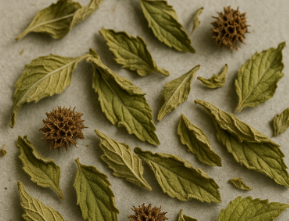
Field mint can be collected from wild stands or cultivated fields in temperate regions. Harvesting is carried out at full flowering, when leaves and flowering tops contain the highest level of essential oil. The aerial parts are cut and quickly transferred to shaded, well-ventilated drying areas, where moderate temperatures help preserve the volatile monoterpenes, especially menthol.
The essential oil is obtained by steam distillation of the dried (or partly wilted) aerial parts. Oil from Mentha arvensis is characterised by a very high menthol content, often in the range of about 50–70 %, which gives a sharp, cooling, peppermint-like odour and strong sensory “cold” effect. After distillation the oil may be chilled and fractionated to crystallise out menthol, with the remaining “dementholised” mint oil used as a separate flavour or fragrance ingredient. Hydroalcoholic extracts and hydrolats are also produced for softer cosmetic or herbal uses.
Applications
In traditional herbal use, Mentha arvensis has been employed as an aromatic and digestive herb, similar to peppermint but generally more pungent. Dried leaves may be included in mixed herbal teas and some traditional liquors, always within the legal limits for menthol and related constituents.
Today, the essential oil is particularly important as a technical and cosmetic ingredient. Thanks to its high menthol content, Mentha arvensis oil (often called cornmint or wild mint oil) is widely used in:
Topical and cosmetic products such as cooling gels, after-sun and muscle products, foot balms and refreshing body lotions, where it produces an intense cooling and invigorating sensation.
Oral-care products (toothpastes, mouthwashes) to provide a strong, fresh mint flavour and a prolonged feeling of freshness.
Hair and scalp care, for example in shampoos and scalp tonics for oily scalp, where its cooling and deodorising effect is appreciated.
In aromatherapy and functional perfumery, field mint oil is used to deliver a powerful mint note, to enhance alertness, and to give a sense of “open air” freshness in room fragrances, balms and massage products.
Nutrition & health
When used as a simple culinary herb (dried leaves in small amounts), Mentha arvensis behaves comparably to other mints, providing aroma and a mild digestive sensation. The main bioactive profile of the essential oil is driven by menthol and related monoterpenes (menthone, isomenthone, menthyl acetate, etc.), which account for the strong cooling and sensory effects.
Preclinical and experimental work suggests that Mentha arvensis extracts and essential oil may exhibit antimicrobial, antioxidant and anti-inflammatory properties, and there is interest in potential applications in skin conditions and inflammatory models. However, these data are largely preclinical, and do not justify specific therapeutic claims in humans.
Internal use of field mint essential oil must be approached with great caution. As with other menthol-rich oils, excessive doses can cause gastrointestinal discomfort, neurological symptoms and other adverse effects. Any oral use of concentrated oil should be restricted to regulated preparations and professional supervision; home use of pure oil by ingestion is not appropriate.
Topically, menthol-rich preparations can give a pronounced sensation of cooling and relief, but high concentrations may also cause burning, irritation or paradoxical discomfort, especially on sensitive or damaged skin, mucous membranes, or in young children.
Allergens and intolerances
Some individuals are sensitive to menthol and mint oils, and may develop skin irritation, contact urticaria or, in rarer cases, allergic contact dermatitis when exposed to products containing Mentha arvensis oil. Irritation of eyes and respiratory mucosa is also possible with over-exposure to vapours or high-strength products applied near the face.
For people with a history of mint allergy, fragrance sensitivity, asthma triggered by strong odours, or very reactive skin, products containing field mint oil or high levels of menthol should be used cautiously or avoided. As with other fragrant essential oils, any regulated fragrance allergens arising from Mentha arvensis (or the fragrance blend in general) must be listed on cosmetic labels when they exceed legal thresholds.
Storage and shelf-life
The dried herb should be stored in a cool, dry and dark place, in closed containers that protect it from humidity and light; under these conditions it usually remains suitable for herbal use for about 1–2 years, with gradual loss of aroma over time.
The essential oil is more sensitive to oxidation and volatilisation. It should be kept in tightly closed, preferably dark glass or metal containers, away from heat sources. Good storage practices help preserve both the characteristic menthol-rich odour and the chemical profile, and reduce the formation of oxidation products that may alter odour and irritancy. Commercial technical data sheets generally recommend shelf-lives of about 2–3 years under proper storage.
Safety and regulatory aspects
Because of its high menthol content, Mentha arvensis oil is subject to regulatory scrutiny similar to other peppermint-type oils. Safety assessments for cosmetic use typically consider systemic exposure to menthol and related constituents, and some expert panels have recommended limits so that total menthol exposure from all cosmetic products remains below acceptable daily intake values. Individual jurisdictions may also set specific maximum levels for menthol or mint oils in oral-care, topical and inhaled products.
Manufacturers are expected to work under GMP, with:
control of botanical identity and origin of the plant;
analysis of the essential oil composition (menthol, menthone, etc.) and confirmation it meets specification;
monitoring of contaminants (e.g. pesticides, heavy metals, residual solvents where relevant) and oxidation status;
appropriate labelling and classification according to flavour, fragrance, cosmetic or other intended use.
Labeling
In herbal and flavour products, the plant may be declared as Mentha arvensis, field mint, cornmint, wild mint or similar, depending on national language conventions. For essential oil, terms such as “Mentha arvensis oil”, “cornmint oil” or “wild mint oil” are common.
In cosmetics, typical INCI names include:
Mentha Arvensis Leaf Oil,
Mentha Arvensis Flower/Leaf/Stem Oil,
Mentha Arvensis Leaf Extract,
and purified Menthol may appear as a separate INCI ingredient when isolated from the oil.
Any required fragrance allergens must be listed separately when above threshold levels, even if the oil itself is part of a complex “Parfum” declaration.
Main INCI functions (cosmetics)
In cosmetic and personal-care formulations, Mentha arvensis derivatives are primarily used for their cooling and perfuming properties:
Fragrance / perfuming agent – provides a strong, fresh, mentholated mint odour, often as a top or middle note in the fragrance accord.
Cooling / refreshing agent – delivers a marked cooling sensation on skin and scalp, especially in gels, after-sun products, sports balms, foot-care products and “cooling” masks.
Skin and scalp conditioning – contributes to a feeling of freshness and cleanliness; in some formulas it is also positioned for oily or problem skin and scalp, often in combination with other actives.
Conclusion
Mentha arvensis (field mint / cornmint) is a menthol-rich mint species widely used as a source of strong, cooling essential oil for cosmetic, oral-care, aromatherapy and flavour applications. The plant and its oil sit at the intersection between traditional herbal use and modern functional perfumery, offering intense freshness, sensory impact and useful technical properties. At the same time, its high menthol content requires careful control of composition, dosage and exposure, particularly in products applied to sensitive areas or used by vulnerable populations. When cultivation, distillation, fractionation and quality control are properly managed within the current regulatory framework, Mentha arvensis provides a versatile and effective ingredient for “cooling” and refreshing products in many categories.
Mini-glossary
SFA – Saturated fatty acids: fats without double bonds; excessive intake compared with unsaturated fats may be associated with increased cardiovascular risk.
MUFA – Monounsaturated fatty acids: fats with one double bond; generally beneficial when replacing saturated fats in the diet.
PUFA – Polyunsaturated fatty acids: fats with two or more double bonds (including n-6 and n-3 families); contribute to normal heart function within a balanced diet.
TFA – Trans fatty acids: fats containing at least one trans double bond; dietary intake should be kept as low as possible, as recommended by major health authorities.
GMP – Good manufacturing practices: standards ensuring hygiene, safety and quality throughout production and processing.
HACCP – Hazard analysis and critical control points: preventive system for identifying and controlling potential hazards in food production chains.
BOD – Biological oxygen demand: indicator of organic pollution in wastewater, measuring oxygen required by microorganisms.
COD – Chemical oxygen demand: indicator of total oxidisable compounds in wastewater, measuring oxygen needed for chemical oxidation.
Studies
The essential oil obtained from Mentha arvensis is composed mostly of menthol that exerts a successfully tested antifungal action against Rhizoctonia solani and Fusarium moniliforme (1).
This study explored the possibility of reducing postprandial glucose release and inhibiting posprandial hyperglicemia with components from alternative plants for diabetes control. A methanol extract derived from Mentha arvensis was found to be effective in this antidiabetic activity (2).
The most relevant studies on this ingredient have been selected with a summary of their contents:

