



Parsley (Petroselinum crispum)
Description
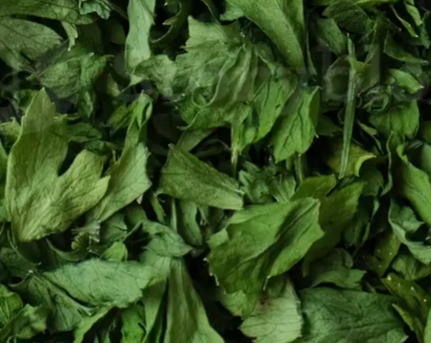
Parsley (Petroselinum crispum, family Apiaceae) is a biennial aromatic herb (cultivated as an annual) widely used in Mediterranean and international cuisine. The leaves are bright green, finely divided, and occur in two main commercial types: flat-leaf (Italian) and curly. The aroma is fresh, green and slightly pungent, and the flavour is clean, herbaceous and mildly peppery. Parsley is used mainly fresh as a finishing herb and ingredient in sauces, dressings and ready meals.
Botanical Classification
Kingdom: Plantae
Clade: Angiosperms
Class: Eudicots
Order: Apiales
Family: Apiaceae
Genus: Petroselinum
Species: P. crispum
Plant Characteristics
Parsley grows about 30 cm tall, featuring bright green, curly or flat leaves depending on the variety. The plant forms a rosette of leaves at the base from which stems extend, ending in umbels of small, yellow-green flowers in its second year.
Chemical Composition and Structure
Parsley is rich in vitamins C and K, and it also contains significant amounts of flavonoids, carotenoids, and essential oils like apiol and myristicin. These compounds are known for their antioxidant properties and contribute to the herb’s distinctive aroma and flavor.
How to Cultivate It
To successfully cultivate parsley:
- Soil: Prefers rich, loamy, well-drained soil with a neutral pH.
- Light: Thrives in full sun but can tolerate partial shade.
- Water: Requires consistent moisture to keep the soil evenly moist, not waterlogged.
- Temperature: Hardy and can tolerate frost; it performs best in cooler temperatures of spring and autumn.
Indicative nutritional values per 100 g (fresh leaves)
(Actual intake per serving is only a few grams; values below are indicative.)
Energy: ≈ 35–40 kcal
Water: ≈ 86–90 g
Carbohydrates: ≈ 6–7 g
of which sugars: ≈ 0.8–1 g
Protein: ≈ 3–3.5 g
Total fat: ≈ 0.5–0.8 g
SFA (saturated fatty acids; should be moderated in the overall diet): traces
MUFA (monounsaturated fatty acids; generally favourable for lipid profile): traces
PUFA (polyunsaturated fatty acids; important for membranes and inflammatory modulation): traces
Dietary fibre: ≈ 3–4 g
Vitamins: vitamin C, vitamin K, provitamin A (β-carotene), folate
Minerals: potassium, calcium, iron, magnesium
Key constituents
Vitamin C and carotenoids (provitamin A)
Vitamin K (high per 100 g, though intake per portion is low)
Flavonoids (e.g. apigenin, luteolin and their derivatives)
Essential-oil components (in low levels in the fresh herb): myristicin, apiol, limonene and other terpenes
Soluble and insoluble dietary fibre
Mineral salts (notably potassium and iron)
Production process
Cultivation
Prefers temperate climates and cool, fertile, well-drained soils.
Grown by direct seeding or transplanting, often in staggered sowings for continuous harvest.
Cultivated in open fields, greenhouses or pots.
Harvest
Leaves are cut a few centimetres above the crown, manually or mechanically.
Harvest is staggered, as plants regrow and can be cut several times throughout the season.
Post-harvest
Selection of sound leaves and removal of yellow or damaged parts.
Washing and surface drying.
Packing in bunches, clamshell trays or bags (including fresh-cut IV-range products).
Further processing
Freezing (chopped frozen parsley).
Drying (whole leaves or flakes/powder).
Preparation of ready-to-use condiments, herb mixes, sauces (e.g. salsa verde, chimichurri), stuffings and ready meals.
Physical properties
Tender leaves, bright green colour (darker and more curled in curly types).
High water activity in fresh product → highly perishable.
Low bulk density; large volume for a small weight.
Sensory and technological properties
Aroma: fresh, green, slightly peppery, clean herbaceous note.
Flavour: delicate yet characteristic; enhances flavours without overpowering them.
Sensitive to heat: prolonged cooking reduces aroma → best used raw or added at the end of cooking.
Finely chopped parsley disperses well in sauces and dressings; properly processed frozen parsley retains much of its aroma if handled quickly before freezing.
Food applications
Used fresh as garnish and flavouring for:
soups, stews, sauces, salads
fish, meat and vegetable dishes
dressings and condiments (salsa verde, gremolata, tabbouleh, chimichurri)
Ingredient in stuffings, meatballs, vegetable patties and ready meals.
In frozen or dried form as an aroma component in industrial products (ready meals, sauces, snacks, seasonings).
Nutrition & health
Low in energy and a good source of micronutrients per 100 g, especially vitamin C, vitamin K and carotenoids.
Contributes antioxidants (flavonoids, vitamin C) to the overall diet.
Provides small amounts of iron and folate; contribution is modest at typical use levels but positive as part of a varied diet.
Due to the small quantities normally consumed, parsley is better seen as a nutrient-dense garnish rather than a major nutrient source.
Portion note
Typical household use: 2–5 g fresh leaves per serving (about 1–2 tablespoons of chopped parsley).
Allergens and intolerances
Parsley is not among the major EU allergens.
Possible reactions in individuals allergic to other Apiaceae (e.g. celery, carrot, fennel) due to cross-reactivity.
Essential-oil components such as myristicin and apiol are present only in small amounts in culinary use and are not generally a concern at normal intake levels.
Storage and shelf-life
Fresh parsley
2–4 days in the refrigerator, in a ventilated container or with stems in a little water and loosely covered.
Prone to wilting and yellowing if stored in dry air or at improper temperatures.
Frozen parsley
8–12 months in the freezer if properly packed and kept at stable low temperatures.
Dried parsley
12–18 months in a cool, dry, dark place; aroma is less intense than fresh and gradually fades over time.
Safety and regulatory aspects
Subject to legal limits for:
pesticide residues (MRL)
microbiological contamination (especially for fresh-cut and frozen products)
Processing facilities must operate under GMP and HACCP systems.
For processed foods (sauces, ready-to-use condiments) general food law applies regarding ingredients, additives and nutritional and health claims.
Labelling
Name: “parsley” / Petroselinum crispum.
Country of origin (country of cultivation).
Batch/lot number, best-before date, storage conditions.
For herb mixes and seasonings: parsley must appear in the ingredient list in descending order of weight.
Troubleshooting
Yellowing or wilting leaves → aged product or excessive storage time; reduced aroma and quality.
Weak herbaceous odour → old or long-stored dried parsley, or product stored exposed to air/light.
Rot or mould → excessive moisture or failure of the cold chain; product must be discarded.
Darkening after chopping → oxidation; minimise time between chopping and use, work in cool conditions and optionally add an acidic component (e.g. lemon juice).
Sustainability and supply chain
Parsley is a low-impact crop, suitable for small plots, home gardens and organic farming.
Relatively short crop cycle and good yield per hectare.
Easily integrated into local, short supply chains, including direct sales and local markets.
Freezing and drying reduce waste associated with the high perishability of fresh parsley and extend its availability year-round.
Main INCI functions (cosmetics)
Cosmetic derivatives from parsley include:
Petroselinum Crispum Extract – antioxidant, toning, mildly brightening agent.
Petroselinum Crispum Leaf Extract – used in some skin- and hair-care products for its phenolic content.
Use levels are usually low and subject to cosmetic safety evaluation.
Conclusion
Parsley is one of the most commonly used herbs in Italian and Mediterranean cuisine, valued for its fresh aroma and its ability to enhance a wide variety of dishes. While the nutritional contribution at typical serving sizes is modest, it positively supports the antioxidant profile of the diet. Thanks to easy cultivation, versatile culinary use and the possibility of preservation by freezing or drying, parsley is an important yet simple raw material in both domestic and industrial contexts.
Uses and Benefits
Parsley is not only a staple in the culinary world but also has various medicinal properties. It is used to promote digestion and kidney health, and its high vitamin content supports immune function. Additionally, it’s applied in traditional remedies for its diuretic and anti-inflammatory properties.
Applications
- Culinary: Widely used fresh in dishes for its flavor or as a garnish. It is essential in many seasoning blends and herbal mixtures.
- Medicinal: Utilized in herbal medicine to treat ailments like hypertension and allergies.
- Cosmetic: Extracts are used in skincare products for their antioxidant and skin-brightening properties.
Environmental and Safety Considerations
Parsley is an environmentally low-impact plant, requiring minimal pest control and fertilizer when grown under proper conditions.
It is safe for most people when consumed in typical food amounts, but excessive consumption can lead to health issues due to its oxalate content and the essential oil apiol, which can be toxic in large quantities.
Sustainable and organic farming practices are recommended to maintain soil health and reduce environmental impact.
Studies
Its components flavonoids, coumarin, tocopherol, carotenoids and ascorbic acid give this herb antioxidant, anti-inflammatory and antihypertensive activity.
Vitamin C, an antioxidant, is present with a high content, 248 mg/100g and chlorophyll which has an inhibitory effect on the dehydration of calcium oxalate with 0,185mg/g (1).
Overall, parsley has been shown to be effective in preventing urolithiasis (the process of stone formation in the urinary tract) (2).
In this study, the histopathological and biochemical results of oral administration of a parsley-rich diet demonstrated efficacy in reducing stress-induced gastric lesions by supporting the cellular antioxidant defense system (3).
Scientific evidence of the traditional use of parsley extract as an anti-diabetic agent and antioxidant in type 1 diabetes mellitus is confirmed in this other study (4).
Mini-glossary
SFA – Saturated fatty acids; when excessive in the diet, associated with increased cardiovascular risk.
MUFA – Monounsaturated fatty acids; generally associated with a favourable blood-lipid profile.
PUFA – Polyunsaturated fatty acids; important for cell membranes and modulation of inflammatory processes.
MRL – Maximum Residue Level; legal limit for pesticide residues in foods.
GMP – Good Manufacturing Practices; standards ensuring hygienic, controlled production.
HACCP – Hazard Analysis and Critical Control Points; system for prevention and control of hygiene and safety risks along the food chain.

