



Hydroxyapatite is a mineral consisting mainly of calcium is present in the human body and milk in good quantities and is found in bones and teeth as a significant inorganic component where it acts as a shield against caries. In a process using ethanol and water, calcium apatite Ca5(PO4)3(OH) is mineralised to obtain a very fine powder consisting of nano particles.
Chemical Composition and Structure
Hydroxyapatite has the chemical formula Ca5HO13P3, with a crystalline structure that provides high stability and biological compatibility. Its composition is similar to that of human mineral tissue, making it ideal for applications that involve strengthening bones and teeth.
Physical Properties
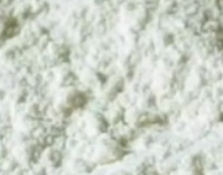
It appears as a white powder, insoluble in water, with a highly compact crystalline structure. Its ability to adhere to the surface of teeth and bones allows it to promote remineralization and regeneration of mineral tissue, thereby protecting enamel and repairing small damages.
Production Process
Hydroxyapatite can be produced through synthetic methods or extracted from natural sources. Synthetic production involves reacting calcium phosphate and calcium hydroxide solutions, which are then purified and micronized to create the powdered form used in cosmetics and toothpaste.
Chemical Synthesis: This method involves the combination of calcium and phosphate salts in aqueous solutions. Commonly used chemicals include calcium chloride and monosodium phosphate. The chemical reaction leads to the formation of hydroxyapatite, which is then filtered, washed, and dried.
Precipitation: In this process, reagents are added to a solution of calcium and phosphate salts to promote the formation of hydroxyapatite in the form of a precipitate. This precipitate is collected, washed, and treated to remove impurities.
Sol-gel: An innovative method that uses a colloidal solution (sol) to form a hydroxyapatite gel. This gel is then dried and sintered to obtain a solid and porous material.
Biomass-derived Hydroxyapatite: This eco-friendly method utilizes biological sources, such as animal bones or algae, which are processed to extract hydroxyapatite. The biomass is first demineralized and then chemically treated to obtain the desired mineral.
Sintering: Once hydroxyapatite is obtained, the material can undergo a sintering process, which involves heating at high temperatures to improve its stability and mechanical properties.
These methods allow for the production of high-purity hydroxyapatite suitable for medical, dental, and industrial applications.
What it is used for and where it is used
- Calcium supplementation. Hydroxyapatite can be used as a source of calcium in dietary supplements. This is especially useful for maintaining bone health and preventing conditions such as osteoporosis.
- Bone repair. Hydroxyapatite is used in orthopedic and dental surgery for bone repair and replacement. It is particularly useful in treating critically large bone defects where natural healing is not possible. It is also used in the creation of scaffolds that mimic the architecture of human bone, providing a structure on which new bone cells can grow.
- Caries treatment. Hydroxyapatite is used in toothpastes and other oral hygiene products to help prevent cavities. It can also be used in dental surgery to repair and replace teeth.
- Drug delivery. Hydroxyapatite can act as a carrier for drug delivery, particularly for drug delivery to bone. Hydroxyapatite's structure allows it to carry a variety of substances, and it has been explored for targeted drug delivery.
- Tissue engineering. Hydroxyapatite is used in the development of tissue engineering scaffolds. These scaffolds provide a structure on which cells can grow, helping to form new tissue.
- Protein or drug carriers. Hydroxyapatite has been used as a carrier for proteins or drugs because of its bioactivity and biocompatibility. It can adsorb and release active molecules, which is beneficial for various biomedical applications.
Medical
Hydroxyapatite is classified as bioactive, i.e. with the ability to aid bone growth in surgical applications: orthopaedic, dental, maxillofacial and spine surgery. See 'Hydroxyapatite (Biomedical applications)' . Hydroxyapatite fillers have demonstrated important advantages when compared to other fillers in terms of both volume of product required and duration of action (1). It has interesting biocompatibility properties as a scaffold in tissue engineering and degrades into non-toxic products. It is an effective supplement of calcium and other nutrients due to its compositional characteristics.
Potential carrier for bioactive compounds in the development of edible coating systems (2).
Dentistry
Hydroxyapatite nanoparticles are used to achieve a post-brushing teeth whitening effect (3) and the reason is that hydroxyapatite has an extraordinary affinity and similarity to the apatite crystal of tooth enamel and is considered biologically safe and cytocompatible. It is also used in products for the treatment of dental hypersensitivity and enamel remineralisation.
Other uses
- Chromatographic purification to separate and purify proteins, enzymes, nucleic acids and plasmids.
- Removal of toxic metals from water
- Biochemical research, isolation of natural and denatured DNA.
Applications
Oral Care: Hydroxyapatite is widely used in toothpaste for its remineralizing properties, helping to repair tooth enamel and prevent cavities.
Skincare: In cosmetics and anti-aging treatments, Hydroxyapatite is used for its regenerative abilities, helping to stimulate collagen production and reduce wrinkles.
Medical Applications: It is also employed in bone regeneration procedures, such as dental implants and orthopedic treatments, due to its biocompatibility and ability to integrate with bone tissue.
Health and Safety Considerations
Safety in Use
Hydroxyapatite is considered extremely safe and biocompatible. It is non-toxic and does not cause allergic reactions or sensitization, making it ideal for use in toothpaste, skincare products, and medical applications.
Allergic Reactions
Allergic reactions to Hydroxyapatite are virtually nonexistent, as it is a natural material compatible with human tissues. However, as with any ingredient, it is always advisable to perform a patch test before use on the skin.
Toxicity and Carcinogenicity
It has been extensively studied and used in dental health and medical fields without reports of adverse effects.
Environmental and Safety Considerations
As a natural mineral, Hydroxyapatite is biodegradable and poses minimal environmental risks. Its ecological impact is minimal, especially when used in cosmetic and health products.
Regulatory Status
Hydroxyapatite is approved for use in cosmetics and toothpaste by the European Union and the Food and Drug Administration (FDA) in the United States. It is considered safe and is used in a variety of formulations, particularly in oral care products.
For more information:
Typical commercial product characteristics Hydroxyapatite
| Appearance | White powder |
| Boiling Point | 158ºC at 760 mmHg |
| Melting Point | 1100 °C(lit.) |
| PSA | 119.12000 |
| LogP | 0.20920 |
| Size | 60nm |
| Loss on Drying | ≤0.8% |
| Calcium oxide | >56% |
| Pb | ≤2.5mg/kg |
| As | ≤1.8mg/kg |
| Cd | ≤0.5mg/kg |
| Hg | ≤0.06mg/kg |
| Total Plate Count | ≤1000cfu/g |
| Yeast&Mold | ≤100cfu/g |
| Storage | -20°C |


 |  |
- Molecular Formula Ca5HO13P3 Ca10(PO4)6(OH)2, HAp
- Linear Formula 3Ca3(PO4)2 · Ca(OH)2
- Molecular Weight 502.3
- Massa esatta 501.675964
- CAS 1306-06-5
- UNII 91D9GV0Z28
- EC Number 215-145-7
- DSSTox Substance ID DTXSID10872538
- IUPAC pentacalcium;hydroxide;triphosphate
- InChl=1S/5Ca.3H3O4P.H2O/c;;;;;3*1-5(2,3)4;/h;;;;;3*(H3,1,2,3,4);1H2/q5*+2;;;;/p-10
- InChl Key XYJRXVWERLGGKC-UHFFFAOYSA-D
- SMILES [OH-].[O-]P(=O)([O-])[O-].[O-]P(=O)([O-])[O-].[O-]P(=O)([O-])[O-].[Ca+2].[Ca+2].[Ca+2].[Ca+2].[Ca+2]
- MDL number MFCD00010904
- PubChem Substance ID 57646735
- RTECS MY8434000
- NACRES NA.21
Synonyms
- Durapatite
- Monite
- Calcium hydroxide phosphate (5:1:3)

