



Avena (Avena sativa)
Description
Avena sativa is an annual cereal of the Poaceae family, cultivated mainly in temperate and cool regions. The plant has erect culms, linear leaves and a loose panicle-type inflorescence, quite different from the compact ears of wheat and barley, with drooping spikelets that contain the caryopses. The grains are elongated, straw-coloured and originally covered by tough hulls; dehulling yields groats (naked kernels), which are further processed into flakes, flours or bran. Oats are known for their high soluble fibre content (especially β-glucans), a lipid fraction rich in unsaturated fatty acids and antioxidant components, and for bioactive compounds such as avenanthramides, appreciated in cosmetics for their soothing and protective properties.
Botanical classification
Common name: oat, common oat
Scientific name: Avena sativa
Family: Poaceae (Gramineae)
Genus: Avena
Origin: temperate regions of Europe and Western Asia; now grown in many temperate areas worldwide
Growth habit: annual cereal with erect culms (60–120 cm), loose panicle and often hulled, elongated caryopses
Cultivation and growing conditions
Climate
Suited to temperate and cool–temperate climates, with cool springs and summers that are not excessively dry.
More tolerant of humidity and spring rains than wheat and barley, but less resistant to severe cold.
Prefers hilly and mid-altitude environments with good water availability during the crop cycle.
Exposure
Requires full sun for good tillering and grain filling.
In shaded positions it tends to grow tall and weak, lodge more easily and yield less.
Soil
Grows well on medium-textured, well-drained soils, including slightly acidic soils where other cereals may struggle.
Tolerates cool, moist soils better than wheat and barley, but still suffers under prolonged waterlogging.
Prefers soils rich in organic matter and well-structured.
Irrigation
Generally grown under rainfed conditions, relying on autumn–spring or spring rainfall.
In areas with dry springs it may benefit from supplementary irrigation during stem elongation and booting/anthesis.
Sensitive to drought during stem elongation, flowering and grain filling, with yield reductions if stress is prolonged.
Temperature
Optimal germination between 5 and 15 °C.
Autumn-sown (winter) types tolerate cold, but less so than wheat or barley; they are susceptible to severe frosts without snow cover.
Spring oats prefer cool springs and summers that are not too hot.
Fertilization
Has intermediate nutrient requirements compared with other cereals.
Needs a balanced supply of nitrogen, phosphorus and potassium.
Excess nitrogen increases the risk of lodging and can favour some fungal diseases.
In low-input systems it benefits from good rotations with legumes that enrich soil nitrogen.
Crop management
Requires a well-prepared seedbed, fine and level.
Can be sown in autumn (winter oat) or in spring (spring oat), depending on variety and region.
Usually fairly competitive against weeds thanks to its tillering; in early stages, where necessary, mechanical weeding or selective herbicides are used.
Susceptible to some fungal diseases (rusts, powdery mildew, helminthosporium) and to lodging under conditions of strong vegetative growth.
Harvest
Typically harvested between late June and August, depending on sowing time and climate.
Combine harvesting is carried out when the grain has reached physiological maturity and moisture content suitable for storage.
The product is used for human nutrition, animal feed, flakes, flours and sometimes technical uses.
Propagation
Propagated exclusively by seed.
Use healthy, certified seed to reduce seed-borne diseases.
Sowing rate and density depend on soil fertility, sowing date and intended use (for forage or grain).
Indicative nutritional values per 100 g (whole dry oats)
(Values for uncooked whole/rolled oats; actual composition varies with cultivar and process.)
Energy: ~370–390 kcal
Water: ~8–10 g
Total carbohydrates: ~60–65 g
starch (predominant fraction)
simple sugars: ~1 g
Total dietary fibre: ~8–12 g
β-glucans: ~3–5 g
Protein: ~11–15 g
Total fat: ~5–7 g
SFA: minor fraction
MUFA: moderate fraction
PUFA: relevant fraction (mainly linoleic acid, n-6)
TFA: negligible
Vitamins: B-group vitamins, vitamin E
Minerals: manganese, phosphorus, magnesium, zinc, iron, copper, selenium
Key constituents
Carbohydrates and fibre
slowly digestible starch
soluble fibre (β-glucans) with strong viscosity-forming capacity
insoluble fibre (cellulose, hemicelluloses, lignin)
Proteins
avenins and other storage proteins, with a relatively favourable amino-acid profile for a cereal
Lipid fraction
unsaturated fatty acids (oleic, linoleic, traces of α-linolenic)
phytosterols and tocopherols (vitamin E)
Micronutrients
B-group vitamins and vitamin E
essential minerals (manganese, phosphorus, magnesium, iron, zinc, copper, selenium)
Phytocompounds
avenanthramides (oat-specific polyphenols with antioxidant and anti-irritant activity)
phenolic acids (ferulic, caffeic, p-coumaric)
saponins and other minor constituents
Production process
Cultivation
autumn or spring sowing in temperate, relatively cool climates
good tolerance to acidic soils and moderate input levels
important agronomic role in crop rotations with other cereals and legumes
Harvesting
mechanical combining at full maturity, when grain moisture is suitable for safe storage
Post-harvest
drying, if needed, to about 12–14% moisture
cleaning and removal of foreign matter
dehulling to remove the inedible hulls and obtain oat groats
Processing
cutting of groats (steel-cut oats), rolling/steaming (rolled oats), instant flakes
separation of fractions such as oat bran (β-glucan-rich) and oat flour
enzyme-stabilising heat treatments to reduce lipid rancidity
Storage
grain and flakes stored in cool, dry, well-ventilated conditions
flours in protective packaging, with rapid stock rotation to limit oxidation
Physical properties
Groats: elongated kernels, straw-yellow, hard texture
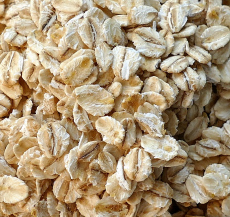
Flakes: thin or thick lamellae with cream–straw colour and high water-absorption capacity
Oat flour: variable particle size, off-white to light greyish colour
Moderate bulk density and high capacity to absorb water and aqueous liquids (milk, plant drinks, etc.)
Sensory and technological properties
Aroma: mild cereal character with sweet, slightly toasted and nutty notes, more pronounced after roasting or prolonged cooking.
Taste: gentle natural sweetness, soft and “comforting” flavour, particularly appreciated in porridge and baked goods.
Technological functionality:
β-glucans increase viscosity and gelling capacity, useful in porridges, beverages and dairy/plant-based products,
strong water-binding capacity, useful for structuring breakfast cereals, bars and plant-based burgers,
flour and flakes contribute soft, moist crumb in bakery (biscuits, muffins, sandwich bread).
Food applications
Rolled oats
traditional porridge, muesli, granola, overnight oats,
toppings for yoghurt, desserts, dairy and plant-based fermented products.
Oat flour
biscuits, pancakes, muffins, bars, bread and bakery products (often in blends),
thickener for soups, creams and sauces.
Oat bran
ingredient in high-fibre products, breakfast cereals, breads and bars.
Industrial preparations
oat-based beverages (“oat drinks”),
extruded snacks, breakfast cereals, baby foods and instant porridges.
Nutrition and health
Oats are a significant source of β-glucans; at appropriate intakes, this soluble fibre contributes to maintaining normal blood LDL-cholesterol levels as part of a varied, balanced diet.
Total fibre (soluble and insoluble) supports normal bowel function and promotes satiety, with potential benefits for weight management and post-prandial glycaemic response.
The lipid fraction, though moderate in quantity, is rich in unsaturated fatty acids and vitamin E, contributing to protection from oxidative stress.
Proteins, B-group vitamins and minerals support energy metabolism and normal function of the nervous system.
Polyphenols, particularly avenanthramides, are being studied for antioxidant and inflammation-modulating properties.
Portion note
Dry rolled oats: about 40–60 g per adult portion of porridge or muesli.
Oat bran: typical daily intakes of 10–30 g in foods or as an ingredient.
Oat drinks: 150–250 mL per serving, depending on the overall dietary context.
Allergens and intolerances
Oats contain avenins, structurally different from wheat gluten, but:
conventional oats are often contaminated with wheat/barley/rye and therefore not suitable for coeliac individuals,
only certified gluten-free oats are potentially appropriate for coeliac patients, under medical guidance and according to current regulations.
Specific oat allergies are possible, though less common.
Industrial products may contain other allergens due to cross-contamination; label checks are always necessary.
Storage and shelf-life
Whole grain and rolled oats:
store in a cool, dry place away from light and strong odours;
typical shelf-life 6–12 months; wholegrain products are more prone to lipid rancidity.
Oat flours:
more perishable than grain, with indicative shelf-life of 3–6 months,
require good protection from oxygen and heat.
Processed products (bars, biscuits, ready-to-eat cereals):
shelf-life depends on water activity, fat content and packaging.
Safety and regulatory
All cultivation and processing stages must follow GMP and HACCP principles, with particular attention to:
mycotoxins typical of cereals,
integrity and traceability in gluten-free supply chains.
Oat-based products bearing nutritional or health claims on β-glucans (cholesterol, glycaemia) must comply with quantitative requirements and conditions defined by legislation, including minimum daily intakes for specific claims.
Labelling
Clear sales name (e.g. “whole rolled oats”, “oat bran”, “oat flour”, “oat drink”).
Ingredient list in descending order by weight.
Allergen declaration for gluten-containing cereals, or “gluten-free” indication only if legal thresholds and process controls are respected.
Complete nutrition declaration.
Any fibre-, β-glucan-, cholesterol- or glycaemia-related claims only if fully compliant with applicable regulations.
Troubleshooting
Porridge too thick or “gluey”
Causes: too low water:oat ratio, prolonged cooking, very fine flakes.
Solutions: increase liquid, reduce cooking time, use thicker flakes or blends with other cereals.
Crumbly or dense baked goods
Causes: excessive replacement of gluten-rich flours with oats.
Solutions: blend with wheat or other strong flours, adjust hydration, use binders (egg, soluble fibres, hydrocolloids).
Rancid flavour
Causes: oxidation of the lipid fraction due to prolonged storage or exposure to heat/light.
Solutions: shorten storage time, use oxygen- and light-barrier packaging, store in cool conditions.
Sustainability and supply chain
Oats adapt well to acidic soils and moderate input systems, and are widely used in low-impact and organic farming.
Inclusion in crop rotations improves soil structure and helps reduce weed and disease pressure.
By-products (bran, screening residues, processing fines) can be valorised in feed, as fibre-rich ingredients or as biomass for energy/compost.
In milling and flaking plants, sustainable water and effluent management, with monitoring of BOD and COD, is important to minimise environmental impact.
Main INCI functions (cosmetics)
(Especially for “Avena sativa (Oat) Kernel Extract”, “Avena sativa (Oat) Kernel Flour”, “Colloidal Oatmeal”.)
skin conditioning – improves skin softness and comfort thanks to polysaccharides, lipids and colloidal components.
soothing – calming effect on sensitive or irritated skin, supported by β-glucans and avenanthramides.
emollient – helps maintain stratum corneum hydration and suppleness.
antioxidant – polyphenols and vitamin E help counteract oxidative stress and protect the formulation.
mild abrasive – in some scrubs using finely milled oats for very gentle exfoliation.
film forming / protective – colloidal oatmeal forms a thin protective film on the skin surface, useful in products for dry or irritated skin.
Conclusion
Oats (Avena sativa) are a cereal with particularly interesting nutritional, functional and cosmetic profiles. Their β-glucans, unsaturated fatty acids, avenanthramides and micronutrients make them a key ingredient in health-oriented foods and a valuable soothing active in dermocosmetic formulations. Versatile, relatively sustainable and rich in bioactive components, oats represent a high-value resource in modern food and cosmetic supply chains when cultivated, processed and labelled in full compliance with current regulations, including those relating to gluten.
Studies
The active components are hypolysaccharides of mucilosis (β-glucan), proteins (glutelin and avenin) and flavonoids. Consuming oatmeal regularly can help lower cholesterol levels and reduce the risk of heart disease (1) due to its soluble fiber content.
Blood Sugar Control: The beta-glucan in oatmeal helps slow the absorption of carbohydrates into the bloodstream, aiding in blood sugar control (2) and making it a good dietary choice for people with diabetes.
Digestive Health: The fiber in oatmeal supports digestive health, helping to prevent constipation, promote regular bowel movements and has an effect on gut microbial functions (3).
Versatile Ingredient: Oatmeal can be used in various culinary applications, from breakfast cereals to baking. It can be made into porridge, added to baked goods like cookies and bread, or used as a thickener in soups and stews.
Weight Management: The high fiber content in oatmeal can help you feel fuller longer, potentially aiding in weight management by reducing overall calorie intake.
Skin Health: Colloidal oatmeal (finely ground oatmeal) has properties that can soothe skin irritation and itching, making it a beneficial ingredient in skincare products for conditions like eczema and rashes (4).
More recent studies have shown the antioxidant (5) capacity of this cereal .

