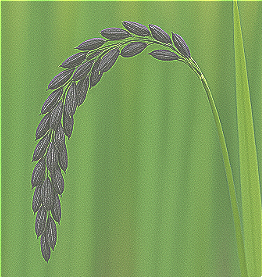
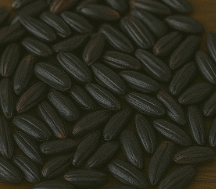
Black rice (Oryza sativa L., family Poaceae)
Description
Black rice is a pigmented rice belonging to the species Oryza sativa, characterized by a dark pericarp (from deep purple to black) due to the presence of anthocyanins in the outer layers of the grain. It is most commonly marketed in wholegrain or semi-wholegrain form, so the bran and germ are largely preserved. The grains are generally medium or long, slightly tapered in cross-section, with an opaque surface.
Structurally, black rice has a higher proportion of fibre and phenolic compounds than fully milled white rice, as a result of the outer layers still being present. Pigmentation mainly affects the pericarp, while the inner endosperm remains light-coloured. During cooking, this structure results in greater mechanical resistance of the grain and longer cooking times compared with refined rices. Partial release of pigments and starch into the cooking water gives the liquid a violet tint.
From a sensory point of view, black rice has a more pronounced aroma than many white rices, with notes reminiscent of nuts and, in some cases, light toasted nuances. The texture of the cooked grain is generally firm: the outer portion is structured, while the inner, once properly hydrated, remains compact but not hard. The kernels tend to remain well separated, with limited stickiness, although some surface creaminess develops due to starch.
In practical use, black rice usually requires prolonged cooking and a higher water-to-rice ratio than polished rice; a soaking step can help promote more uniform hydration. It is employed as a starchy base in dishes where structured, intact and visually distinctive grains are desired, in combination with vegetables, pulses, fish or white meats, and in formulations where the contribution of the bran fraction and external pigmentation is considered both a functional and distinguishing feature.
Botanical classification
Common name: black rice (pigmented wholegrain rice)
Clade: Angiosperms
Order: Poales
Family: Poaceae
Genus: Oryza
Species: Oryza sativa L.
Cultivation and growth conditions
Climate
Black rice belongs to the group of pigmented rices, often grown as wholegrain rice with high added value. It is suited to warm–temperate climates, with hot summers and good water availability throughout the crop cycle. It requires a growing season free from frost, with high temperatures during germination, tillering, stem elongation and flowering. The crop is sensitive to low temperatures, especially at germination and anthesis, which can reduce grain set and yield.
Exposure
Like other paddy rice types, it needs full sun to ensure adequate photosynthetic activity and good panicle development. Prolonged shading slows growth, weakens the canopy and reduces production of pigmented grains.
Soil
Black rice is grown on flat soils suitable for flooding, preferably clay or clay–loam soils with good organic matter content and high water-holding capacity. Very sandy, highly permeable soils are unfavourable, as they do not allow a stable water layer to be maintained. Optimal pH ranges from slightly acidic to neutral or mildly alkaline.
Irrigation
The crop is almost always managed under controlled flooding, maintaining a water layer over the soil for most of the vegetative cycle. Proper management of water levels in the different stages (pre-emergence, tillering, stem elongation, ripening) is essential to control weeds, reduce water stress and ensure uniform growth. Sudden reductions in water depth or unplanned dry periods can compromise yield and technological quality of the grain.
Temperature
Optimal temperatures for germination are above 12–13 °C, while for vegetative growth and flowering ideal values lie between 20 and 30 °C. Cold episodes at anthesis reduce fertilization and grain set; conversely, periods of intense heat combined with strong radiation and dry winds can cause grain scorching and quality defects (breakage, chalkiness).
Fertilization
Black rice requires balanced fertilization with nitrogen (N), phosphorus (P) and potassium (K):
Nitrogen, applied in split doses, promotes regular tillering without excessively increasing lodging risk;
Phosphorus supports early crop establishment and root system development;
Potassium improves lodging resistance and several aspects of grain quality.
Excess nitrogen increases the risk of fungal diseases (e.g. blast), favours lodging and can negatively affect yield stability.
Crop care
Main agronomic practices include:
weed control through crop rotation, possible false sowing, mechanical methods and/or selective chemical treatments;
accurate land levelling, essential for uniform flooding;
careful management of water levels to limit unwanted aquatic weeds and reduce crop stress;
monitoring of diseases (especially blast) and pests, adopting integrated pest management strategies;
selection of an appropriate sowing density to limit internal competition and lodging risk.
Good air circulation within the canopy helps maintain crop health and supports proper panicle formation.
Harvesting
Harvest takes place when grain ripening is uniform and grain moisture is suitable for mechanized combining. For black rice it is particularly important to avoid delayed harvesting, which can cause lodging, shattering and quality loss. After harvest, grain is dried to a moisture content appropriate for safe storage and subsequent processing.
Propagation
Black rice varieties are propagated using certified seed, produced in varietal seed multiplication plots to ensure genetic purity, uniform pigmented grain type and stable technological characteristics. On farm, paddy sowing (broadcast or in rows, on dry soil or under water) is carried out by adjusting the seed rate to target plant density, soil fertility and the agronomic technique adopted.
Caloric value (per 100 g)
Raw: ~350–365 kcal; carbohydrate ~72–76 g, protein ~7–9 g, fat ~2–3 g, fiber ~4–8 g.
Cooked (absorption or excess-water): ~110–140 kcal (hydration dependent).
Sodium naturally low.
Key constituents
Anthocyanins (e.g., cyanidin-3-glucoside, peonidin-3-glucoside): color and in-vitro antioxidant activity.
Dietary fiber, minerals (Fe, Zn, Mn) and B vitamins concentrated in bran.
Proteins (mainly glutelins; lysine limiting), starch with varietal amylose/amylopectin ratio.
Bran components: γ-oryzanol, tocopherols/tocotrienols higher than in white rice.
Production process
Dehulling (husk removal) while keeping bran/germ → screening/grading (whole/broken) → optional parboiling (soak–steam–dry) → packaging under GMP/HACCP.
Routine controls: moisture, varietal purity, metals/pesticides, broken percentage; for parboiled, verify firmness/yield.
Sensory and technological properties
Gelatinization ~68–78 °C; longer cook time than white rice.
Anthocyanins are sensitive to pH/oxygen/prolonged heat → potential fading and leaching into the cooking water.
Retrogradation upon cooling raises resistant starch (RS), aiding texture and glycemic response.
Parboiled variants: firmer, less sticky, better hot-hold performance.
Food uses
Rice salads, aromatic sides, bowls, one-dish meals, whole-grain risotti, stuffings, fusion cuisine; great for color contrasts (veg, seafood, legumes).
Water ratio: 1 : 2.0–2.5 (variety/method); soak 20–60 min to shorten cooking.
Colored cook water can be reused for sauces/stocks.
Nutrition and health
Whole-grain with more fiber and micronutrients than white rice; GI typically medium, reducible via RS, parboiling, cooling, and dish composition.
Naturally gluten-free (fit for gluten-free diets with cross-contact controls).
Inorganic arsenic may be higher than white (bran holds more). Rinsing and excess-water cooking + draining can lower part of it; prefer low-As origins.
Lipid profile
Quality and specifications (typical topics)
Moisture (~13–14%), broken %, kernel length/shape, color (Lab*), varietal purity.
Total anthocyanins (spectro/HPLC), apparent amylose, pasting/viscosity, cooking yield.
Pesticides/metals (focus As), mycotoxins (proper storage), foreign matter.
For ready-to-eat: compliant microbiology and pH/aw.
Storage and shelf-life
Store cool/dry, away from odors, light, and pests; keep well-sealed or under controlled atmosphere.
Typical shelf-life 18–24 months; apply FIFO.
Cooked rice is perishable: rapidly cool and keep <4 °C to limit Bacillus cereus.
Allergens and safety
Rice is not a major EU allergen; individual sensitivities rare.
Risk of gluten cross-contact in mixed mills/lines—verify certifications.
Manage CCP for foreign bodies, storage moisture, hygiene, and packaging integrity.
INCI functions in cosmetics
Related materials: Oryza Sativa (Rice) Bran Extract/Oil (from pigmented bran: γ-oryzanol, tocopherols), Oryza Sativa (Rice) Starch, Hydrolyzed Rice Protein; roles antioxidant, emollient/conditioning, absorbent.
Troubleshooting
Excess cook time/firm core: pre-soak, increase water, or use pressure cooker.
Color fading: reduce agitation; cook by absorption with lid; lightly acidify water (within sensory limits).
Flat flavor: light toasting, cook in stock, finish with rice oil/olive oil and herbs.
Stickiness: rinse until water runs nearly clear; adjust water ratio; choose higher-amylose varieties.
Rancid notes in storage: improve barrier and rotation; avoid high temperatures.
Sustainability and supply chain
Flooded paddies: manage water use and CH₄ emissions; adopt AWD (alternate wetting and drying) and efficient varieties to reduce impact.
Upcycling: broken rice → rice flour; bran/germ → rice oil.
Treat effluents to BOD/COD targets; use recyclable packaging; full traceability and audits under GMP/HACCP.
Conclusion
Black rice combines culinary value (nutty flavor, striking color) with whole-grain functionality. Varietal choice, pigment management (time, pH, method), and tight quality control deliver consistent performance in home and professional kitchens.
Mini-glossary
GI — Glycemic index: post-meal glucose response; medium for black rice, reducible via RS, parboiling, cooling, and meal composition.
RS — Resistant starch: starch fraction not digested; increases after cooling/storage of cooked rice.
SFA — Saturated fatty acids: excess may raise LDL; low in black rice.
MUFA — Monounsaturated fatty acids (e.g., oleic): generally favorable/neutral for blood lipids.
PUFA — Polyunsaturated fatty acids (n-6/n-3): beneficial when balanced; susceptible to oxidation.
TFA — Trans fatty acids: avoid industrial TFA; not characteristic of rice.
ALA — Alpha-linolenic acid (n-3): precursor to EPA/DHA; present only in traces in cereals.
EPA/DHA — Long-chain n-3 fatty acids: typical of fish; absent in rice.
MCT — Medium-chain triglycerides: not typical of rice.
GMP/HACCP — Good Manufacturing Practice / Hazard Analysis and Critical Control Points: hygiene and preventive-safety frameworks with defined CCP.
CCP — Critical control point: step where a control prevents/reduces a hazard.
BOD/COD — Biochemical/Chemical oxygen demand: wastewater impact indicators.
FIFO — First in, first out: inventory rotation using older lots first.
Studies
The colour of cereal grains is determined by the pigmentation of certain phytochemicals. In the rice ( Oryza sativa ), most of the varieties have white grains, but some have brown, red or black grains. The colour of red rice is due to the deposition and oxidative polymerization of proanthocyanidins in the pericarp, while the colour of black rice (Oryza sativa var japonica) is due to the deposition of anthocyanins (1).
Black rice extracts demonstrated a protective effect against oxidative stress (2), relieved liver steatosis induced in laboratory animals (3), using in vitro and in vivo model systems, revealed antiangiogenic effects of anthocyanins (4) also on retina damage (5).
Rice is a grass and one of the most common and oldest foods. Just think that its history dates back 7,000 years.
It is harvested from September to October from a small plant called Oryza, which is fed by flooded soil.
The genus Oryza has many species, here some of the best known:
- Oryza sativa, white rice grown all over the world
- Oryza glaberrima, cultivated in Africa
- Oryza officinalis, cultivated in Vietnam
- Oryza australiensis, cultivated in Australia
- Oryza rhizomatis
- etc.
Italy is the first European producer with crops in the provinces of Vercelli, Novara, Pavia, Biella, Milan, Lodi and others.
The rice is composed of the grain and its husk and husk wrapper.
Once harvested, it is not edible and must be worked to remove the husk and other parts.
After the processing that is called dehusking you get the
Wholemeal rice, with a subsequent refining process, is used to produce the
The varieties of rice are numerous, over 100,000 and each has different taste and cooking times.
In general, rice contains more than 100 bioactive substances mainly in its bran layer including phytic acid, isovitexin, gamma-oryzanol, phytosterols, octacosanol, squalene, gamma-aminobutyric acid, tocopherol and derived from tocotrienol (6), antioxidants.
It does not contain beta carotene (provitamin A) and has a very low iron and zinc content (7).
In rice bran there are bioactive phytochemicals that exert protective actions against cancer that involve the metabolism of the host and the intestinal microbiome. A diet based on rice bran has shown positive effects in reducing the risk of colon cancer (8).
Rice studies
Allergies: Be careful, rice contains a certain amount of lactose.
The most common types of rice used are :
- Arborio : large grains, the most common in Italy
- Ribe : elongated grains.
- Thaibonnet : medium, elongated and fine grains
- Rome : large grains
- Basmati : thin and elongated grains. Grown in Pakistan and India
- Carnaroli : large grains
- Vialone nano : large, round grains
- Original or Balilla : small round grains
- Jasmine : fine grains of Asian origin
- Red : red, small and narrow grains
- Wild : Zizania palustris
- Baldo : large, shiny grains
- Ganges : from India
- Footboard : releases a lot of starch
- Venus : from China and the Po Valley
- Patna : from Thailand. Long and narrow grains
- Sant'Andrea : Thick and long grains. Releases a lot of starch
Rice viruses and pests: Pseudomonas aeruginosa, Rice yellow mottle virus, Magnaporthe oryzae , Rice Tungro Bacilliform Virus , Lissorhoptrus oryzophilus Kuschel, Oebalus pugnax, Xanthomonas oryzae
References________________________________
(1) Tetsuo Oikawa, Hiroaki Maeda, Taichi Oguchi, Takuya Yamaguchi, Noriko Tanabe, Kaworu Ebana, Masahiro Yano, Takeshi Ebitani, Takeshi Izawa The Birth of a Black Rice Gene and Its Local Spread by Introgression Plant Cell. 2015 Sep; 27(9): 2401–2414. Published online 2015 Sep 11. doi: 10.1105/tpc.15.00310
(2) Seon-Mi Lee, Youngmin Choi, Jeehye Sung, Younghwa Kim, Heon-Sang Jeong, Junsoo Lee Protective Effects of Black Rice Extracts on Oxidative Stress Induced by tert-Butyl Hydroperoxide in HepG2 Cells Prev Nutr Food Sci. 2014 Dec; 19(4): 348–352. Published online 2014 Dec 31. doi: 10.3746/pnf.2014.19.4.348
Abstract. Black rice contains many biologically active compounds. The aim of this study was to investigate the protective effects of black rice extracts (whole grain extract, WGE and rice bran extract, RBE) on tert-butyl hydroperoxide (TBHP)-induced oxidative injury in HepG2 cells. Cellular reactive oxygen species (ROS), antioxidant enzyme activities, malondialdehyde (MDA) and glutathione (GSH) concentrations were evaluated as biomarkers of cellular oxidative status. Cells pretreated with 50 and 100 μg/mL of WGE or RBE were more resistant to oxidative stress in a dose-dependent manner. The highest WGE and BRE concentrations enhanced GSH concentrations and modulated antioxidant enzyme activities (glutathione reductase, glutathione-S-transferase, catalase, and superoxide dismutase) compared to TBHP-treated cells. Cells treated with RBE showed higher protective effect compared to cells treated with WGE against oxidative insult. Black rice extracts attenuated oxidative insult by inhibiting cellular ROS and MDA increase and by modulating antioxidant enzyme activities in HepG2 cells.
Yoon J, Ham H, Sung J, Kim Y, Choi Y, Lee JS, Jeong HS, Lee J, Kim D. Black rice extract protected HepG2 cells from oxidative stress-induced cell death via ERK1/2 and Akt activation. Nutr Res Pract. 2014 Apr;8(2):125-31. doi: 10.4162/nrp.2014.8.2.125.
Abstract. Background/objectives: The objective of this study was to evaluate the protective effect of black rice extract (BRE) on tert-butyl hydroperoxide (TBHP)-induced oxidative injury in HepG2 cells. Materials/methods: Methanolic extract from black rice was evaluated for the protective effect on TBHP-induced oxidative injury in HepG2 cells. Several biomarkers that modulate cell survival and death including reactive oxygen species (ROS), caspase-3 activity, and related cellular kinases were determined. Results: TBHP induced cell death and apoptosis by a rapid increase in ROS generation and caspase-3 activity. Moreover, TBHP-induced oxidative stress resulted in a transient ERK1/2 activation and a sustained increase of JNK1/2 activation. While, BRE pretreatment protects the cells against oxidative stress by reducing cell death, caspase-3 activity, and ROS generation and also by preventing ERKs deactivation and the prolonged JNKs activation. Moreover, pretreatment of BRE increased the activation of ERKs and Akt which are pro-survival signal proteins. However, this effect was blunted in the presence of ERKs and Akt inhibitors. Conclusions: These results suggest that activation of ERKs and Akt pathway might be involved in the cytoprotective effect of BRE against oxidative stress. Our findings provide new insights into the cytoprotective effects and its possible mechanism of black rice against oxidative stress.
(3) Hwan-Hee Jang, Mi-Young Park, Heon-Woong Kim, Young-Min Lee, Kyung-A Hwang, Jae-Hak Park, Dong-Sik Park, Oran Kwon Black rice (Oryza sativa L.) extract attenuates hepatic steatosis in C57BL/6 J mice fed a high-fat diet via fatty acid oxidation
Nutr Metab (Lond) 2012; 9: 27. Published online 2012 Mar 30. doi: 10.1186/1743-7075-9-27
Abstract. Background: Two major risk factors for the onset of fatty liver disease are excessive alcohol intake and obesity, the latter being associated with non-alcoholic fatty liver disease (NAFLD). The aim of this study was to examine the effects of black rice extract (BRE) on hepatic steatosis and insulin resistance in high-fat diet-fed mice, providing a model of NAFLD. Methods: Twenty-four mice were randomly divided into three groups (n = 8 in each group): normal fat diet (ND), high fat diet (HF), and high fat diet supplemented with 1% (w/w) BRE (HF +1% BRE). The experimental diets were fed for seven weeks. Results: A HF induced hepatic steatosis with significant increases in the serum levels of free fatty acids (FFAs), triglyceride (TG), total cholesterol (TC), and insulin. By contrast, supplementary BRE (10 g/kg of diet) included in the HF alleviated hepatic steatosis and significantly decreased serum TG and TC levels (p < 0.01 for both). Dietary BRE also increased expression of fatty acid metabolism-related genes, including carnitine palmitoyltransferase (CPT1A), acyl-CoA oxidase (ACO), cytochrome P450 (CYP4A10), and peroxisome proliferator activated receptor (PPAR)-α (p < 0.05 for all). Conclusions: Dietary BRE supplementation improved serum lipid profiles and significantly enhanced mRNA expression levels of fatty acid metabolism-related genes, primarily via β-oxidation and ω-oxidation in the liver. Taken together, these findings suggest that a BRE-supplemented diet could be useful in reducing the risks of hepatic steatosis and related disorders, including hyperlipidemia and hyperglycemia.
(4) Hui C., Bin Y., Xiaoping Y., et al. Anticancer activities of an anthocyanin-rich extract from black rice against breast cancer cells in vitro and in vivo. Nutrition and Cancer. 2010;62(8):1128–1136. doi: 10.1080/01635581.2010.494821
Abstract. Anthocyanins widely present in human diet and have a variety of health effects. This study investigates the anticancer effects of an anthocyanin-rich extract from black rice (AEBR) on breast cancer cells in vitro and in vivo. AEBR reduced the viability of breast cancer cell lines MCF-7 (ER(+), HER2/neu(-)), MDA-MB-231 (ER(-), HER2/neu(-)), and MDA-MB-453 (ER(-), HER2/neu(+)) and induced apoptosis in MDA-MB-453 cells via the intrinsic pathway in vitro by activating caspase cascade, cleaving poly (ADP-ribose) polymerase (PARP), depolarizing mitochondrial membrane potential, and releasing cytochrome C. Oral administration of AEBR (100 mg/kg/day) to BALB/c nude mice bearing MDA-MB-453 cell xenografts significantly suppressed tumor growth and angiogenesis by suppressing the expression of angiogenesis factors MMP-9, MMP-2, and uPA in tumor tissue. Altogether, this study suggests the anticancer effects of AEBR against human breast cancer cells in vitro and in vivo by inducing apoptosis and suppressing angiogenesis.
(5) Hao Jia, Wei Chen, Xiaoping Yu, Xiuhua Wu, Shuai Li, Hong Liu, Jiru Liao, Weihua Liu, Mantian Mi, Longjian Liu, Daomei Cheng Black rice anthocyanidins prevent retinal photochemical damage via involvement of the AP-1/NF-κB/Caspase-1 pathway in Sprague-Dawley Rats
J Vet Sci. 2013 Sep; 14(3): 345–353. Published online 2013 Sep 25. doi: 10.4142/jvs.2013.14.3.345
Abstract. The effects of black rice anthocyanidins (BRACs) on retinal damage induced by photochemical stress are not well known. In the present study, Sprague-Dawley rats were fed AIN-93M for 1 week, after which 80 rats were randomly divided into two groups and treated with (n = 40) or without BRACs (n = 40) for 15 days, respectively. After treatment, both groups were exposed to fluorescent light (3,000 ± 200 lux; 25°C), and the protective effect of dietary BRACs were evaluated afterwards. Our results showed that dietary BRACs effectively prevented retinal photochemical damage and inhibited the retinal cells apoptosis induced by fluorescent light (p < 0.05). Moreover, dietary BRACs inhibited expression of AP-1 (c-fos/c-jun subunits), up-regulated NF-κB (p65) expression and phosphorylation of IκB-α, and decreased Caspase-1 expression (p < 0.05). These results suggest that BRACs improve retinal damage produced by photochemical stress in rats via AP-1/NF-κB/Caspase-1 apoptotic mechanisms.
(6) Bidlack W. Phytochemicals as bioacive agents. Lancaster, Basel, Switzerland: Technomic Publishing Co., Inc; 1999. pp. 25–36.
(7) Singh SP, Gruissem W, Bhullar NK. Single genetic locus improvement of iron, zinc and β-carotene content in rice grains. Sci Rep. 2017 Jul 31;7(1):6883. doi:10.1038/s41598-017-07198-5.
Abstract. Nearly half of the world's population obtains its daily calories from rice grains, which lack or have insufficient levels of essential micronutrients. The deficiency of micronutrients vital for normal growth is a global health problem, and iron, zinc and vitamin A deficiencies are the most prevalent ones. We developed rice lines expressing Arabidopsis NICOTIANAMINE SYNTHASE 1 (AtNAS1), bean FERRITIN (PvFERRITIN), bacterial CAROTENE DESATURASE (CRTI) and maize PHYTOENE SYNTHASE (ZmPSY) in a single genetic locus in order to increase iron, zinc and β-carotene content in the rice endosperm. NAS catalyzes the synthesis of nicotianamine (NA), which is a precursor of deoxymugeneic acid (DMA) iron and zinc chelators, and also chelate iron and zinc for long distance transport. FERRITIN provides efficient storage of up to 4500 iron ions. PSY catalyzes the conversion of GGDP to phytoene, and CRTI performs the function of desaturases required for the synthesis of β-carotene from phytoene. All transgenic rice lines have significantly increased β-carotene, iron, and zinc content in the polished rice grains. Our results establish a proof-of-concept for multi-nutrient enrichment of rice grains from a single genetic locus, thus offering a sustainable and effective approach to address different micronutrient deficiencies at once.
(8) Zarei I, Oppel RC, Borresen EC, Brown RJ, Ryan