



Red Rice
(varieties of Oryza sativa L. with red pericarp; family Poaceae )
Description
• Wholegrain rice with a red pericarp (phenolic pigmentation of the bran), long- or medium-grain, with a nutty flavor and pleasant chew.
• Color arises mainly from proanthocyanidins/catechins (and, in some varieties, anthocyanins).
• Sold as brown (whole), parboiled, or lightly milled; typical cook time 25–40 minutes (water ratio 2–2.5 : 1).
• Naturally gluten-free (mind potential cross-contamination along the supply chain).
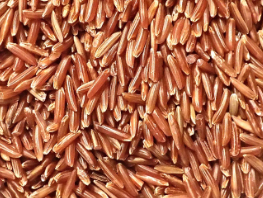
Common name: Red rice
Kingdom: Plantae
Clade: Angiosperms
Clade: Monocots
Order: Poales
Family: Poaceae
Genus: Oryza
Species: Oryza sativa L.
Variety: Variety of Oryza sativa L. with red pericarp
Cultivation and growing conditions
Climate: Prefers warm, humid climates; needs a long growing season and high temperatures during germination and ripening.
Exposure: Requires full sun throughout the whole crop cycle.
Soil: Grows well in clay or loam soils capable of retaining water; tolerates slightly acidic to neutral pH.
Watering: Traditionally grown in flooded paddies; needs a constant water supply for most growth stages, with a gradual reduction towards ripening.
Temperature: Optimal range is 20–30 °C; temperatures below 15 °C slow down or stop growth.
Fertilization: Requires good availability of nitrogen, phosphorus and potassium; excess nitrogen should be avoided as it can increase lodging and disease susceptibility.
Crop management: Weed control is essential, especially in early stages; careful water management is needed to avoid both water stress and excessive flooding.
Crop rotation: Alternating with dryland crops is useful to improve soil structure and reduce typical paddy pathogens.
Propagation: By seed, through direct seeding in water or in rows on dry soil, depending on the chosen cultivation system.
Indicative Nutrition Values (typical ranges; cultivar/origin vary — per 100 g raw | per 100 g cooked)
• Energy: 360–370 kcal | 110–130 kcal
• Total carbohydrates: 75–78 g | 23–28 g (starch predominant)
• Sugars: ≤1 g | ≤0.5 g
• Fibre: 3–4 g | 1–2 g
• Protein: 7–9 g | 2–3 g (lysine-limited—pair with legumes)
• Fat: 2–3 g | 0.5–1.0 g
– of which SFA (saturated fatty acids; keep low to support LDL control) ~0.5–0.7 g | ~0.2 g
– MUFA (monounsaturates; favorable when replacing saturates) ~0.9–1.2 g | ~0.3 g
– PUFA (polyunsaturates, mostly n-6; traces of ALA n-3) ~0.8–1.1 g | ~0.3 g
– TFA natural: none; MCT: not relevant
• Indicative minerals (raw): potassium 200–300 mg; magnesium 100–150 mg; phosphorus 250–350 mg; manganese 2–4 mg; iron 1–3 mg
• Vitamins: B-group (thiamine, niacin) in the bran; vitamin E/tocotrienols in the germ (sensitive to storage and milling)
Key Constituents
• Starch (amylopectin/amylose; amylose level guides firmness after cooking).
• Dietary fibre (insoluble and pectic) and micronutrients concentrated in bran/germ.
• Pigment phenolics: proanthocyanidins, catechins, sometimes anthocyanins; plus γ-oryzanol, tocopherols/tocotrienols, phytosterols.
• Minerals: Mg, P, Mn, Fe; traces of Zn, Cu, Se (soil-dependent).
• Rice proteins (prolamins/glutelin), limited in lysine.
• Grain lipids (2–3%): mainly oleic (mono) and linoleic (poly) acids; palmitic as the main saturated.
Production Process
• Cultivation & harvest: varietal selection (red pericarp), water and plant-health management; harvest at correct moisture.
• Dehusking (husk removal) and light milling to retain the pericarp; optional parboiling to improve yield and firmness.
• Optical sorting for color uniformity and removal of defective/broken kernels; drying to safe moisture (~12–13%).
• Packaging: vacuum or protective atmosphere to slow bran-lipid rancidity.
Sensory And Technological Properties
• Color: red-brown that remains after cooking; firm, pleasantly al dente kernel.
• Aroma/flavor: nutty, toasted cereal, light earthiness.
• Glycaemic behavior: typically lower than white rice (fibre + phenolics), but varies with amylose level and parboiling.
• Cooking behavior: good stand for salads/pilaf; moderate water uptake; less stickiness than high-amylopectin rices.
Food Applications
• Sides, rice salads, pilaf, bowls, one-dish meals with legumes.
• Multigrain mixes, stuffings, veggie burgers (as structurant).
• Red-rice flour for gluten-free bakery (bread/crackers/cookies) and extruded pasta; natural coloration.
• Traditional fermentations (rice vinegars) and modern uses (plant beverages).
Nutrition & Health
Red rice is a whole grain: it retains bran and germ, therefore fibre, micronutrients, and bioactives that are largely removed in white rice. Fibre supports satiety and, together with amylose profile and pigment phenolics, tends to moderate the glycaemic response versus polished rice. Pairing red rice with legumes, vegetables, and a modest amount of “good” fats further improves meal glycaemic load and completes the amino-acid profile (covering the lysine limitation).
The fat content is low but of good quality (mono- and polyunsaturates predominate; saturates are contained), which can support LDL-cholesterol management when red rice replaces refined cereals cooked with saturated-fat-rich dressings. Compounds such as γ-oryzanol, tocopherols/tocotrienols, and phytosterols add antioxidant activity and may help maintain normal cholesterolaemia within a balanced diet. Long-chain n-3 fatty acids (EPA, DHA) are absent in rice; any ALA present is trace and does not replace marine sources.
The mineral content (magnesium, manganese, phosphorus, iron) and B-vitamins are valuable in diversified diets; however, some nutrients may decline with long storage or excess water cooking (followed by draining). Soaking then boiling in excess water and draining can reduce inorganic arsenic (an agricultural characteristic of rice), at the cost of some water-soluble minerals—rotate cooking methods and vary grains for optimal nutrition and safety.
For people with coeliac disease, red rice is naturally gluten-free, but supply-chain controls are needed to avoid cross-contact (the “gluten-free” claim requires <20 ppm verification). As with all staples, portioning matters: a typical cooked serving of 150–210 g (about 50–70 g raw) fits well in Mediterranean-style eating, especially alongside vegetables and lean or plant proteins.
Bottom line: red rice contains useful fibre and phenolics, offers slower-to-moderate energy release versus white rice, and brings sensory and color variety to the plate; key attentions are cooking method, portion size, and grain rotation for best nutritional and safety outcomes.
Portion Note: 50–70 g raw (≈150–210 g cooked) is a practical reference for a balanced meal.
Quality And Specifications (Typical Topics)
• Moisture ≤13%; physical defects (broken, chalky), varietal purity, absence of pests/foreign matter.
• Color uniformity of pericarp; % stained/whitish kernels within spec.
• Composition: amylose/amylopectin ratio; ash; water-absorption index; gelatinisation time.
• Contaminants: inorganic arsenic within legal limits; heavy metals; mycotoxins where applicable.
• Residues: pesticides ≤ MRL; non-GMO where required.
• Microbiology: dry-grain criteria; no active infestation.
Storage And Shelf-Life
• Store cool, dry, and away from light/odours; reseal promptly after opening.
• Protective atmosphere/vacuum helps limit rancidity (bran-lipid oxidation/lipase).
• Typical shelf-life: 12–18 months (shorter for milled flour). Cooked rice keeps 2–3 days refrigerated.
Safety And Regulatory
• Names: “red rice” / “red brown rice” / “red parboiled rice,” as applicable.
• Allergens: inherently gluten-free; “gluten-free” claim only with cross-contact control (<20 ppm).
• Contaminants: jurisdictional limits for arsenic in rice and derivatives; plant compliance under GMP/HACCP.
• Nutrition claims: possible on fibre or minerals if thresholds are met; avoid non-authorised health claims.
Labeling
• Name of the food, origin (country of cultivation/processing as required), lot, date mark, cooking instructions.
• Optional cooking method to reduce arsenic (soak + boil in excess water + drain).
• “Gluten-free” if certified; any allergen advisory for cross-contact, if applicable.
Troubleshooting
• Hard kernels after cooking: insufficient water or time → increase hydration/soak, extend cook or use parboiled.
• Astringent/bitterness: high phenolics in bran or very hard water → rinse/soak, cook in soft water.
• Rancid odour in raw grain: bran oxidation → choose fresh lots, barrier packs, cool storage.
• Excess stickiness: over-stirring or high amylopectin → limit agitation, rinse, use correct water ratio.
Sustainability And Supply Chain
• Irrigation/field: practices like AWD (alternate wetting & drying) can reduce methane vs continuous flooding.
• By-products: bran to rice oil (rich in γ-oryzanol), feed, or bioenergy.
• Plant: heat/air recovery, CIP water reuse, wastewater management toward BOD/COD targets; recyclable packaging.
• Systems: supplier audits, robust traceability, preventive controls under GMP/HACCP.
Conclusion
Red rice is a versatile and colorful whole grain that contributes fibre, phenolics, and micronutrients, with typically more favorable glycaemic behavior than white rice. Culinary and nutritional success depends on varietal choice, cooking, and portioning, alongside proper storage and diligent supply-chain care.
INCI Functions (Cosmetics)
• Oryza Sativa (Rice) Extract / Bran Extract: skin-conditioning, antioxidant; may support barrier function (formulation-dependent).
• Oryza Sativa (Rice) Powder: absorbent/mattifying; mild mechanical exfoliation in scrubs.
Mini-Glossary
• SFA: Saturated fatty acids—excess intake can raise LDL-cholesterol; keep low overall.
• MUFA: Monounsaturated fatty acids—beneficial when replacing saturates.
• PUFA: Polyunsaturated fatty acids—include n-6/n-3 families; helpful when balanced and protected from oxidation.
• ALA: Alpha-linolenic acid (n-3, essential); present only in traces in rice.
• EPA/DHA: Long-chain n-3 fatty acids typical of fish/algae; absent in rice.
• TFA: Trans fatty acids; naturally absent in intact grains.
• MCT: Medium-chain triglycerides; not relevant in rice.
• γ-Oryzanol: Mixture of ferulic-acid esters with sterols/triterpene alcohols from rice bran; antioxidant activity.
• Proanthocyanidins: Condensed polyphenols responsible for red hue and mild astringency.
• MRL: Maximum residue limits for pesticides on foods.
• GMP/HACCP: Good manufacturing practice / hazard analysis and critical control points—preventive hygiene systems.
• BOD/COD: Biochemical/chemical oxygen demand—wastewater impact metrics guiding treatment.
Studies
The colour of the rice grain is determined by the pigmentation of certain phytochemicals. In the rice ( Oryza sativa ), most of the varieties have white grains, but some have brown, red or black grains. The colour of red rice is due to the deposition and oxidative polymerization of proanthocyanidins in the pericarp, while the colour of black rice is due to the deposition of anthocyanins (1).
Red or pigmented rice (Oryza longistaminata and Oryza sativa var Selvatica) is a perennial species of wild rice originating in Africa and containing anthocyanins and proanthocyanidins concentrated in the bran layer.
It also contains flavonoids derived from vitamin E, gamma oryzanol, proanthocyanidins and anthocyanins.
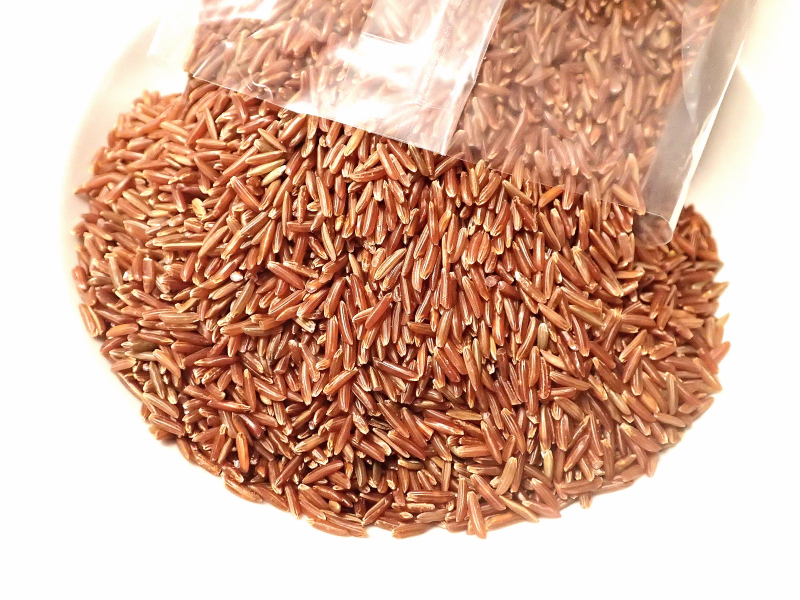
Very resistant to pests and diseases, until recently it was considered a weed and was frequently removed.
Rice is a grass and one of the most common and oldest foods. Just think that its history dates back 7,000 years.
It is harvested from September to October from a small plant called Oryza, which is fed by flooded soil.
The genus Oryza has many species, here some of the best known:
- Oryza sativa, white rice grown all over the world
- Oryza glaberrima, cultivated in Africa
- Oryza officinalis, cultivated in Vietnam
- Oryza australiensis, cultivated in Australia
- Oryza rhizomatis
- etc.
Italy is the first European producer with crops in the provinces of Vercelli, Novara, Pavia, Biella, Milan, Lodi and others.
The rice is composed of the grain and its husk and husk wrapper.
Once harvested, it is not edible and must be worked to remove the husk and other parts.
After the processing that is called dehusking you get the
- brown rice, edible
Wholemeal rice, with a subsequent refining process, is used to produce the
- refined rice, edible
The varieties of rice are numerous, over 100,000 and each has different taste and cooking times.
In general, rice contains more than 100 bioactive substances mainly in its bran layer including phytic acid, isovitexin, gamma-oryzanol, phytosterols, octacosanol, squalene, gamma-aminobutyric acid, tocopherol and derived from tocotrienol (2), antioxidants.
It does not contain beta carotene (provitamin A) and has a very low iron and zinc content (3).
In rice bran there are bioactive phytochemicals that exert protective actions against cancer that involve the metabolism of the host and the intestinal microbiome. A diet based on rice bran has shown positive effects in reducing the risk of colon cancer (4).
Allergies: Be careful, rice contains a certain amount of lactose, a component that can give intolerance.
The most common types of rice used are :
- Arborio : large grains, the most common in Italy
- Ribe : elongated grains.
- Thaibonnet : medium, elongated and fine grains
- Rome : large grains
- Basmati : thin and elongated grains. Grown in Pakistan and India
- Carnaroli : large grains
- Vialone nano : large, round grains
- Original or Balilla : small round grains
- Jasmine : fine grains of Asian origin
- Red : red, small and narrow grains
- Wild : Zizania palustris
- Baldo : large, shiny grains
- Ganges : from India
- Footboard : releases a lot of starch
- Venus : from China and the Po Valley
- Patna : from Thailand. Long and narrow grains
- Sant'Andrea : Thick and long grains. Releases a lot of starch
Rice viruses and pests: Pseudomonas aeruginosa, Rice yellow mottle virus, Magnaporthe oryzae , Rice Tungro Bacilliform Virus , Lissorhoptrus oryzophilus Kuschel, Oebalus pugnax, Xanthomonas oryzae

