



PEG-30 Glyceryl stearate is a chemical compound, glycerol ester of stearic acid. It is produced industrially from vegetable oils such as palm, rapeseed, sunflower and stearic acid.
The name describes the structure of the molecule.
- "PEG-30" refers to the fact that on average, there are 30 units of ethylene glycol in the molecule.
- "Glyceryl" refers to the glycerol part of the molecule, which is a simple polyol compound.
- "Stearate" refers to the stearic acid part of the molecule, which is a long-chain fatty acid.
The synthesis process takes place in several stages:
- Step 1: Preparation of raw materials: polyethylene glycol (PEG), glycerol and stearic acid.
- Step 2: Esterification. Glycerol and stearic acid react together in the presence of a catalyst to form glyceryl stearate.
- Step 3: Pegylation. Glyceryl stearate is reacted with PEG in a process known as pegylation to form PEG-30 Glyceryl Stearate.
- Step 4: Purification. The resulting PEG-30 Glyceryl Stearate is purified to remove any unreacted glycerol, stearic acid and PEG. This can involve various techniques, including distillation and filtration.
- Step 5: Drying. PEG-30 Glyceryl Stearate Purified is then dried to remove any residual solvent.
It appears in the form of a fine, white powder or in small pellets with a white to slightly yellow colour.

What it is used for and where
Food
Increases consistency in baked goods, gives uniformity to ice cream and whipped cream. Non-stick agent in baking.
Cosmetics
Surfactant - Cleansing agent. Cosmetic products used to cleanse the skin utilise the surface-active action that produces a lowering of the surface tension of the stratum corneum, facilitating the removal of dirt and impurities.
Surfactant - Emulsifying agent. Emulsions are thermodynamically unstable and are used to soothe or soften the skin and emulsify, so they need a specific, stabilising ingredient. This ingredient forms a film, lowers the surface tension and makes two immiscible liquids miscible. A very important factor affecting the stability of the emulsion is the amount of the emulsifying agent. Emulsifiers have the property of reducing the oil/water or water/oil interfacial tension, improving the stability of the emulsion and also directly influencing the stability, sensory properties and surface tension of sunscreens by modulating the filmometric performance.
Moisturiser, stabiliser and emulsifier. Glyceryl stearate together with PEG-75 stearate significantly influenced the consistency and thixotropic behaviour, although to a lesser extent than methyl glucose sesquistearate (1).
In this study on optimising the formulation of oil/water cosmetic emulsions, Glyceryl stearate was found to be the dominant co-emulsifier influencing the properties of emulsions. Interactions between Glyceryl stearate and other co-emulsifiers also significantly influenced the properties of emulsions (2).
With regard to safety, emulsifiers are considered mild irritants.
Pharmaceuticals
Solidifying agent and release control agent in pharmaceuticals
Other uses
Resins. Lubricant
Plastics. Anti-fogging and anti-static agent
Safety
Since the PEG (Polyethylene glycol) family is very numerous and can be found in cosmetic, industrial, pharmaceutical, medical and other products, we need to make an introductory statement on the subject, which is rather complex from a safety point of view because these products not only come into contact with the skin, but, as in the case of medical products, are ingested.
PEGs (polyethylene glycol) polymerise condensed ethylene oxide and water and are referred to as polyethylene glycols, but are actually complex chemical components, polymers bonded together. For example, plastic is polyethylene and has a hard consistency, while polyethylene combined with glycol forms a liquid. PEGylation is produced not only as etherification, but also as transesterification, which is the transformation of an alcohol by an ester.
The number appearing after the abbreviation PEG represents the molecular weight and the higher this number is, the less it penetrates the skin.
Safety.
The term 'eth' refers to the ethoxylation reaction with ethylene oxide after which residues of ethylene oxide and 1,4-dioxane, chemical compounds considered carcinogenic, may remain. The degree of safety therefore depends on the degree of purity of the compound obtained. At present, no manufacturer is known to provide this information on the label.
The most relevant studies and their abstracts have been selected to explore this in more depth:
Typical commercial product characteristics PEG-30 Glyceryl stearate
| Appearance | White powder |
| Boiling Point | 476.9±25.0°C at 760 mmHg |
| Melting Point | 78-81ºC |
| Flash Point | 151.9±16.7°C |
| Density | 1.0±0.1 g/cm3 |
| Vapor Pressure | 0.0±2.7 mmHg at 25°C |
| Refraction Index | 1.469 |
| PSA | 66.76000 |
| LogP | 7.23 |
| Monogliceride | ≥90 |
| Acid value as Stearic Acid | ≤2.5% |
| Glycerin free | ≤1.0% |
| Iodine content | ≤3.0 g/100g |
| Solidification point | 60~70°C |
| Heavy metals as Pb | ≤5 mg/kg |
| Total plate count | ≤1000 CFU/g |
| Yeast and mould | ≤100 CFU/g |
 |  |
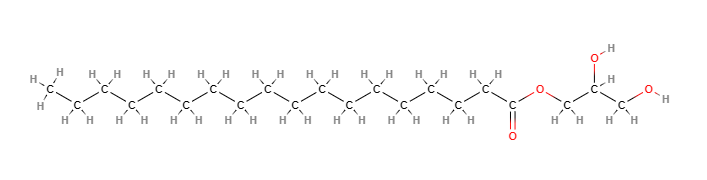 | 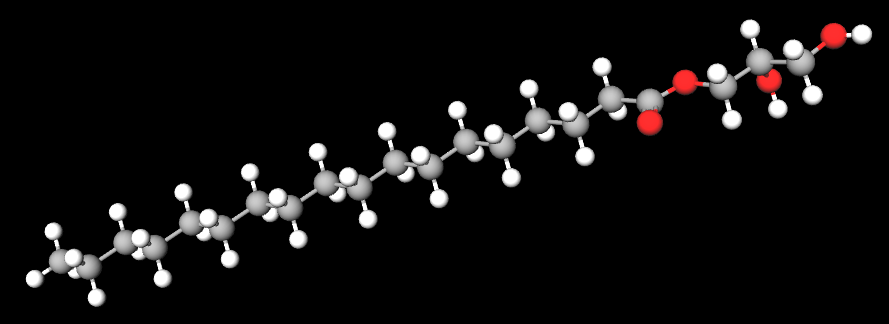 |
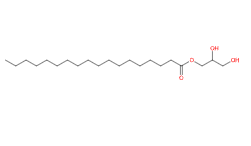
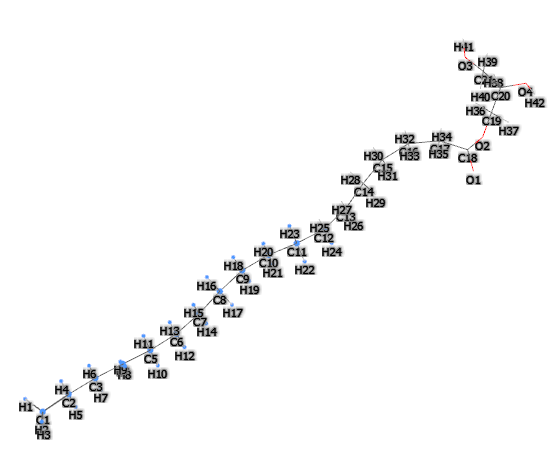
- Molecular Formula C21H42O4
- Linear Formula CH3(CH2)16COOCH2CH(OH)CH2OH
- Molecular Weight 358,6 g/mol
- Exact Mass 358.308319
- CAS 123-94-4
- UNII 258491E1RZ
- EC Number: 204-664-4 250-705-4
- DSSTox Substance ID DTXSID7027968 DTXSID7029160
- IUPAC 2,3-dihydroxypropyl octadecanoate
- InChl=1S/C21H42O4/c1-2-3-4-5-6-7-8-9-10-11-12-13-14-15-16-17-21(24)25-19-20(23)18-22/h20,22-23H,2-19H2,1H3
- InChl Key VBICKXHEKHSIBG-UHFFFAOYSA-N
- SMILES CCCCCCCCCCCCCCCCCC(=O)OCC(CO)O
- FEMA Number 2527
- DSSTox Substance ID:
- MDL number MFCD00036186
- PubChem Substance ID 24896595
- RTECS
- NSC 3875
- JECFA 918
- NCI C80900
- RXCUI 1311165 1427173
- Beilstein 1728685
- NACRES NA.25
Synonyms:
- Polyethylene Glycol (30) Glyceryl Monostearate
- GMS
- 2,3-Dihydroxypropyl octadecanoate
- Tagat S
- Momostearin
- 1-Stearoyl-rac-glycerol
- Monoglyceride
Some studies in Medicine that refer to the use of PEG Polyethylene Glycol in various fields.
Bowel
Polyethylene glycol with or without electrolytes is effective for the treatment of functional constipation, both in adults and pediatric patients, with great safety and tolerability. These preparations constitute the most effective osmotic laxatives (more so than lactulose) and are the first-line treatment for functional constipation in the short and long term. They are as effective as enemas in fecalomas, avoid the need for hospitalization, and are well tolerated by patients (especially when administered without electrolytes) (3).
In colonoscopy preparation, Polyethylene glycol tablets have confirmed similar efficacy, acceptability, tolerance, and safety as sodium phosphate (4).
Polyethylene glycol is also used for peripheral nerve repair (5).
Eyes
Dry eye disease is a disorder that affects 5-34% of the world's adult population with reduced quality of life. Artificial tears or lubricants are the most widely used therapy for the treatment of this disease because of their low side effect profile, which attempt to modify the properties of the tear film. Polyethylene glycol has demonstrated clinical efficacy in the treatment of this disease (6).
Brain
Polyethylene glycol facilitates the neuroprotective effects of magnesium in traumatic brain injury (7).
Cancer
By transarterial chemoembolization, Polyethylene glycol is effective and safe for the treatment of liver cancer and, as indicated, gives good tolerability, quality of life, and high tumor response (8).
Cosmetics
Many types of PEGs are hydrophilic and are used as creams, topical dermatological preparations, and are widely used in cosmetic products such as surfactants, emulsifiers, detergents, humectants, and skin conditioners.
Safety varies from type to type given the structural complexity (9).

