

Ciao, Visitatore!


🔍
RECENSIONE

Recensione

Al222
Al222 (25514 pt) 24-Nov-2025 18:52

Mais bianco 
(Da Zea mays, varietà a cariosside bianca)


Descrizione
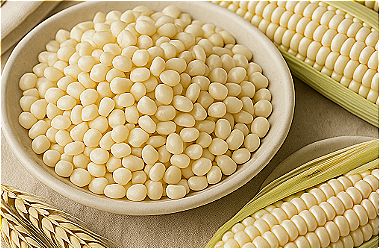
Il mais bianco è costituito da varietà di Zea mays in cui il chicco è privo o quasi privo di carotenoidi, con colore che va dal bianco panna all’avorio.
È molto utilizzato in America Latina, Africa e Asia per la produzione di farine, semole, cornmeal, polente, porridge, tortillas, arepas, snack estrusi e prodotti breakfast, oltre che come base per farine gluten-free.
Ha sapore morbido, neutro, poco dolce, e per questo è estremamente versatile sia in prodotti salati sia dolci. Le sue caratteristiche di amido lo rendono adatto a prodotti estrusi, da forno, pastosi e come base per prodotti plant-based.

Valori nutrizionali indicativi per 100 g
(granella secca di mais bianco)

  • Energia: 330–370 kcal

  • Carboidrati: 70–75 g

    • zuccheri: 1–2 g

    • amido: 65–72 g

  • Fibre: 6–10 g (più elevate nelle farine integrali)

  • Proteine: 7–10 g

  • Lipidi: 2–4 g

    • SFA (prima occorrenza – acidi grassi saturi): 0,4–0,7 g (un eccesso di SFA nella dieta è associato a maggior rischio cardiovascolare, ma il contributo del solo mais bianco è moderato)

    • MUFA: 0,8–1,2 g

    • PUFA: 1,2–2 g

    • TFA: non presenti naturalmente in quantità significative

  • Vitamine: B1, B3, B5, B6, folati; piccole quantità di vitamina E

  • Minerali: magnesio, fosforo, potassio; tracce di manganese, zinco, rame

I valori variano in funzione della varietà, del grado di macinazione (integrale/raffinato) e dei trattamenti tecnologici.


Principali sostanze contenute

  • Amido (amilosio + amilopectina)

  • Proteine (zeine, gluteline) a valore biologico moderato

  • Fibre alimentari (pericarpo e strati esterni del chicco)

  • Lipidi nel germe (prevalentemente PUFA e MUFA)

  • Vitamine del gruppo B e piccole quantità di vitamina E

  • Minerali (Mg, P, K)

  • Composti fenolici (acido ferulico, p-cumarico) a moderata attività antiossidante

  • Contenuto molto basso di carotenoidi (differenza principale rispetto al mais giallo)


Processo di produzione
(granella, semole e farine di mais bianco)

  1. Coltivazione e raccolta

    • raccolta delle pannocchie a maturazione fisiologica;

    • selezione delle varietà a chicco bianco.

  2. Essiccazione

    • riduzione dell’umidità della granella (≤14%) per assicurare conservabilità.

  3. Sgranatura e pulizia

    • separazione dei chicchi dal tutolo;

    • rimozione di polveri, chicchi rotti e corpi estranei.

  4. Macinazione

    • dry milling per ottenere grits, semole, cornmeal, farine;

    • wholegrain milling per farine integrali con crusca e germe;

    • nixtamalizzazione (cottura alcalina con calce) per produrre masa e farine per tortillas, arepas, chip, ecc.

  5. Eventuale degerminazione

    • rimozione parziale o totale del germe per migliorare la shelf-life (minor contenuto lipidico).

  6. Trattamenti termici

    • precottura, estrusione, fioccatura per cereali da colazione e snack.

  7. Confezionamento

    • in sacchi, sacchetti o big-bag barriera all’umidità e all’ossigeno.

Il processo è condotto secondo GMP/HACCP con controlli su umidità, carica microbica, micotossine e infestanti.


Proprietà fisiche

  • Colore: bianco–avorio, non pigmentato.

  • Aspetto granella: chicchi duri o semiduri, a seconda di varietà dentata/vitrea.

  • Umidità (granella secca): 12–14%

  • Granulometria: variabile (grits, semole, farine fini).

  • Stabilità: buona per la granella secca; più critica per farine integrali (maggiore rischio di ossidazione).


Proprietà sensoriali e tecnologiche

  • Sapore: delicato, neutro, meno “dolce” rispetto al mais giallo; profilo cerealicolo morbido.

  • Colore in prodotto finito: conferisce un aspetto chiaro/bianco, utile quando si desidera evitare colorazioni gialle.

  • Comportamento tecnologico:

    • amido con buona capacità di gelatinizzazione e addensamento;

    • ottime proprietà per estrusione (snack e cereali soffiati);

    • buone proprietà di legante in impasti e paste (soprattutto dopo nixtamalizzazione);

    • in prodotti da forno conferisce croccantezza e struttura friabile.


Impieghi alimentari

  • Alimenti tradizionali:

    • tortillas, arepas, pupusas, tamales, pozole, polente chiare, porridge (ugali, sadza, pap).

  • Prodotti da forno:

    • pane e prodotti bakery gluten-free in miscela con altre farine, cracker, grissini, biscotti.

  • Snack:

    • chip, extrusi, snack soffiati, triangoli tipo tortilla chips.

  • Cereali da colazione:

    • flakes, puffed cereals, porridge istantanei.

  • Alimenti per l’infanzia:

    • farine precotte per pappe, cereali istantanei, prodotti gluten-free.

  • Ingredienti industriali:

    • farine di mais bianco, semole, cornmeal, masa harina, amidi da mais bianco per salse e creme chiare.


Nutrizione e salute

  • Fonte di carboidrati complessi e di energia a rilascio relativamente graduale.

  • Proteine a tenore medio, ma con profilo aminoacidico limitante in lisina (spesso abbinate a legumi per migliorare la qualità proteica complessiva).

  • Naturalmente privo di glutine, adatto a formulazioni per celiaci se prodotto in filiere dedicate o a rischio controllato.

  • Le versioni integrali apportano fibre utili alla funzionalità intestinale nel contesto di una dieta varia.

  • Il germe contribuisce con PUFA, MUFA e vitamina E.

  • L’effetto glicemico dipende da grado di macinazione (farina fine vs semola), modalità di cottura e presenza di altri ingredienti (grassi, fibre, proteine).


Nota porzione

  • Preparazioni cotte (polente, porridge, creme, tortillas, arepas):

    • in genere 40–60 g di semola/farina secca per porzione, pari a circa 150–200 g di prodotto cotto.

  • In prodotti da forno/snack:

    • il mais bianco può costituire 5–60% della ricetta, a seconda che si tratti di pane misto, cracker o snack a base quasi esclusiva di mais.


Allergeni e intolleranze

  • Il mais bianco non è un allergene maggiore secondo la normativa UE, ma esistono rari casi di allergia specifica alle proteine del mais.

  • È naturalmente senza glutine, ma la sicurezza per celiaci richiede controlli su contaminazioni crociate in campo, in molino e in stabilimento.

  • Possibili intolleranze individuali devono essere valutate sul prodotto finito che può contenere altri allergeni (latte, soia, ecc.).


Conservazione e shelf-life

  • Granella secca:

    • conservare in silos o sacchi in ambiente fresco, asciutto, ventilato;

    • umidità <14% per prevenire muffe e sviluppo di micotossine;

    • shelf-life: tipicamente ≥12 mesi se correttamente gestita.

  • Farine e semole degerminate:

    • minore contenuto lipidico → maggiore stabilità ossidativa;

    • shelf-life: 6–12 mesi in imballi barriera a umidità e ossigeno.

  • Farine integrali:

    • contenuto di germe più elevato → maggiore rischio di irrancidimento;

    • shelf-life: 3–6 mesi in confezioni protettive e al riparo da calore e luce.

È essenziale proteggere da umidità, insetti e roditori.


Sicurezza e regolatorio

  • Soggetto a limiti per:

    • micotossine (fumonisine, aflatossine, zearalenone, ecc.),

    • residui di pesticidi,

    • metalli pesanti.

  • Richiesti controlli di qualità per carica microbiologica, assenza di infestanti e conformità ai parametri chimico-fisici.

  • Produzione secondo GMP/HACCP, con tracciabilità dal campo al prodotto finito.

  • Per prodotti destinati a infanzia e diete speciali possono essere applicati limiti più restrittivi su contaminanti.


Etichettatura

  • Possibili denominazioni in etichetta:

    • “mais bianco”,

    • “farina di mais bianco”,

    • “semola di mais bianco”,

    • “cornmeal di mais bianco”,

    • “masa harina (mais bianco)” per farine nixtamalizzate.

  • Nei prodotti composti compare in elenco ingredienti in ordine decrescente di peso.

  • La dicitura “senza glutine” è consentita solo se rispettati i limiti analitici di legge.


Troubleshooting

  • Sapore rancido o odore sgradevole:

    • irrancidimento di farine integrali o con germe → migliorare conservazione (T°, luce, O₂) o utilizzare farine degerminate.

  • Scarsa funzionalità dell’impasto (masa, tortillas):

    • nixtamalizzazione incompleta (pH, tempo, concentrazione calce non ottimali) → regolare parametri di processo.

  • Chicchi duri dopo cottura:

    • chicco troppo vecchio o insufficientemente idratato → allungare tempi di ammollo/cottura o usare granella più recente.

  • Infestazioni da insetti in granella o farina:

    • carente gestione del magazzino → implementare piani di lotta integrata e monitoraggio.


Sostenibilità e filiera

  • L’impatto ambientale dipende da:

    • uso di fertilizzanti e fitofarmaci,

    • sistema irriguo,

    • gestione del suolo (erosione, rotazioni).

  • Il mais bianco è spesso coltivato anche in sistemi a basso input e in piccole aziende, contribuendo alla sicurezza alimentare locale.

  • Miglioramenti possibili tramite:

    • rotazioni colturali,

    • agricoltura integrata o biologica,

    • fertilizzazione di precisione e uso efficiente dell’acqua.

  • Negli stabilimenti di trasformazione:

    • le acque di processo e reflue devono essere trattate e monitorate (indicatori BOD/COD);

    • i sottoprodotti (crusca, germe, fibre, tutoli) possono essere valorizzati in mangimistica, bioenergia e materiali bio-based.


Principali funzioni INCI (cosmesi)
(stesse funzioni generali del mais, senza effetti del pigmento giallo)

  • Zea Mays Starch (da mais bianco):

    • assorbente (umidità, sebo),

    • agente di riempimento e controllo viscosità in polveri e creme.

  • Zea Mays Kernel Extract:

    • skin conditioning, apporto di componenti idratanti.

  • Zea Mays Germ Oil:

    • emolliente, con azione nutriente e antiossidante (vitamina E).


Conclusione
Il mais bianco è un cereale molto versatile, con sapore neutrocolore chiaro, ideale per prodotti in cui si desidera evitare la pigmentazione gialla tipica del mais comune.
Grazie alle sue caratteristiche di amido, struttura e assenza naturale di glutine, trova ampia applicazione in alimenti tradizionali, prodotti gluten-free, snack, cereali da colazione e ingredienti industriali.
All’interno di filiere gestite secondo GMP/HACCP, il mais bianco rappresenta un ingrediente sicuro, stabile e di alta qualità, adatto a un ampio ventaglio di applicazioni, dalle produzioni artigianali a quelle industriali di grande scala.


Mini-glossario

  • SFA – Saturated Fatty Acids (acidi grassi saturi): grassi da moderare nella dieta; il mais bianco ne contiene in quantità moderate nella frazione lipidica del germe.

  • MUFA – acidi grassi monoinsaturi: componenti lipidici generalmente considerati neutri o favorevoli (es. acido oleico).

  • PUFA – acidi grassi polinsaturi: includono acidi grassi essenziali (es. acido linoleico), abbondanti nell’olio di germe di mais.

  • TFA – acidi grassi trans: nella versione industriale sono associati a effetti negativi; il mais bianco non li contiene naturalmente in quantità rilevanti.

  • GMP/HACCP – Good Manufacturing Practices / Hazard Analysis and Critical Control Points, sistemi di gestione per igiene, sicurezza e qualità della produzione alimentare.

  • BOD/COD – Biological / Chemical Oxygen Demand, indicatori del carico organico e chimico delle acque reflue industriali e del loro impatto ambientale.

Bibliografia__________________________________________________________________________

Plascencia A, Bermúdez RM, Cervantes M, Corona L, Dávila-Ramos H, López-Soto MA, May D, Torrentera NG, Zinn RA. Influence of processing method on comparative digestion of white corn versus conventional steam-flaked yellow dent corn in finishing diets for feedlot cattle. J Anim Sci. 2011 Jan;89(1):136-41. doi: 10.2527/jas.2010-3116.

Abstract. Four Holstein steers (137 ± 2 kg) with cannulas in the rumen and proximal duodenum were used in a 4 × 4 Latin square design to evaluate the influence of processing method on comparative digestion of white corn. Treatments consisted of a basal finishing diet containing 80% corn grain (DM basis) as 1) dry-rolled white corn (DRWC), 2) steam-flaked white corn (SFWC) with 0.36 kg/L flake density (SFWC36), 3) SFWC, 0.31 kg/L flake density (SFWC31), and 4) steam-flaked yellow corn (SFYC) with 0.31 kg/L flake density (SFYC31). Characteristics of ruminal, postruminal, and apparent total tract digestion of OM, starch, and N were similar (P ≥ 0.08) for SFYC31 and SFWC31 treatments. Decreasing flake density of white corn (from 0.36 to 0.31 kg/L) did not affect (P = 0.22) ruminal OM digestion, but increased (1.9%, P = 0.07) apparent total tract OM digestion. Compared with dry rolling, steam flaking white corn increased ruminal (9.4%, P = 0.05), postruminal (14.4%, P < 0.01), and apparent total tract OM digestion (8.2%, P < 0.01), reflecting corresponding increases in ruminal (13.3%, P < 0.01), postruminal (43%, P < 0.01), and apparent total tract (12.3%, P < 0.01) starch digestion. Apparent postruminal and apparent total-tract N digestion also were greater (6.5 and 5.6%, respectively, P = 0.04) for SFWC than for DRWC. The DE value of SFWC and SFYC diets was similar, averaging 3.39 Mcal/kg. The DE value of SFWC was greater (8.1%, P < 0.01) than that of DRWC. Ruminal pH (4 h postprandial) averaged 5.74 and was not affected (P ≥ 0.48) by dietary treatments. Compared with dry rolling, steam flaking markedly enhances the feeding value of white corn, with optimal flake density being less than 0.36 kg/L. Although white corn has greater vitreous endosperm content, characteristics of ruminal starch digestion and undegradable intake protein are similar to conventional yellow dent corn when processed to a similar flake density (0.31 kg/L). However, postruminal and apparent total tract starch digestion tends to be slightly less for flaked white corn than for yellow corn.

Rovaris, S. R., Zagatto, M. E., & Sawazaki, E. (2014). Combining ability of white corn genotypes with two commercial hybrids. Maydica, 59(1), 96-103.

 Abstract.  White corn is a special type of corn used to make «canjica», a dish appreciated in many regions in Brazil. However, there is a shortage of scientific information, genetic statistical estimates for breeding programs and white corn cultivars for producers to produce grits. The objectives of the present study were to assess two groups of white corn genotypes in a partial diallel cross for the main agronomic traits, estimate the combining ability of the parents and identify promising white corn hybrids for yield and grits quality. The fourteen topcross hybrids obtained from a partial Diallel (2 x 7), using seven genotypes and two commercial testers of the white maize (IPR 119 e IPR 127). The resulting hybrids and the two commercial controls were assessed in the 2011/2012 in the experimental center Agronomic Institute in Campinas (IAC) in growing season at the in Campinas and Tatuí, São Paulo state, Brazil. A randomized block design was used with four replications. The traits assessed were male flowering (MF), female f lowering (FF), plant height (PH), ear height (EH), percentage of broken and lodged plants (Ld + Br) and grain yield (GY). There were two treatments for all the traits assessed in the two locations and some hybrids presented higher mean production than the commercial controls. The P7 , P1 , P3 , and P2 genotypes presented the best general combining ability for all the traits assessed. The best estimates for specific combining ability were observed in the P6 x P9 , P2 x P9 , and P7 x P8 hybrids, indicating dominant loci systems in the genetic control of the traits PH, EH and GY.

Pineda-Gómez, P., Acosta-Osorio, A. A., Coral, D. F., Rosales-Rivera, A., Sanchez-Echeverri, L. A., Rojas-Molina, I., & Rodríguez-García, M. E. (2012). Physicochemical characterization of traditional and commercial instant corn flours prepared with threshed white corn. CyTA-Journal of Food, 10(4), 287-295.

Abstract. The aim of this work is to study the physicochemical characterization of commercial instant corn flour (CICF) and traditional instant corn flour (TICF) prepared with threshed corn. The chemical analysis shows that there are a few amounts of fat, fiber, and minerals but the protein shows small variations in relation to the threshed corn. The CICF is characterized by coarse particles. Differential scanning calorimeter corroborated that the flours are gelatinized; but in the case of CICF the starch granules are partially disrupted and some of them are integer, producing structural changes which are identified using X-ray diffraction. A pasting analysis based on the pasting curves was conducted in order to study the apparent viscosity of these flours. The CICF shows quick water absorption at low temperatures and major values in peak viscosity than the threshed corn flour which may be related to presence of hydrocolloids. The TICF apparent viscosity showed a complete gelatinized starch.

Sahai, D., Surjewan, I., Mua, J. P., Buendia, M. O., Rowe, M., & Jackson, D. S. (2000). Dry matter loss during nixtamalization of a white corn hybrid: Impact of processing parameters. Cereal Chemistry, 77(2), 254-258.

Abstract. Nixtamalization is the primary step in the production of products such as corn chips, tortilla chips, tacos, and corn tortillas. The process involves cooking and steeping of corn in lime and excess water to produce nixtamal. Commercial nixtamalization results in 5–14% corn solids loss in the liquid generated during cooking-steeping and washing. Loss of corn solids not only causes economic loss to corn processors but also creates costly waste and wastewater disposal problems. Empirical results show that, besides corn kernel characteristics, processing parameters are critical variables influencing corn solids loss and effluent pH during nixtamalization. This work was designed to systematically study the impact of processing parameters on corn dry matter loss and effluent pH generated during nixtamalization by using response surface methodology. Corn cooking temperature and lime concentration were more critical factors influencing corn solid loss than were cooking and steeping time. In the ranges studied, total dry matter loss increased only up to ≈8 hr of steeping and then leveled off. By optimizing the nixtamalization protocol, effluent dry matter loss can be minimized.

González-Cruz, J. L., & Torres-Rojo, J. M. (2024). Regional differences in rainfed white corn production in Mexico. Revista mexicana de ciencias agrícolas, 15(1).

Abstract. This research aims to identify the functional form that best represents the production of rainfed white corn in Mexico. Two variants of the constant elasticity of substitution function and the Cobb-Douglas function were tested using a cross-sectional sample of 10 924 corn farmers obtained from the ‘questionnaire to collect the 2008 baseline: SAGARPA programs’. The analysis was performed at national and regional levels using fourteen factors of production. The results show that the Cobb-Douglas model provides better fits and estimators consistent with theoretical principles. Similarly, it is shown that the use and effect of each production factor on the yield of rainfed white corn is different between the regions of the country, so it was shown that public policy actions should be differentiated based on the needs and particularities of each region. An analysis of the effect of each input at the regional level and a discussion of the possible effects of some support programs for the agricultural sector focused on a particular input are presented.

Aini, N., & Hariyadi, P. (2018). Utilization of modified white corn starch in producing marshmallow cream. IJFAC (Indonesian Journal of Fundamental and Applied Chemistry), 3(2), 40-46.

Abstract. The purpose  of this study was to determine the effect of the white maize starch by oxidation and acetylation-oxidation modification on gel formation and character of the resulting gel, and applying a modified white corn starch in manufacturing of marshmallow cream. White corn varieties Srikandi, Pulut and Canggal are used as raw materials to produce starch. Starch modification is conducted by oxidation and acetylation-oxidation. Quality analysis of the modified starch is freeze thaw stability, smallest gel formation concentration and gel strength. Corn starch, both native and modified applied in manufacturing of marshmallow cream. The results showed that the treated starch acetylation-oxidation provide the best freeze thaw stability with the least water released than native starch and modified starch oxidation. Starch modified by oxidation tend to have the highest Least Gelling Concentration (LGC). Gel produced from modified starch both oxidation and acetylation-oxidation has a gel strength greater than the native starch. Marshmallow cream that uses a modified starch by acetylation-oxidation, have the best received power in testing organoleptic by the panelists. Use of modified starch does not give a noticeable difference in color of the product, but it gives texture and the best spread power compared to products using original starch.