



Lettuce (Lactuca sativa L.)
Description
Lettuce is one of the most widely consumed leafy vegetables in the world and belongs to the Asteraceae family. Under the name lettuce we usually refer to Lactuca sativa L., a species that includes numerous varieties and commercial types: head lettuce (for example iceberg), romaine/cos, cut-and-come-again lettuce, and various green- or red-leaf lettuces, including soft baby leaves commonly used in bagged salads. Although they differ in leaf shape, head compactness, colour and crispness, they share some common features: very high water content, low energy density, and a meaningful supply of vitamin K, folate and phenolic compounds.
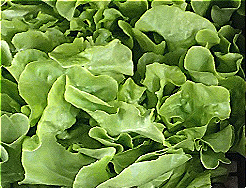
The plant forms a more or less compact basal rosette/head made of leaves that may be smooth or crinkled, more or less elongated, with entire or serrated margins. Colour ranges from pale yellow–green to dark green, and to reddish or purplish hues in pigmented varieties. The leaves contain a characteristic milky latex (whence the name Lactuca), more evident in the basal parts and in plants allowed to bolt and go to seed. This latex contributes to a slight bitter aftertaste, especially in more mature tissues and central ribs.
Culinarily, lettuce is strongly associated with raw consumption as a base for salads, sandwiches and cold dishes, thanks to its crisp texture and pronounced freshness. Some types, particularly romaine and certain leaf lettuces, can also be used in short cooking processes (stir-fried, braised, grilled, or added to light soups). The very high water content and delicate flavour make lettuce an ideal support food in low-calorie diets, where it helps increase volume and satiety with very few calories.
Botanical classification
Common name: Lettuce
Clade: Angiospermae
Order: Asterales
Family: Asteraceae
Genus: Lactuca
Species: Lactuca sativa L.
Climate
Lettuce prefers a cool, temperate climate, with mild spring and autumn conditions that support rapid and continuous growth. Excessively high temperatures can cause early bolting and make the leaves more bitter, while moderate cold is generally well tolerated, especially by more rustic varieties.
Exposure
The ideal exposure is full sun in the cooler seasons, to ensure good photosynthesis and the development of wide, tender leaves. In warmer climates, or towards late spring and in summer, light shading during the hottest hours of the day can help to limit water and heat stress and reduce the risk of bolting.
Soil
Lettuce grows best in medium-textured soils that are soft, well drained and rich in organic matter, with a pH that is generally neutral or slightly subacid. A well-worked, friable soil without waterlogging supports the development of the shallow root system and rapid growth of the aerial parts. Soils that are too compact or prone to standing water increase the risk of rot and fungal diseases.
Irrigation
Irrigation should be regular and moderate, keeping the soil constantly moist but never saturated. Periods of drought alternating with excessive watering can cause head splitting, less tender leaves and a higher tendency to physiological disorders. It is best to water in the morning or late afternoon, avoiding excessive wetting of the foliage. Light mulching helps to reduce evaporation and stabilize soil moisture.
Temperature
The optimal temperature range for germination and growth is generally between 10 and 20 °C. Prolonged temperatures above 24–26 °C encourage bolting and worsen leaf quality. Moderately low temperatures are tolerated by most varieties, allowing cultivation in different periods of the year depending on the growing area.
Fertilization
Fertilization of lettuce is based mainly on a good supply of well-matured organic matter before planting, which improves soil fertility and structure. As a short-cycle, mainly leafy crop, lettuce needs a regular availability of nitrogen, supplied in a balanced way to avoid excesses that could make tissues too soft and more susceptible to disease. Phosphorus and potassium help strengthen plants and improve head quality.
Crop care
Crop care includes weed control, which is particularly important in the early growth stages, using light hoeing or mulching. Keeping the soil surface loose improves aeration and drainage. Regular monitoring makes it possible to detect pests (such as aphids or slugs) and fungal diseases at an early stage, and to intervene with appropriate methods to limit damage to production.
Harvest
Harvesting varies according to the type of lettuce. For head types, the entire head is cut at the base when it has reached the desired size and compactness. For cut-and-come-again lettuces, leaves or the aerial part are cut a few centimetres above the soil, allowing subsequent regrowth. It is important to harvest at the right time, before the plant starts to bolt, in order to maintain tender leaves with a delicate flavour.
Propagation
Propagation is by seed, usually by direct sowing in the field or in finely prepared beds. Seeds are sown in rows or broadcast, and the soil is kept moist until germination. After emergence, thinning is carried out to ensure each plant has enough space to form a good head or regular rosette. Alternatively, seedlings can be produced in seed trays or plugs and transplanted when they have developed a few true leaves.
Indicative nutritional values per 100 g (raw lettuce)
Values vary slightly among types (iceberg, romaine, green/red leaf), but for 100 g of raw lettuce average figures are roughly:
Energy: about 10–17 kcal
Water: about 94–96 g
Total carbohydrates: about 1.5–3 g (mainly simple sugars)
Total fibre: about 1–2 g
Protein: about 0.8–1.5 g
Total fat: about 0.1–0.3 g
SFA (saturated fatty acids, whose excessive overall intake is associated with less favourable blood lipid profiles): traces
MUFA (monounsaturated fatty acids): traces
PUFA (polyunsaturated fatty acids, including n-6 and n-3 series involved in inflammation and cardiovascular health): traces
Micronutrients:
good source of vitamin K1;
useful amounts of folate (vitamin B9);
in types such as romaine and darker-leaf lettuces, meaningful amounts of provitamin A (as beta-carotene);
presence of potassium plus small amounts of calcium, magnesium and other minerals.
Given the very low energy density, lettuce contributes relatively few calories even in generous portions.
Key constituents
Beyond basic macro- and micronutrients, lettuce contains several bioactive molecules of interest:
Polyphenols, especially phenolic acids and some flavonoids, which contribute to the antioxidant capacity of leaves. Levels are generally higher in dark green and red-leaf lettuces.
Carotenoids, particularly lutein and beta-carotene, more abundant in intensely coloured varieties. Lutein is often associated with retinal protection and eye health.
Vitamin C, present in modest but non-negligible amounts in some types.
Nitrates, which can reach relatively high levels in lettuce grown with high nitrogen fertilisation and under low light. These compounds are monitored both from a regulatory and technological perspective.
Small amounts of lactucin and related bitter substances, partly associated with the milky latex and responsible for the characteristic slightly bitter note.
Together, these constituents make lettuce a simple but meaningful contributor to the overall antioxidant profile of a vegetable-rich diet.
Production process
Lettuce has a relatively short production cycle, typical of leafy vegetables.
Cultivation is carried out both in open field and in greenhouses or hydroponic systems, ensuring almost year-round supply. Different varieties are chosen according to the season, with shorter cycles under favourable conditions. The ideal substrate is a well-drained soil, from medium to light texture, with good organic matter content.
Sowing may be direct in the field or, more often, in a nursery, followed by transplanting at the rosette stage. Crop management includes carefully balanced fertilisation with nitrogen, phosphorus and potassium; nitrogen management is particularly critical to control nitrate accumulation in leaves. Irrigation aims to keep the soil consistently moist but not waterlogged.
Harvest is carried out manually or mechanically when the head reaches commercial size and compactness. In head lettuces (e.g. iceberg) the entire head is cut at the base, while cut-and-come-again lettuces are trimmed by removing outer leaves, allowing regrowth. After harvest, lettuce undergoes trimming (removal of damaged outer leaves), washing and rapid cooling.
For distribution as fresh whole heads, lettuce is packed in crates or light packaging. For fresh-cut (ready-to-eat) salads, leaves are cut, washed, dried and packed in modified atmosphere, with a strictly controlled cold chain.
Physical properties
Lettuce is characterised by a very high water content and low density. Leaves are thin, but depending on the variety they can be markedly crisp (e.g. iceberg, romaine) or more tender and delicate (many leaf types and baby leaves).
Colour is an important physical trait: pale, almost translucent green in inner leaves; deep green in outer leaves; and red to purplish tones in pigmented cultivars. Colour is influenced by light intensity, nutritional status and plant maturity.
The leaf tissue, with many water-filled vacuoles, gives the characteristic refreshing bite but also makes lettuce extremely sensitive to dehydration, mechanical damage (cutting, crushing) and chilling injury if stored at inappropriate temperatures or humidity.
Sensory and technological properties
From a sensory standpoint, lettuce offers:
a delicate flavour, generally mild and slightly sweet, with a faint bitter note concentrated in outer leaves and central ribs;
a light, green, fresh aroma, rarely dominant in a dish;
a texture ranging from very crisp in dense-headed types to soft and tender in loose-leaf varieties.
Technologically, lettuce contributes primarily volume, crunchiness and visual freshness, while it plays a minor role as a structuring or thickening ingredient. It is highly sensitive to temperature and handling: repeated cutting, crushing and improper storage quickly compromise crispness and appearance.
In bagged salads, careful management of cutting, washing, drying and modified atmosphere is essential to maintain colour, neutral smell and absence of browning, slimy texture or off-odours.
Food applications
Lettuce is used mainly raw:
as a base for simple or mixed salads, dressed with oil, vinegar or lemon and combined with other vegetables;
in composed salads and buddha bowls, with cereals, legumes, animal or plant proteins;
as a component of sandwiches, wraps, burgers and flatbreads to add freshness, crunch and lower the calorie density of the meal;
as a fresh side for starters, cold meats and cheeses.
Some types, especially romaine, also lend themselves to short cooking: for example grilled hearts, braised lettuce with other vegetables, or lettuce added at the end of cooking in soups and light broths. Cooking, however, reduces typical crispness and may lead to loss of vitamin C and other heat-sensitive compounds, which is why raw consumption remains predominant.
Nutrition and health
Lettuce is a low-calorie, high-water food, ideal for increasing meal volume with minimal energy intake. Within a varied diet, it helps:
increase fibre intake, supporting satiety, bowel regularity and more stable glycaemic response;
provide vitamin K1, important for blood coagulation and bone health;
supply folate, essential for cell metabolism and especially important in pregnancy;
deliver carotenoids (particularly lutein and beta-carotene), involved in protection of ocular tissues and free radical scavenging;
contribute, together with other vegetables, to overall intake of antioxidant phytochemicals.
The presence of nitrates in lettuce has been discussed for many years. On one side, excessive intake of nitrates and nitrites may raise concerns about potential formation of nitrosamines under unfavourable conditions. On the other, the nitrate load from leafy vegetables is now often considered in the broader context of vegetable-rich diets, which are generally associated with protective health effects. Modern agronomic techniques aim to limit nitrate accumulation in lettuce through appropriate management of light, fertilisation and cultivation systems.
For people undergoing vitamin K-antagonist anticoagulant therapy (e.g. warfarin), the vitamin K content of lettuce and other leafy greens requires attention. Lettuce does not need to be excluded, but intake should be regular and consistent, agreed with the physician, avoiding large fluctuations.
Portion note
For a healthy adult, reasonable portions of lettuce are:
about 50–80 g raw for a simple side salad;
up to 100–150 g (often together with other vegetables) for a mixed salad serving as the main vegetable component of a meal.
Given the low energy density, even larger portions can be appropriate in a balanced diet, provided the salad is not overloaded with high-calorie dressings (rich sauces, large amounts of fatty cheese, etc.).
Allergens and intolerances
Lettuce is not among the major regulated food allergens, but:
rare cases of specific lettuce allergy have been reported, with symptoms such as oral itching, urticaria, angioedema, and occasionally more severe reactions in sensitised individuals;
people with oral allergy syndrome (OAS) to certain pollens may show cross-reactivity to some leafy vegetables;
individuals with irritable bowel or a very sensitive gut may experience bloating or discomfort after consuming large amounts of raw lettuce, especially if very fibrous.
In case of symptoms, medical or allergological evaluation is advisable.
Storage and shelf-life
Lettuce is highly perishable.
Whole heads should be stored in the refrigerator, ideally in the vegetable drawer, at around 4 °C, in a slightly humid environment but not wet—for example wrapped in lightly damp paper and placed in a perforated bag. Typical domestic shelf-life is about 3–5 days, depending on the initial quality and variety: iceberg tends to be more durable, while tender leaf types spoil more quickly.
Bagged ready-to-eat salads must be kept in a continuous cold chain and consumed by the use-by date or shortly after opening, avoiding prolonged stays at room temperature.
Signs of spoilage include limp leaves, marked yellowing or browning, mould growth, fermented or off-odours and slimy texture. In these cases, the product should not be consumed.
Safety and regulatory
From a food safety viewpoint, lettuce is a traditional vegetable but requires careful hygiene management and nitrate control:
as a leafy vegetable often eaten raw, lettuce can be a vehicle for pathogenic microorganisms (e.g. toxigenic E. coli, Salmonella, Listeria) in case of contamination in the field, during harvest or processing. Good agricultural and manufacturing practices and microbiological controls are therefore essential;
lettuce is one of the species subject to regulatory limits on nitrate content in the European Union, with maximum levels set according to season and growing conditions (open field vs greenhouse);
producers use agronomic strategies (fertiliser management, light, cultivar choice) and technological measures to keep nitrate levels within legal limits;
for fresh-cut salads, specific rules cover hygiene, washing processes, water quality, temperature control and traceability.
When these measures are respected, lettuce is considered safe for general consumption.
Labelling
For fresh lettuce sold whole or prepacked, labels typically indicate:
the product name, e.g. “iceberg lettuce”, “romaine lettuce”, “green leaf lettuce”, “red leaf lettuce”;
the country of origin;
commercial class and weight where required.
For bagged salads:
full ingredient list (e.g. lettuce, carrot, radicchio, etc.);
use-by date and storage conditions (e.g. “keep refrigerated”);
standard nutrition declaration.
In cosmetics, lettuce extracts may appear with INCI names such as:
Lactuca Sativa Leaf Extract
Lactuca Scariola Sativa Leaf Extract
depending on species/variety and extract type.
Troubleshooting
Common practical issues with lettuce and possible actions:
Limp, non-crisp lettuce
Possible cause: prolonged storage, inadequate temperature, dehydration.
Action: store in the refrigerator in a slightly humid environment, avoid keeping it at room temperature for long, and consume delicate lettuces first.
Browning of cut edges
Possible cause: mechanical damage and tissue oxidation.
Action: cut with sharp knives, avoid excessive chopping, dress and serve soon after cutting.
Off-odours in bagged salad
Possible cause: product close to use-by date or broken cold chain.
Action: always check date and storage temperature; if smell or appearance are abnormal, discard the pack.
“Salad causes bloating” sensation
Possible cause: individual sensitivity to raw vegetables and fibre.
Action: reduce portion size, increase fibre intake gradually, combine with other vegetables, and consider partially cooked options if needed.
Main INCI functions (cosmetics)
In cosmetics, lettuce extracts are less prominent than other botanicals but are used in some formulations as:
Lactuca Sativa Leaf/Extract and Lactuca Scariola Sativa Leaf Extract
main function: skin conditioning, helping to keep the skin in good condition;
secondary functions sometimes mentioned: refreshing, mild soothing effect and masking (helping soften undesired odours in formulations).
These extracts are typically obtained by hydroalcoholic extraction or other approved solvents from leaves. As with all botanical ingredients, a proper safety assessment (including irritation and sensitisation tests where needed) and compliance with cosmetic regulations on purity, contaminants and stability are required.
Conclusion
Lettuce (Lactuca sativa L.) is a widely used leafy vegetable and a symbol of fresh salads and light cuisine. Although it has a simple nutritional profile due to its very high water content and low energy density, it contributes meaningfully to daily intake of fibre, vitamin K, folate, and—especially in darker or red types—carotenoids and antioxidant polyphenols.
Included in a varied, vegetable-rich diet, lettuce helps increase meal volume with few calories, supporting satiety and more favourable energy balance, while improving the overall nutritional quality of the diet. From a technological and culinary standpoint, it remains an irreplaceable ingredient to bring freshness, crunchiness and colour to a wide range of dishes, provided its need for gentle handling and proper cold storage is respected.
Studies
In the leaves are found phenolic compounds and ascorbic acid that give the lettuce antioxidant contents especially in red lettuce. The minerals phosphorus, potassium, calcium and magnesium are present in larger quantities in green lettuce (1).
They are also present, especially in the leaves: saponins, alkaloids, sesquiterpenes and glucosinolates (2).
There are some carotenoid antioxidants in both varieties of lettuce (3): Neoxanthine and violaxanthine : 33%, Lutein : 15% more, Zeaxanthin : 0% for zeaxanthin, Cryptoxanthin : 36%, Lycopene : 0% sugar content, Alpha carotene : 16%, Beta beta carotene : 0%
Lettuce is therefore a plant with good characteristics for human health, but the dangers are the soil pollution due to heavy metals and arsenic.
Mini-glossary
Carotenoids: fat-soluble pigments (such as beta-carotene and lutein) with antioxidant activity, important for eye health and protection of tissues from oxidative stress.
Polyphenols: a broad class of plant compounds with strong antioxidant properties, helping to protect against free radicals and contributing to colour and flavour stability in foods.
Nitrates: naturally occurring salts in plants, particularly leafy vegetables. They can be converted in the body into nitric oxide, with vasodilatory effects, but under certain conditions may contribute to nitrosamine formation; for this reason they are subject to regulatory limits.
SFA (saturated fatty acids): fatty acids without double bonds; excessive intake is associated with less favourable lipid and cardiovascular profiles.
MUFA (monounsaturated fatty acids): fatty acids with one double bond, generally beneficial when they replace SFA within a balanced diet.
PUFA (polyunsaturated fatty acids): fatty acids with two or more double bonds (n-6 and n-3 series), involved in the regulation of inflammation, cardiovascular function and numerous metabolic processes.
Skin conditioning (INCI): cosmetic function indicating an ingredient that helps keep the skin in good condition, supporting comfort, softness and overall appearance.

