



Spinach (Spinacia oleracea L.)
(fresh or processed leaves; family Amaranthaceae)
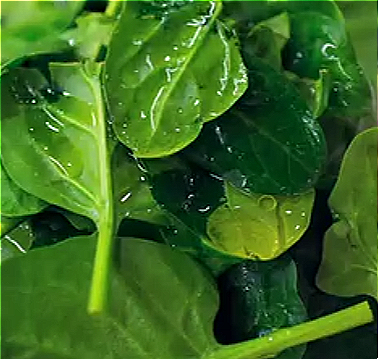
Spinach is one of the most recognizable leafy vegetables, known for its fleshy, deep-green leaves and a delicate flavor with a slightly ferrous note. This annual herbaceous plant, belonging to the family Amaranthaceae and originally from Southwestern Asia, became deeply rooted in Mediterranean lands, where it gradually earned a stable place in culinary traditions. Its leaves, smooth or gently crinkled depending on the variety, range from rounded to more elongated shapes, and their texture changes with plant maturity: tender and soft in baby forms, more structured and resilient as the plant reaches full growth.
Spinach thrives in cool climates, fertile soil rich in organic matter, and consistent but moderate watering. Once harvested, the leaves preserve their quality only with gentle handling, as they bruise easily. When enjoyed raw, spinach retains its fresh vegetal aroma and natural abundance of water, fiber, and micronutrients; when cooked briefly, it reveals a silkier texture and a more pronounced fragrance. Within its tissues are compounds such as carotenoids, folic acid, iron, magnesium, and ample chlorophyll, responsible for its vivid green hue.
Appearing in salads, fillings, soups, savory pies, and classic recipes, spinach stands out for its remarkable versatility: from Mediterranean kitchens to Middle Eastern and Asian traditions, it crosses cuisines with effortless harmony. Although it naturally contains oxalates, which can limit the absorption of some minerals, spinach remains widely appreciated as an ingredient that symbolizes simplicity, quick growth, and ease of use. Whenever conditions are favorable, it continues to be a favorite choice for those seeking something fresh, light, and deeply connected to cultural memory.
Botanical classification
Common name: Spinach
Clade: Angiospermae
Order: Caryophyllales
Family: Amaranthaceae
Genus: Spinacia
Species: Spinacia oleracea L.
Climate
Spinach prefers a cool, temperate climate, with mild springs and autumns that support rapid and continuous growth. Excessively high temperatures quickly lead to bolting, reducing leaf quality, while moderate cold is fairly well tolerated, especially in more rustic varieties.
Exposure
The ideal exposure is full sun during the cooler seasons, in order to promote good photosynthesis and tender, well-developed leaves. In warmer climates or towards late spring, light shading during the central hours of the day can help to limit heat stress and delay bolting.
Soil
Spinach grows best in medium-textured, deep, well-drained soils that are rich in organic matter and have a neutral to slightly alkaline pH. A soft, well-worked soil supports root development and rapid growth of the aerial parts. Waterlogging should be avoided, as it can cause root rot and slow down growth.
Irrigation
Irrigation should be regular and moderate, keeping the soil consistently moist but not saturated. Sudden water shortages can make the leaves tougher and encourage bolting, while excessive water increases the risk of fungal diseases. Light mulching helps to reduce evaporation and keep soil moisture more stable.
Temperature
The optimal temperature range for germination and development is generally between 10 and 20 °C. Prolonged high temperatures, especially above 22–24 °C, stimulate flower stalk formation at the expense of leaves. By contrast, low temperatures within certain limits are tolerated, allowing autumn–winter cultivation in many areas.
Fertilization
Fertilization is based on a good supply of well-matured organic matter before sowing or transplanting, which improves soil structure and fertility. Because spinach grows quickly and is mainly a leaf crop, nitrogen plays an important role, but it must be applied carefully to avoid excessive accumulation and overly tender, disease-prone foliage. Phosphorus and potassium help maintain good nutritional balance and plant robustness.
Crop care
Crop care includes weed control, which is particularly important in the early stages of development, using light hoeing or mulching. Keeping the soil surface loose improves aeration and drainage. Regular monitoring allows early detection of pests or fungal diseases, so that timely interventions can limit damage to leaf production.
Harvest
Spinach can be harvested in two ways: by cutting the entire rosette at the base once the leaves have reached the desired size, or by picking the outer leaves as they grow, leaving the centre to produce new foliage. It is important to harvest before the plants start to bolt, as leaves then become tougher and of lower quality.
Propagation
Propagation is by seed, usually by direct sowing in the field or in well-prepared beds. Seeds are sown in rows or broadcast, and the soil is kept moist until germination. Once seedlings have emerged, thinning is carried out to give each plant enough space to develop, thus obtaining larger rosettes and higher quality leaves.
Indicative nutrition values (per 100 g raw; typical averages)
• Energy: ~23 kcal
• Carbohydrates: ~3.6 g (sugars ~0.4 g)
• Dietary fiber: ~2.2 g
• Protein: ~2.9 g
• Fat: ~0.4 g — SFA negligible; MUFA/PUFA negligible
• Sodium: ~70–80 mg (natural)
• Potassium: ~550–600 mg • Magnesium: ~75–80 mg • Calcium: ~90–120 mg • Iron (non-heme): ~2–3 mg
• Vitamins: very high K1, folate, vitamin A (as β-carotene), vitamin C (~25–30 mg)
Key constituents
• Chlorophylls a/b; carotenoids (β-carotene, lutein/zeaxanthin).
• Folate, vitamin K1 (phylloquinone), vitamin C.
• Nitrates (natural; vary by season/cultivation).
• Oxalates (soluble/insoluble) that chelate Ca/Fe and limit bioavailability.
• Cell-wall polysaccharides (cellulose/hemicelluloses/pectins), organic acids.
Production process
• Short-cycle cultivation; manage nitrogen/irrigation to control nitrates.
• Harvest mechanical/manual → sorting, trimming, multi-wash.
• RTE salads: gentle drying, MAP packing; frozen: quick blanch, cool, IQF.
• Full traceability and controls under GMP/HACCP.
Physical properties
• pH ~5.5–6.8; very high aw.
• Color: vivid green → shifts to olive when acidified or overcooked (chlorophyll → pheophytin).
• Texture: tender raw; melting texture when cooked, with high purge.
Sensory & technological properties
• Short cooks (steam/sauté) preserve color and vitamin C; blanching lowers oxalates and microbial load.
• Acidity (lemon/vinegar) brightens flavor but speeds color shift; baking soda is discouraged (nutrient/texture loss).
• Excellent binder in fillings/gnocchi/patties; purée for sauces/creams; strong synergy with dairy, eggs, and warm spices.
Food applications
• Raw: salads, bowls, sandwiches.
• Cooked: sautéed/steamed, soups, fillings (pasta, pies), bakes, frittatas, savory smoothies.
• Industry: RTE salad mixes, single-serve frozen portions, creams and bases for ready meals.
Nutrition & health
Spinach is low-calorie and micronutrient-dense (K1, folate, pro-vitamin A carotenoids, vitamin C), with trivial fat and SFA. Iron is mainly non-heme and its bioavailability is limited by oxalates; it improves with vitamin C (e.g., citrus, peppers) and by avoiding excessive calcium in the same meal. Calcium absorption from spinach is likewise reduced by oxalate complexation.
Natural nitrates may support endothelial function (via NO) in healthy adults; however, for infants <1 year, avoid frequent servings of high-nitrate vegetables and long hot holding, due to nitrite/methemoglobinemia risk—cool quickly and refrigerate.
For those with calcium-oxalate kidney stones or IBS (insoluble-fiber sensitivity), tailor portion and frequency with a clinician. On warfarin, keep vitamin K intake consistent (do not eliminate it).
Portion note: as a side, 120–200 g cooked (≈ 400–600 g raw before wilting); for raw salads, 50–100 g per serving.
Quality & specifications (typical topics)
• Appearance: intact, turgid green leaves; free from yellowing, thick stems, soil/grit.
• Residues: pesticides ≤ MRL; metals within limits; nitrates within legal/spec limits.
• Microbiology: low counts; pathogens absent/25 g (RTE focus on E. coli, Salmonella, Listeria).
• Physicochemical: high moisture, pH, sand/grit; for frozen, verify blanch/IQF parameters.
Storage & shelf-life
• Fresh: 0–4 °C, high RH, away from ethylene; use within 3–7 days (RTE per date code).
• Frozen: ≤ −18 °C; do not refreeze after thawing.
• Cooked: chill quickly, store at ≤4 °C, consume within 48 h; avoid prolonged warm holding (nitrites).
Safety & regulatory
• Vegetable subject to marketing and hygiene standards; RTE salads require stringent washing, MAP, and cold-chain control.
• Nitrates: legal limits for spinach (fresh/baby/frozen); field and lot testing.
• Allergens: none intrinsic; manage cross-contact in plant.
Labeling
• Name: “spinach” (or “baby spinach” for young leaves); RTE packs “washed/ready to eat”.
• Origin, class, size (where applicable), storage temperature, date code; for frozen/processed, full ingredient list (salt, condiments).
Troubleshooting
• Sliminess → cold-chain break or excess moisture → improve drainage and maintain 0–4 °C.
• Gritty mouthfeel → insufficient washing → increase wash stages/turbulence and sieving.
• Olive color when cooked → acidity/overcook → cook briefly and hot; add salt/acid at the end.
• Watery prep → inadequate draining → squeeze or reduce formulation water.
• Strong bitter/metallic → older leaves/water stress → prefer baby or spring/autumn crops.
INCI functions (cosmetics)
• Spinacia Oleracea Leaf Extract: antioxidant, skin-conditioning in serums/creams.
• Spinacia Oleracea Seed Oil (rare): light emollient. Use per cosmetic regs and tolerability.
Conclusion
Spinach is a versatile, micronutrient-dense leafy vegetable. Optimal results come from very fresh raw material, short cooking, careful water management, and attention to nitrates/oxalates for sensitive groups.
Mini-glossary
• SFA: saturated fatty acids — keep overall intake low; spinach provides negligible amounts.
• Bioavailability: fraction of a nutrient that is absorbed and utilized.
• Oxalates: chelators that reduce Ca/Fe absorption and may contribute to stones in predisposed individuals.
• Nitrates/Nitrites: natural salts; nitrites may form during prolonged warm holding.
• Pheophytin: chlorophyll degradation product causing olive hue.
• RTE / MAP / IQF: ready to eat / modified atmosphere packaging / individually quick frozen.
• MRL: maximum residue limits.
• GMP/HACCP: good manufacturing practices / hazard analysis and critical control points.
Studies
It is rich in minerals, vitamins, carotenoids, polysaccharides and has been used by traditional medicine as an antioxidant therapeutic agent (1).
Compared to other plants, the consumption of spinach remains rather low despite the fact that he has many positive activities for human health such as (2):
- prevent macromolecular oxidative damage
- modulate the expression and activity of genes involved in metabolism, with antioxidant, anti-inflammatory activity
- curb food intake by inducing secretion of satiety hormones (anti-obesity)
Among the most interesting components present in spinach are some flavonoids that exert antimutagenic properties (3):
- spinacetin
- 5,3',4'-trihydroxy-3-methoxy-6,7-methylenedioxyflavone
- protocatechuic acid
- ferulic acid
- coumaric acid
Based on the results of this study, it was deduced that extracts of spinach leaves exert antimicrobial activity both by inducing mutations in the DNA and by causing interruptions of the cell wall of the bacteria (4). A functional food that may play a beneficial role in the management of gastroesophageal reflux disease (5).

