Zeaxantina è un carotenoide, un tipo di pigmento che viene prodotto da piante, alghe e alcuni batteri e funghi.
Il nome definisce la struttura della molecola:
- "zea" deriva da Zea mays, il nome scientifico del mais, da cui la zeaxantina è stata isolata per la prima volta.
- "-xantin" è comune nei nomi dei pigmenti gialli e deriva dalla parola greca "xanthos", che significa giallo.
La sintesi della zeaxantina nelle piante avviene nei plastidi, compresi i cloroplasti. Il processo è complesso e coinvolge molteplici reazioni enzimatiche.
Versione semplificata:
Il processo inizia con la formazione di geranilgeranil pirofosfato (GGPP), un precursore comune per la sintesi dei carotenoidi.
- Due molecole di GGPP vengono poi condensate per formare il fitoene dall'enzima fitoene sintasi.
- Il fitoene viene poi convertito in licopene attraverso una serie di reazioni di desaturazione e isomerizzazione.
- Il licopene viene ciclizzato dalla licopene ciclasi per formare il beta-carotene.
- Il beta-carotene viene poi idrossilato dalla beta-carotene idrossilasi per formare la zeaxantina.
- Il processo inizia con la formazione di geranilgeranil pirofosfato (GGPP), un precursore comune per la sintesi dei carotenoidi.
- Due molecole di GGPP vengono poi condensate per formare il fitoene dall'enzima fitoene sintasi.
- Il fitoene viene poi convertito in licopene attraverso una serie di reazioni di desaturazione e isomerizzazione.
- Il licopene viene ciclizzato dalla licopene ciclasi per formare il beta-carotene.
- Il beta-carotene viene poi idrossilato dalla beta-carotene idrossilasi per formare la zeaxantina.
La sintesi industriale della zeaxantina è un processo complesso che coinvolge molteplici passaggi e condizioni specifiche. Purtroppo, le informazioni dettagliate sul processo di sintesi industriale non sono facilmente disponibili a causa della sua complessità e della natura proprietaria del processo. Tuttavia, una reazione semplificata che può verificarsi in un ambiente di laboratorio è la conversione di antheraxanthin in zeaxantina in presenza di acido ascorbico. La reazione può essere rappresentata come segue:
Antheraxanthin + Acido Ascorbico ⟶ Zeaxantina + Acqua + Acido Deidroascorbico
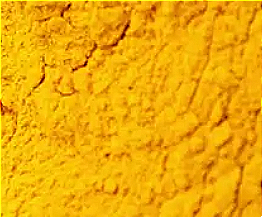
Si presenta in forma di polvere gialla o arancione.
A cosa serve e dove si usa
Medicina
La Zeaxantina è un carotenoide e, come tutti i carotenoidi (un gruppo di composti polifenolici presenti in frutta e verdura), ha effetti benefici particolarmente per le persone anziane per le sue proprietà antinfiammatorie e antiossidanti.
La Zeaxantina è nota per le sue proprietà antiossidanti e la sua capacità di proteggere la retina dell'occhio dai danni causati dalla luce blu (studi hanno dimostrato che l'occhio esposto eccessivamente alla luce blu può subire danni alla retina) e dai radicali liberi. Questo può aiutare a prevenire o ritardare lo sviluppo di malattie oculari come la degenerazione maculare legata all'età (AMD).
Inoltre, la zeaxantina può avere un ruolo nel migliorare la salute del cervello. Alcune ricerche suggeriscono che può aiutare a migliorare la funzione cognitiva negli anziani e può avere un ruolo nella prevenzione di malattie neurodegenerative come l'Alzheimer.
Inoltre, la zeaxantina può avere proprietà anti-infiammatorie e anticancerogene. Alcuni studi suggeriscono che può aiutare a prevenire alcuni tipi di cancro, come il cancro al seno e al polmone, e può aiutare a ridurre l'infiammazione nel corpo.
E' quindi consigliata una dieta ricca di frutta e verdura per limitare i danni al sistema cardiovascolare (1).
Se associata con Vitamina C, Tocoferolo (Vitamina E) e luteina, può ridurre il rischio di tumori al pancreas (2).
In questo studio sui carotenoidi, una lista della frutta e verdura e le percentuali contenute (3).
- Molecular Formula C40H56O2
- Molecular Weight 568.886 g/mol
- CAS 144-68-3
- EINECS 205-636-4
Sinonimi :
- Beta,beta-carotene-3,3'-diol
- Anchovyxanthin
- Zeaxanthol
- Xanthophyll 3
Bibliografia________________________________________________________________________
(1) Woodside JV, McGrath AJ, Lyner N, McKinley MC. Carotenoids and health in older people.
Maturitas. 2015 Jan;80(1):63-68. doi: 10.1016/j.maturitas.2014.10.012. Epub 2014 Oct 31. Review.
(2) Jeurnink SM, Ros MM, Leenders M, van Duijnhoven FJ, Siersema PD, Jansen EH, van Gils CH, Bakker MF, Overvad K, Roswall N, Tjønneland A, Boutron-Ruault MC, Racine A, Cadeau C, Grote V, Kaaks R, Aleksandrova K, Boeing H, Trichopoulou A, Benetou V, Valanou E, Palli D, Krogh V, Vineis P, Tumino R, Mattiello A, Weiderpass E, Skeie G, Castaño JM, Duell EJ, Barricarte A, Molina-Montes E, Argüelles M, Dorronsoro M, Johansen D, Lindkvist B, Sund M, Crowe FL, Khaw KT, Jenab M, Fedirko V, Riboli E, Bueno-de-Mesquita HB. Plasma carotenoids, vitamin C, retinol and tocopherols levels and pancreatic cancer risk within the European Prospective Investigation into Cancer and Nutrition: A nested case-control study: Plasma micronutrients and pancreatic cancer risk. Int J Cancer. 2015 Mar 15;136(6):E665-76. doi: 10.1002/ijc.29175. Epub 2014 Sep 17.
Abstract. Evidence of a protective effect of several antioxidants and other nutrients on pancreatic cancer risk is inconsistent. The aim of this study was to investigate the association for prediagnostic plasma levels of carotenoids, vitamin C, retinol and tocopherols with risk of pancreatic cancer in a case-control study nested within the European Prospective Investigation into Cancer and Nutrition (EPIC). 446 incident exocrine pancreatic cancer cases were matched to 446 controls by age at blood collection, study center, sex, date and time of blood collection, fasting status and hormone use. Plasma carotenoids (α- and β-carotene, lycopene, β-cryptoxanthin, canthaxanthin, zeaxanthin and lutein), α- and γ-tocopherol and retinol were measured by reverse phase high-performance liquid chromatography and plasma vitamin C by a colorimetric assay. Incidence rate ratios (IRRs) with 95% confidence intervals (95%CIs) for pancreatic cancer risk were estimated using a conditional logistic regression analysis, adjusted for smoking status, smoking duration and intensity, waist circumference, cotinine levels and diabetes status. Inverse associations with pancreatic cancer risk were found for plasma β-carotene (IRR highest vs. lowest quartile 0.52, 95%CI 0.31-0.88, p for trend = 0.02), zeaxanthin (IRR highest vs. lowest quartile 0.53, 95%CI 0.30-0.94, p for trend = 0.06) and α-tocopherol (IRR highest vs. lowest quartile 0.62, 95%CI 0.39-0.99, p for trend = 0.08. For α- and β-carotene, lutein, sum of carotenoids and γ-tocopherol, heterogeneity between geographical regions was observed. In conclusion, our results show that higher plasma concentrations of β-carotene, zeaxanthin and α-tocopherol may be inversely associated with risk of pancreatic cancer, but further studies are warranted. © 2014 UICC.
(3) Sommerburg O, Keunen JE, Bird AC, van Kuijk FJ. Fruits and vegetables that are sources for lutein and zeaxanthin: the macular pigment in human eyes. Br J Ophthalmol. 1998 Aug;82(8):907-10. doi: 10.1136/bjo.82.8.907.
Abstract. Background: It has been suggested that eating green leafy vegetables, which are rich in lutein and zeaxanthin, may decrease the risk for age related macular degeneration. The goal of this study was to analyse various fruits and vegetables to establish which ones contain lutein and/or zeaxanthin and can serve as possible dietary supplements for these carotenoids. Methods: Homogenates of 33 fruits and vegetables, two fruit juices, and egg yolk were used for extraction of the carotenoids with hexane. Measurement of the different carotenoids and their isomers was carried out by high performance liquid chromatography using a single column with an isocratic run, and a diode array detector. Results: Egg yolk and maize (corn) contained the highest mole percentage (% of total) of lutein and zeaxanthin (more than 85% of the total carotenoids). Maize was the vegetable with the highest quantity of lutein (60% of total) and orange pepper was the vegetable with the highest amount of zeaxanthin (37% of total). Substantial amounts of lutein and zeaxanthin (30-50%) were also present in kiwi fruit, grapes, spinach, orange juice, zucchini (or vegetable marrow), and different kinds of squash. The results show that there are fruits and vegetables of various colours with a relatively high content of lutein and zeaxanthin. Conclusions: Most of the dark green leafy vegetables, previously recommended for a higher intake of lutein and zeaxanthin, have 15-47% of lutein, but a very low content (0-3%) of zeaxanthin. Our study shows that fruits and vegetables of various colours can be consumed to increase dietary intake of lutein and zeaxanthin.




