



Khorasan wheat flour KAMUT®
Khorasan wheat flour KAMUT® is obtained by milling a specific cultivar of Triticum turgidum subsp. turanicum (Khorasan wheat). In practice, “KAMUT®” is not the generic name of the cereal, but a registered trademark associated with defined production and supply-chain criteria. KAMUT International.
From a sensorial standpoint, the flour often shows nutty and slightly sweet notes, with good performance in doughs aiming for structure and “ancient grain” aromaticity (depending on the extraction rate).
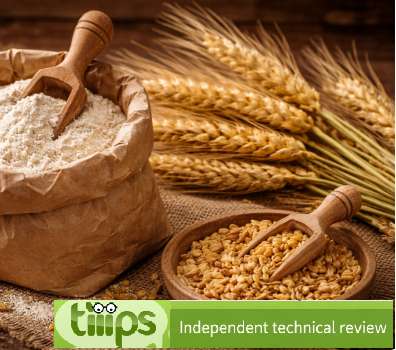
Definition
The raw material is Khorasan wheat; the KAMUT® wording identifies a commercial and specification system (not a different species). The brand’s commercial history began in the United States in the mid-20th century, with cultivation scaling in the Great Plains (Montana area) and later expansion in “ancient grain” and specialty bakery channels.
In food formulations, the flour behaves in some technological aspects like a “durum/tetraploid” wheat flour, but with variability depending on milling grade, protein content, and gluten quality.
Main uses
Food.
Used as an alternative to, or blended with, common soft/durum wheat flours for bread, pizza, focaccia, cookies, crackers, and baked goods. It is also used in fresh pasta doughs and in whole-grain recipes when an integral version is available.
Industrial use.
Industrial food applications (bakery, snacks, premixes, specialty flours) where a distinctive sensorial profile and an “ancient grain” positioning are desired.
Nutrition and health
Khorasan wheat flour KAMUT® is often positioned for a profile that includes a good protein fraction and an interesting content of minerals and B Vitamine (especially thiamin and niacin), with contributions also from magnesium, phosphorus, zinc, and selenium, depending on grade and processing.
From the perspective of clinical studies, some “substitution” diets based on Khorasan wheat products (compared with modern wheat) have been associated, in specific experimental contexts, with favorable changes in certain cardio-metabolic markers. These results should be interpreted cautiously: portion size, the overall dietary pattern, the level of refining, and—most importantly—the real comparability of the tested products (recipes, fiber, processes) matter.
Safety (allergens) and contraindications
Allergen. Contains gluten (wheat): not suitable for celiac disease and gluten-free diets.
Contraindications (brief). In case of diagnosed celiac disease or non-celiac gluten sensitivity, avoid. In case of wheat allergy, avoid.
Storage and shelf-life
Store in a cool, dry place, away from light and heat sources. Close tightly to limit moisture uptake and contamination. Shelf-life depends on refining level (whole-grain tends to be more sensitive due to the lipid fraction of the germ) and on barrier packaging.
Labelling
“KAMUT®” is a trademark: on label it should be used in compliance with the owner’s rules and with the correct ingredient denomination (Khorasan wheat flour). For nutrition claims (e.g., “source of fiber”, “source of protein”), applicable thresholds and conditions depend on the market of sale.
Troubleshooting
Dough not very extensible or difficult to handle. Adjust hydration and rest times; consider blends with other flours to modulate strength and workability.
Dense crumb or limited rise. Check fermentation, flour strength, percentage of this flour in the recipe, and refining level; optimize mixing and bulk proof.
Perceived rancidity (oxidized notes). More likely in whole-grain flours or poorly stored flour; improve packaging, stock rotation, and storage conditions.
Identification data and specifications
| Characteristic | Value |
|---|---|
| Denomination | Khorasan wheat flour KAMUT® |
| Botanical species | Triticum turgidum subsp. turanicum |
| Nature | milled flour (not an additive) |
| Flour vs semolina | flour is finer; semolina is coarser/more granular |
| Commercial-origin note | brand associated with the owner’s cultivation/supply-chain specifications |
Physico-chemical and nutritional properties (indicative)
| Characteristic | Indicative value | Note |
|---|---|---|
| Energy | ~335–345 kcal/100 g | varies by grade and supplier |
| Protein | ~14–15 g/100 g | depends on batch and extraction |
| Carbohydrates | ~67–71 g/100 g | include starch and a fiber fraction |
| Lipids | ~1–4 g/100 g | low fraction; includes PUFA (polyunsaturated fatty acids; note: generally favorable within dietary balance) and MUFA |
| Fiber | variable | higher in whole-grain versions |
| Color and aroma | golden-yellow, nutty notes | depends on extraction and freshness |
Conclusion
Khorasan wheat flour KAMUT® is a tetraploid wheat flour with a commercial identity linked to a trademark, appreciated for its sensorial profile and “ancient grain” positioning. In baking and bakery it can deliver interesting results, but it requires attention to hydration, timings, and blends to optimize workability and volume. From a safety standpoint, it remains a wheat flour: contains gluten.
Mini-glossary
PUFA. Polyunsaturated fatty acids. Note: generally associated with favorable lipid profiles, but absolute amounts (here low) and overall dietary balance matter.
MUFA. Monounsaturated fatty acids. Note: often considered favorable within a balanced diet.
Extraction rate. Degree of separation of grain fractions during milling. Note: more whole-grain = more fiber and micronutrients, but higher oxidative sensitivity.
Gluten. Wheat protein complex responsible for dough structure. Note: contraindicated in celiac disease.
Studies
In particular, it may be suitable to counteract certain risks of the cardiovascular system (1).
This study highlights several aspects that support its benefits (2).
The action of antioxidant peptides inhibits lipid peroxidation (3) has also been established.
This interesting study provides evidence that a substitution diet with KAMUT® khorasan wheat products can reduce some markers associated to the development of type-2 diabetes compared to a diet of modern wheat (4).

