



Laureth-4: properties, uses, INCI functions, safety, alternatives
Laureth-4 is a chemical compound, extracted from lauric acid, a saturated fat derived from coconut or palm oil, by ethylene oxide ethoxylation procedure, so cannot be reasonably excluded to find residues of ethylene oxide and 1,4-dioxane, chemical compounds considered carcinogenic.
Laureths belong to the family of alkyl polyethylene glycol (PEG) ethers, compounds produced by the reaction of lauryl alcohol and one or more ethylene oxide equivalents.
The name describes the structure of the molecule:
- Laureth is a mixture of polyethylene glycol (PEG) and lauryl alcohol. The term 'laureth' is a contraction of 'lauryl ether', where 'lauryl' refers to the lauryl group derived from lauric acid, a medium-chain fatty acid found in coconut and palm oil.
- 4 is the average number of repeated ethylene oxide (EO) units in the molecule.
The synthesis process takes place in different steps:
- Extraction.The raw materials are lauryl alcohol and ethylene oxide. Lauryl alcohol is obtained from coconut or palm oil, while ethylene oxide is a petrochemical product.
- Ethoxylation. Lauryl alcohol is reacted with ethylene oxide in a process called ethoxylation. This reaction is catalysed by a base, usually a strong alkali such as potassium hydroxide. The "4" in "Laureth-4" indicates that for every mole of lauryl alcohol, an average of 4 moles of ethylene oxide are added.
- Neutralisation. The product of the ethoxylation reaction is neutralised, usually with an acid such as citric acid.
- Purification. The resulting product is purified through a series of steps that may include distillation and filtration to remove any unreacted materials and by-products.
- Quality control. The final product is tested to ensure that it meets quality standards.
It appears as a clear, water-white to slightly pale yellow liquid.
What it is used for and where it is used
It is a chemical intermediate, a commercial non-ionic thickening and solubilising agent with an emulsifying function and is used in cosmetic products such as shampoos, liquid soaps and other personal care products such as moisturisers, deodorants and cuticle softeners. Emulsifiers have the property of directly influencing the stability, sensory properties and surface tension of sunscreens by modulating their filmometric performance.
Antistatic agent. Static electricity build-up has a direct influence on products and causes electrostatic adsorption. The antistatic ingredient reduces static build-up and surface resistivity on the surface of the skin and hair.
Deodorant agent. When substances that give off an unpleasant odour are included in cosmetic formulations (typical examples are methyl mercaptan and hydrogen sulphide derived from garlic), deodorants attenuate or eliminate the unpleasant exhalation.
Alternatives
| Option (INCI) | Product type | Key advantages |
|---|---|---|
| Polyglyceryl-4 Laurate | Nonionic solubilizer/co-emulsifier (polyglyceryl) | Non-ethoxylated, supports fragrance/light oil solubilization, suitable for “PEG-free” systems. |
| Polyglyceryl-10 Laurate | Nonionic solubilizer/co-emulsifier (polyglyceryl) | Non-ethoxylated, effective in microemulsions and O/W systems, commonly selected for more eco-positioned formulas. |
| Caprylyl/Capryl Glucoside | Nonionic surfactant/solubilizer (APG) | Non-ethoxylated, good solubilization and cleansing, strong natural-origin positioning, good biodegradability profile. |
| Coco-Glucoside | Nonionic surfactant (APG) | Non-ethoxylated, mild and versatile, useful as a co-surfactant and solubilizer in cleansers and shampoos. |
Laureth-4 gives a soft appearance to cosmetic products in which it is used.
Caratteristiche tipiche ottimali del prodotto commerciale Tetraethyleneglycol monododecyl ether
| Appearance | Clear water-white to slightly pale yellow liquid |
| Boiling Point | 450.3±30.0°C at 760 mmHg |
| Density | 0.9±0.1 g/cm3 |
| Melting Point | |
| Flash Point | 226.1±24.6°C |
| Vapour Pressure | 0.0±2.5 mmHg at 25°C |
| pH | 5.0~7.0 |
| Loss on drying | 0.19% |
| Residue on ignition | ≤0.1% |
| Heavy metals | ≤10 ppm |
| Water | ≤1.0% |
| Index of Refraction | 1.453 |
| PSA | 57.15000 |
| LogP | 3.97 |
 |  |
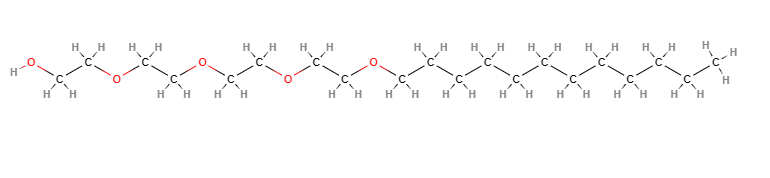 | 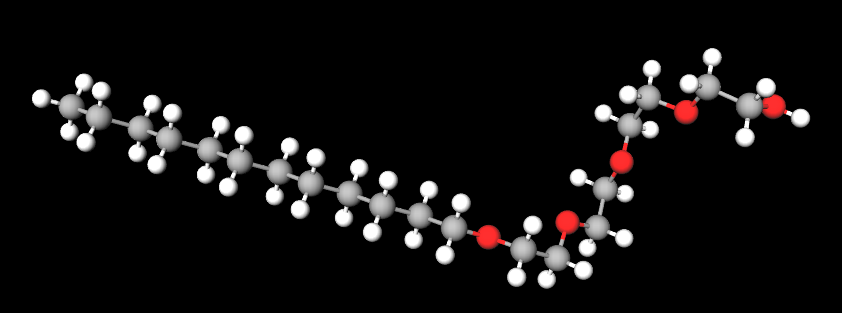 |
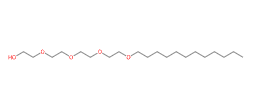
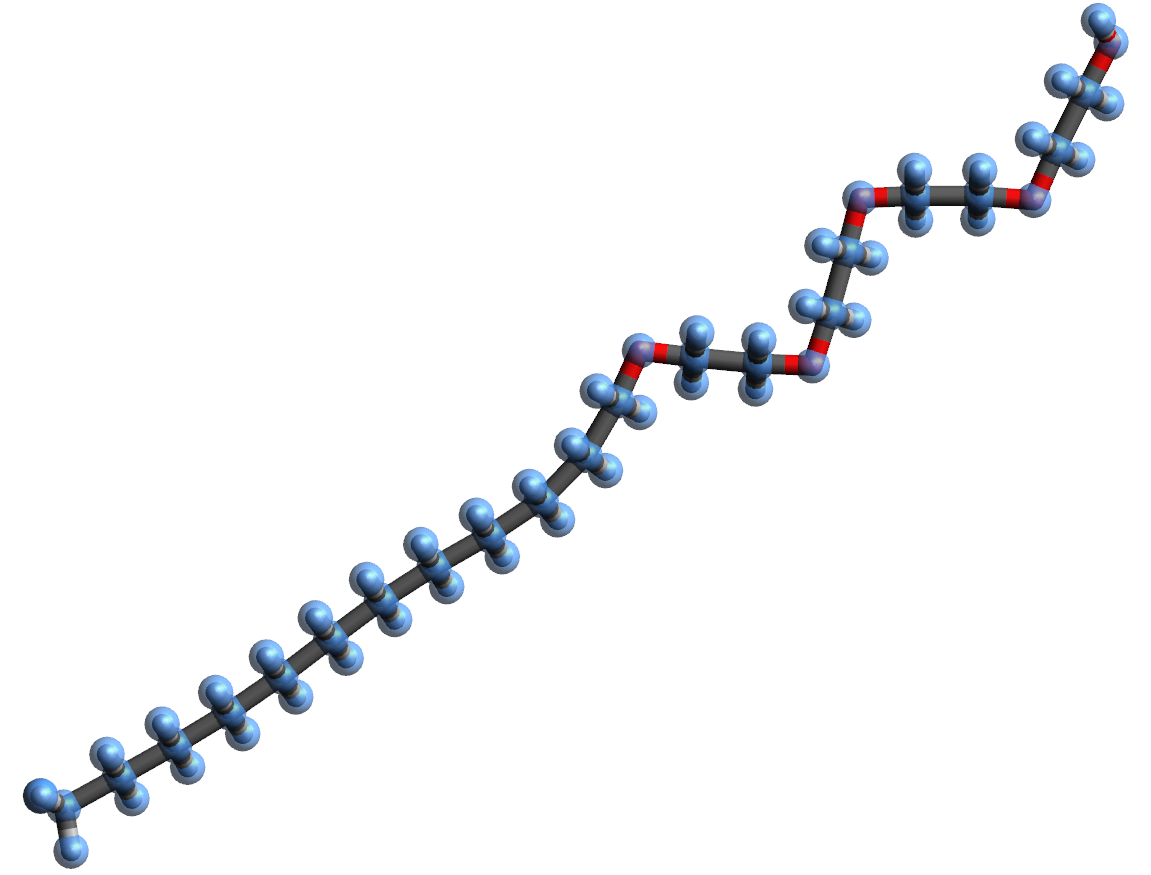
- Molecular Formula C20H42O5
- Linear Formula CH3(CH2)11(OCH2CH2)4OH
- Molecular Weight 362.551 g/mol
- Exact Mass 362.303223
- CAS 5274-68-0 68551-12-2
- EC Number: 226-097-1
- IUPAC 2-[2-[2-(2-dodecoxyethoxy)ethoxy]ethoxy]ethanol
- InChI=1S/C20H42O5/c1-2-3-4-5-6-7-8-9-10-11-13-22-15-17-24-19-20-25-18-16-23-14-12-21/h21H,2-20H2,1H3
- InChl Key WPMWEFXCIYCJSA-UHFFFAOYSA-N
- SMILES CCCCCCCCCCCCOCCOCCOCCOCCO
- PubChem Substance ID 57653173
- DSSTox Substance ID DTXSID3063752
- NSC 190605
- MDL number MFCD00043063
- Beilstein Registry Number 1791369
- NACRES NA.25
Synonyms:
- 3,6,9,12-Tetraoxatetracosan-1-ol
- PEG-4 Lauryl ether
- Tetraethylene glycol monododecyl ether
- 3,6,9,12-Tetraoxatetracosan-1-ol
- Tetraethylene glycol monolauryl ether
- Tetraethylene glycol monododecyl ether
- Lauryl alcohol tri(oxyethylene) ethanol
- Dodecyltetraglycol
- Tetraoxyethylene glycol monododecyl ether
- Tetraethylene glycol dodecyl ether
- Polyoxyethylene (4) lauryl ether
- LA 4
- Dodecyl tetraethylene glycol ether
- Polyoxyethylene(4) lauryl ether
- Ethanol, 2-(2-(2-(2-(dodecyloxy)ethoxy)ethoxy)ethoxy)-
- Dodecyltetraethylene glycol monoether
- 2-{2-[2-(2-dodecyloxyethoxy)ethoxy]ethoxy}ethan-1-ol
- Polyethylene glycol dodecyl ether
- Ethanol, 2-[2-[2-[2-(dodecyloxy)ethoxy]ethoxy]ethoxy]-
- Tetra(oxyethylene) dodecyl ether
- tetraethyleneglycol monododecyl ether
- Tetra(oxydiethanol) monodecyl ether
- 3,9,12-Tetraoxatetracosan-1-ol
- n-Dodecyl tetraethylene glycol ether

