Melaleuca Alternifolia Tea Tree oil (TTO) è un olio essenziale distillato a vapore da una pianta che nasce in Australia, Melaleuca alternifolia appartenente alla famiglia delle Mirtaceae.
Si presenta in forma di liquido oleoso giallo.
E' un liquido volatile, idrofobico, prodotto dal metabolismo secondario della pianta.
È stato dimostrato che non è tossico, non irritante e non corrosivo per l'uomo solo però alle dosi stabilite dalle avvertenze mediche (1).
Salute umana
TTO presenta un ampio spettro di attività antibatteriche, antivirali e antinfiammatorie. La sua vasta gamma di attività antimicrobica è principalmente dovuta alla sua diversità di componenti, in particolare i suoi costituenti volatili. I composti volatili in TTO sono principalmente 1,8-cineolo, terpinen-4-olo e α-terpilenolo (2).
In particolare, è stato dimostrato che 1,8-cineolo distrugge le cellule di E. coli, mentre il terpinen-4-ol mostra forti effetti antibatterici, disinfettanti e anti-corrosivi. È stato dimostrato che l'α-terpilenolo presenta un'adeguata permeabilità e presenta un effetto letale su patogeni comuni come Staphylococcus aureus, E. coli, pseudomonas aeruginosa, candida aibicans, ecc. (3).
Diversi studi hanno suggerito l'uso di TTO per il trattamento di acne vulgaris, dermatite seborroica e gengivite cronica. Accelera inoltre il processo di guarigione delle ferite e mostra attività anti-cancro della pelle (4)
Agricoltura
La Botrytis cinerea , uno dei patogeni fungini più distruttivi, causa la decomposizione della muffa grigia in una vasta gamma di frutta e verdura fresca. Questo studio conclude che importanti percorsi metabolici, tra cui la glicolisi, il ciclo dell'acido tricarbossilico e il metabolismo delle purine, sono stati compromessi dal trattamento TTO, mentre il Il Citocromo c (un'emoglobina situata nella membrana mitocondriale interna che è responsabile del trasferimento di elettroni tra complessi di catene di trasporto degli elettroni mitocondriali) è aumentato. Lo studio conclude che l'interruzione del metabolismo energetico da parte del TTO contribuisce alla sua attività antifungina contro la Botrytis cinerea (5).
Su questo ingrediente sono stati selezionati gli studi più rilevanti con una sintesi dei contenuti:
Melaleuca Alternifolia studi
Caratteristiche tipiche del prodotto commerciale Melaleuca Alternifolia Tea tree oil
Appearance
| Colorless to yellowish liquid
|
Boiling Point
| 165°C 329°F |
Flash Point
| 63,88°C 147°F |
Density
| 0.878 g/mL at 25°C(lit.) |
| Refraction Index | 1.478 |
| Purity | HPLC>99.5%
|
| Components: |
|
terpineol-4
| ≥47%
|
γ -terpinene
| 10%~28%
|
a-terpinene
| 5%~13%
|
a- terpineol
| 1.5%~8%
|
Terpinolene
| 1.5%~5%
|
Eucalyptol
| 0~13%
|
Storage
| 2-8 °C
|
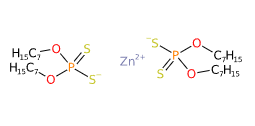
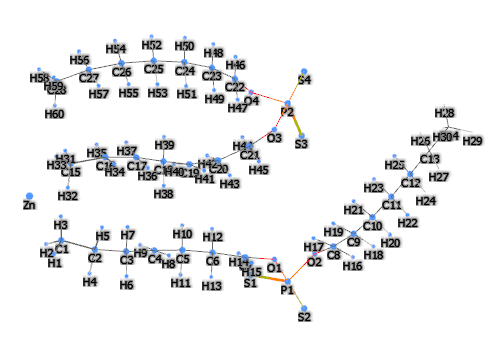
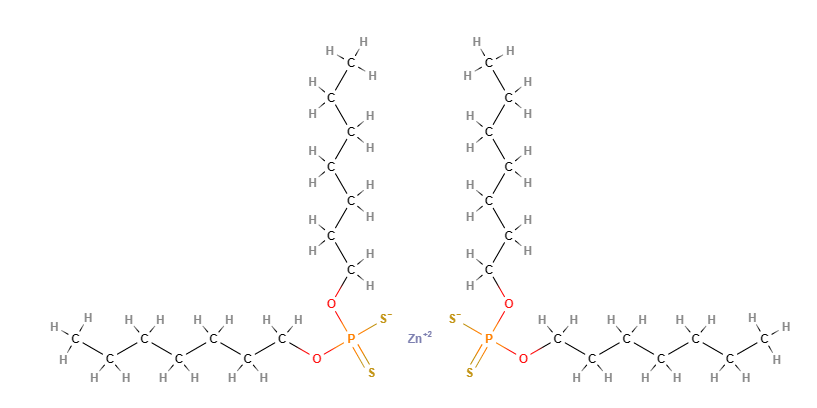
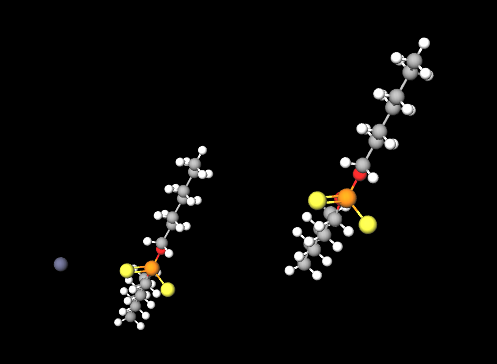
- Formula molecolare: C28H60O4P2S4Zn
- Peso molecolare: 716.352 g/mol
- CAS: 68647-73-4
- EC Number: 232-293-8
- UNII VIF565UC2G
- DSSTox Substance ID DTXSID6028789 DTXSID60100611 DTXSID30874014
- IUPAC zinc;diheptoxy-sulfanylidene-sulfido-λ5-phosphane
- InChl=1S/2C14H31O2PS2.Zn/c2*1-3-5-7-9-11-13-15-17(18,19)16-14-12-10-8-6-4-2;/h2*3-14H2,1-2H3,(H,18,19);/q;;+2/p-2
- InChl Key ZKAQFYDDTYGBBV-UHFFFAOYSA-L
- SMILES CCCCCCCOP(=S)(OCCCCCCC)[S-].CCCCCCCOP(=S)(OCCCCCCC)[S-].[Zn+2]
- MDL number MFCD00132409
- PubChem Substance ID
- RTECS RJ3697600
- NCI C74295
- C74295 69627
- FEMA Number: 3902
Sinonimi:
- Melaleuca alternifolia Oil
- Phosphorodithioic acid, O,O-di-C1-14-alkyl esters, zinc salts
- Oil, Melaleuca alternifolia
- TEA TREE OIL
- Oil, Tea Tree
- Tea Tree Oil
- Dialkyl(C1-C14)dithiophosphoric acid, zinc salt
- SCHEMBL164653
- zinc diheptoxy-sulfido-thioxo-{5}-phosphane
- Zinc Dialkylphosphorodithiloate
- AN-38072
Bibliografia_________________________________________________________________________
(1) Hammer KA, Carson CF, Riley TV. In vitro activity of Melaleuca alternifolia (tea tree) oil against dermatophytes and other filamentous fungi. J Antimicrob Chemother. 2002 Aug;50(2):195-9. doi: 10.1093/jac/dkf112.
Abstract. The in vitro activity of Melaleuca alternifolia (tea tree) oil against dermatophytes (n = 106) and filamentous fungi (n = 78) was determined. Tea tree oil MICs for all fungi ranged from 0.004% to 0.25% and minimum fungicidal concentrations (MFCs) ranged from <0.03% to 8.0%. Time-kill experiments with 1-4 x MFC demonstrated that three of the four test organisms were still detected after 8 h of treatment, but not after 24 h. Comparison of the susceptibility to tea tree oil of germinated and non-germinated Aspergillus niger conidia showed germinated conidia to be more susceptible than non-germinated conidia. These data demonstrate that tea tree oil has both inhibitory and fungicidal activity.
(2) Lin G, Chen H, Zhou H, Zhou X, Xu H. Preparation of Tea Tree Oil/Poly(styrene-butyl methacrylate) Microspheres with Sustained Release and Anti-Bacterial Properties. Materials (Basel). 2018 May 1;11(5):710. doi: 10.3390/ma11050710.
Abstract. Using butyl methacrylate (BMA) and styrene (St) as monomers and divinylbenzene (DVB) as a crosslinking agent, P(St-BMA) microspheres were prepared by suspension polymerization. Tea tree oil (TTO) microspheres were prepared by adsorbing TTO on P(St-BMA) microspheres. The structure and surface morphology of P(St-BMA) microspheres and TTO microspheres were characterized by Fourier transformed infrared spectroscopy (FTIR), optical microscopy, and Thermogravimetric analysis (TGA). In doing so, the structural effect of P(St-BMA) microspheres on oil absorption and sustained release properties could be investigated. The results show that the surface of the P(St-BMA) microspheres in the process of TTO microsphere formation changed from initially concave to convex. The TTO microspheres significantly improved the stability of TTO, which was found to completely decompose as the temperature of the TTO increased from about 110 °C to 150 °C. The oil absorption behavior, which was up to 3.85 g/g, could be controlled by adjusting the monomer ratio and the amount of crosslinking agent. Based on Fickian diffusion, the sustained release behavior of TTO microspheres was consistent with the Korsmeyer-Pappas kinetic model. After 13 h of natural release, the anti-bacterial effect of the TTO microspheres was found to be significantly improved compared to TTO.
(3) Thomas J, Carson CF, Peterson GM, Walton SF, Hammer KA, Naunton M, Davey RC, Spelman T, Dettwiller P, Kyle G, Cooper GM, Baby KE. Therapeutic Potential of Tea Tree Oil for Scabies. Am J Trop Med Hyg. 2016 Feb;94(2):258-266. doi: 10.4269/ajtmh.14-0515.
(4) Pazyar N, Yaghoobi R, Bagherani N, Kazerouni A. A review of applications of tea tree oil in dermatology. Int J Dermatol. 2013 Jul;52(7):784-90. doi: 10.1111/j.1365-4632.2012.05654.x.
(5) Xu J, Shao X, Wei Y, Xu F, Wang H. iTRAQ Proteomic Analysis Reveals That Metabolic Pathways Involving Energy Metabolism Are Affected by Tea Tree Oil in Botrytis cinerea. Front Microbiol. 2017 Oct 12;8:1989. doi: 10.3389/fmicb.2017.01989.
Abstract. Tea tree oil (TTO) is a volatile essential oil obtained from the leaves of the Australian tree Melaleuca alternifolia by vapor distillation. Previously, we demonstrated that TTO has a strong inhibitory effect on Botrytis cinerea. This study investigates the underlying antifungal mechanisms at the molecular level. A proteomics approach using isobaric tags for relative and absolute quantification (iTRAQ) was adopted to investigate the effects of TTO on B. cinerea. A total of 718 differentially expression proteins (DEPs) were identified in TTO-treated samples, 17 were markedly up-regulated and 701 were significantly down-regulated. Among the 718 DEPs, 562 were annotated and classified into 30 functional groups by GO (gene ontology) analysis. KEGG (Kyoto Encyclopedia of Genes and Genomes) enrichment analysis linked 562 DEPs to 133 different biochemical pathways, involving glycolysis, the tricarboxylic acid cycle (TCA cycle), and purine metabolism. Additional experiments indicated that TTO destroys cell membranes and decreases the activities of three enzymes related to the TCA cycle. Our results suggest that TTO treatment inhibits glycolysis, disrupts the TCA cycle, and induces mitochondrial dysfunction, thereby disrupting energy metabolism. This study provides new insights into the mechanisms underlying the antifungal activity of essential oils.