



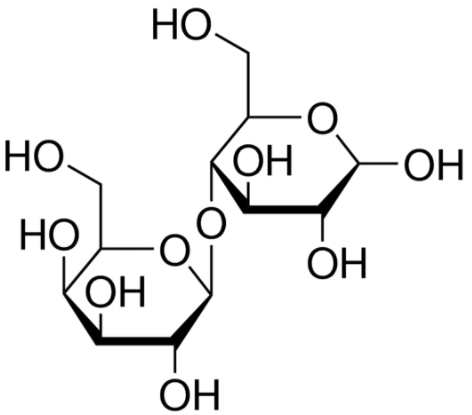
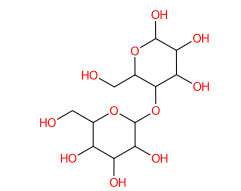
Lactose is a sugar molecule, a disaccharide, soluble in water (hydrophilic) that divides into two other smaller molecules: glucose and galactose.
It is a sugar found in the milk of humans and pets and is of great importance as a basic nutrient.
In order for lactose to be absorbed from the intestine and into the body, it must first be broken down into glucose and galactose which are then absorbed by the cells lining the small intestine. The enzyme that breaks down lactose into glucose and galactose is found on the surface of the cells lining the small intestine.
What it is used for and where
Food
Lactose improves the metabolism of plasma lipids, especially triglycerides, and reduces the accumulation of hepatic cholesterol by maintaining a lower biliary cholesterol concentration; it also reduces the formation of gallstones, apparently through its impact on the metabolism of the large intestine (1).
Pharmaceutical Industry
Lactose is a very common excipient, a dry powder binder in tablets because of its neutral taste, solubility and low cost characteristics. Many people are lactose intolerant and some pharmaceutical companies replace it with microcrystalline cellulose or cornstarch. It is an excellent diluent with binding properties (it offers an excellent cohesion) and it is used for its ability to increase the degree of compactness in medicinal tablets. However it turns out to be decidedly incompatible with amine derivatives with formation of Schiff bases.
Cosmetics
In the cosmetic industry there is a great interest in products synthesized from natural products for a reason of limited cost, availability, renewability. Sucrose, glucose, lactose have shown low toxicity and high biodegradability. Compounds derived from lactose have shown an excellent antagonistic activity against bacteria and fungi so that a wide range of cationic surfactants have been derived.
Skin conditioning agent - Humectant. Humectants are hygroscopic substances used to minimise water loss from the skin and prevent dryness by facilitating faster and greater water absorption into the stratum corneum of the epidermis. The epidermis is the most superficial of the three layers that make up human skin — epidermis, dermis and hypodermis — and is the layer responsible for maintaining hydration across all three layers. In turn, the epidermis is composed of five layers: the stratum corneum, the most superficial layer, followed by the granular, spinous, clear and basal layers. Humectants have the ability to retain in the stratum corneum the water they attract from the air and have the function of hydrating the skin. It is preferable to use them before emollients, which are oil-based.
Safety
The digestive process of lactose in the human body needs a specialized enzyme, commonly called lactase. a β-galactosidase located on the upper surface of enterocytes on the microvilli of the small intestine. When an organism has a lactase deficiency, lactose cannot be absorbed and therefore is not properly digested (1).
Warning : it can cause intolerance
Industrially it appears as a white, fine or crystalline powder.
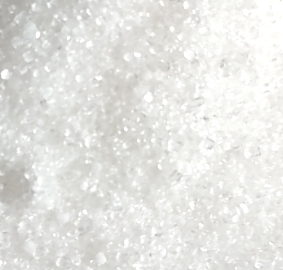
Typical optimal characteristics of commercial Lactose product
| Appearance | Pure white, crystalline, free-flowing powder |
| Solution | Clear, colorless, odorless |
| Flavor | Slightly sweet |
| Acidity or alkalinity | 0.1 ml of 0.1N NaOH |
| Clarity and color (10% 1cm at 400nm) | 0.01 |
| Loss on drying | 0.3% |
| Heavy metals | <5.0ppm |
| At 210-220 nm | 0.06 |
| At 210-300 nm | 0.02 |
| Residue on ignition | 0.1% |
| Bulk density, tapped | 0.70-0.90g/ml (depends upon mesh size specifications) |
| Melting point | 222.8°C |
| Boiling point | 397.76°C (rough estimate) |
| Storage temperature | 2-8°C |
 |  |
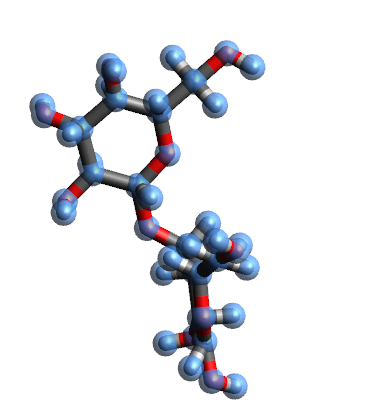 | 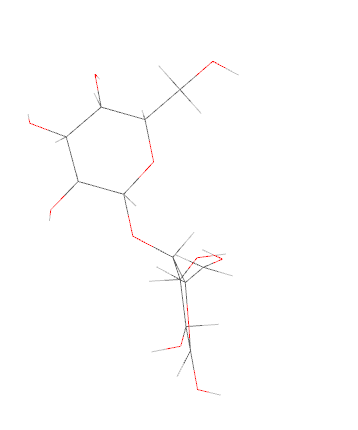 |
- Molecular Formula: C12H22O11
- Molecular Weight: 342.297 g/mol
- CAS: 63-42-3 5965-66-2
- EC Number: 200-559-2 227-751-9
- UNII: 13Q3A43E0S
- PubChem Substance ID 24896352
- MDL number MFCD00064521 MFCD00151251
- DSSTox Substance ID: DTXSID5058723
- PubChem Substance ID 329823055
- InChI=1S/C12H22O11/c13-1-3-5(15)6(16)9(19)12(22-3)23-10-4(2-14)21-11(20)8(18)7(10)17/h3-20H,1-2H2/t3-,4-,5+,6+,7-,8-,9-,10-,11-,12+/m1/s1
- InChl Key GUBGYTABKSRVRQ-DCSYEGIMSA-N
- SMILES C(C1C(C(C(C(O1)OC2C(OC(C(C2O)O)O)CO)O)O)O)O
- IUPAC (2R,3R,4S,5R,6S)-2-(hydroxymethyl)-6-[(2R,3S,4R,5R,6R)-4,5,6-trihydroxy-2-(hydroxymethyl)oxan-3-yl]oxyoxane-3,4,5-triol
- ChEBI 36218
- Beilstein 93796
Synonyms:
- Beta-Lactose
- beta-D-Lactose
- Fast-flo Lactose
- Pharmatose 450M
- Lactobiose
- beta-D-Glucopyranose, 4-O-beta-D-galactopyranosyl-
- (2R,3R,4S,5R,6S)-2-(hydroxymethyl)-6-[(2R,3S,4R,5R,6R)-4,5,6-trihydroxy-2-(hydroxymethyl)oxan-3-yl]oxyoxane-3,4,5-triol
- Aletobiose
- (2R,3R,4S,5R,6S)-2-(hydroxymethyl)-6-[(2R,3S,4R,5R,6R)-4,5,6-trihydroxy-2-(hydroxymethyl)tetrahydropyran-3-yl]oxy-tetrahydropyran-3,4,5-triol
- Galactinum
- beta-D-Galp-(1->4)-beta-D-Glcp
- Tablettose
- Lactin
- 4-O-beta-D-Galactopyranosyl-beta-D-glucopyranose
- beta-D-Gal-(1-->4)-beta-D-Glc
- D-Lactose
- D-Glucose, 4-O-beta-D-galactopyranosyl
- Milk sugar
- beta-D-galactopyranosyl-(1->4)-beta-D-glucose
- Fast-flo
- (2R,3R,4R,5S,6R)-6-(hydroxymethyl)-5-((2S,3R,4S,5R,6R)-3,4,5-trihydroxy-6-(hydroxymethyl)tetrahydro-2H-pyran-2-yloxy)tetrahydro-2H-pyran-2,3,4-triol
- Lactose anhydrous

