



Pomegranate (Punica granatum L.)
Deciduous small to medium-sized tree or shrub, predominantly cultivated in warm temperate and Mediterranean climates, yet able to adapt to inland regions with moderately cold winters. It displays either a bush-like form or a low multi-stemmed tree habit, with branches that may be spiny. Leaves are opposite or nearly opposite, small, glossy, and dark green. Flowers are mostly red-orange, though white or variegated forms exist, with a characteristic bell-shaped structure. Fruits, identified as pomegranates, are specialized berries (balaustae) with a thick, leathery rind enclosing numerous succulent arils, each containing a seed.
From an agronomic standpoint, the pomegranate is considered rustic and shows marked drought tolerance once fully established. It prefers well-drained soils, ranging from medium-textured to slightly sandy, including moderately calcareous substrates. Persistent water stagnation should be avoided, as it may lead to root rot and reduced plant longevity. Flowering generally takes place from late spring through summer, while fruit set is influenced by temperature, water availability, and the efficiency of pollination. Ripening typically occurs in autumn. Yield levels and fruit quality are influenced by cultivar choice, canopy management (notably pruning), the irrigation regime, and the climatic conditions of the growing season.
The composition of the pomegranate fruit is characterized by a high proportion of water, fermentable sugars (primarily glucose and fructose), organic acids (mainly citric and malic), and a component of dietary fibre located partly within the internal membranes and rind. The mineral profile is dominated by potassium, accompanied by smaller quantities of calcium and magnesium. Phenolic compounds—especially tannins and anthocyanins—contribute to both the antioxidant capacity and the pigmentation of the juice. Oil extracted from the seeds contains unsaturated fatty acids, most notably punicic acid, together with variable amounts of tocopherols. The levels of these constituents depend on cultivar, ripeness, pedoclimatic factors, and post-harvest conservation conditions.
At the technological and food-processing level, the pomegranate is cultivated for the production of fresh fruits, juices, concentrates, extracts, and semi-processed ingredients for beverages, syrups, confectionery, and culinary products. Arils may be consumed directly or incorporated into both savoury and sweet preparations, while the juice is used as a base for blends, beverages, or high-fruit formulations. The rind and other anatomical fractions, rich in tannins and polyphenols, are also used—at a more limited scale—for technical or herbal extracts.
Commercial evaluation of pomegranate fruits is based on parameters such as fruit size and rind integrity, external colour, soluble solids content (°Brix), acidity, sugar-to-acid ratio, aril yield, and the absence of internal defects (splitting, rot, or aril desiccation). These criteria determine suitability for fresh consumption as well as for industrial processing.
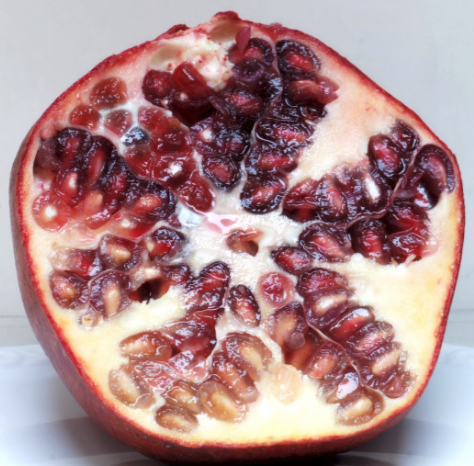 | 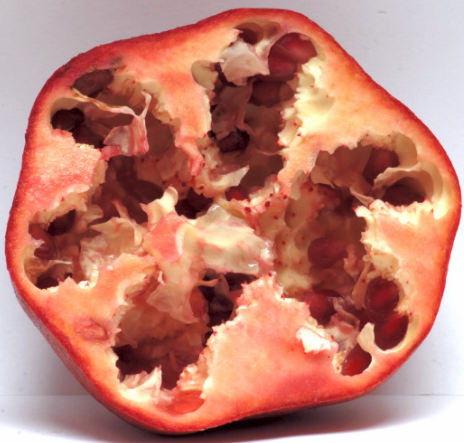 |
The pomegranate ripens exclusively on the plant so the unripe pomegranates are used only for decoration.
Pomegranate tree, botanical classification according to APG IV
Kingdom: Plantae
Clade: Angiosperms → Eudicots → Superrosids → Rosids → Eurosids II
Order: Myrtales
Family: Lythraceae
Genus: Punica
Species: Punica granatum L.
Indicative nutritional values per 100 g (pomegranate arils, raw, edible portion)
| Component | Approx. value per 100 g |
|---|---|
| Energy | ~ 83–90 kcal |
| Water | ~ 77–79 g |
| Total carbohydrates | ~ 18–19 g |
| — of which sugars | ~ 13–16 g |
| Dietary fibre | ~ 4–5 g |
| Proteins | ~ 1.5–2.0 g |
| Total fats | ~ 1.0–1.5 g |
| — of which saturated fatty acids (SFA) | ~ 0.1–0.15 g |
| — monounsaturated (MUFA) | ~ 0.1–0.2 g |
| — polyunsaturated (PUFA) | ~ 0.6–0.9 g (prevalently punicic acid and other omega-5/omega-6) |
| Sodium | low (a few mg) |
| Potassium | ~ 200–260 mg |
| Other minerals and micronutrients | small amounts of calcium, magnesium, phosphorus, iron; vitamin C, some B-group vitamins, natural antioxidants (polyphenols, tannins) |
Values may vary with cultivar, ripeness and growing conditions.
Short interpretation
Pomegranate is a fruit with a moderate energy content, mostly from carbohydrates and natural sugars, but it also provides dietary fibre, a small amount of proteins and fats, and useful micronutrients (especially potassium and polyphenolic antioxidants).
Compared with dry starches or refined sugars, it is less carbohydrate-dense and offers a more complex and nutritionally interesting profile (water, fibre, minerals and bioactive compounds).
Chemical Composition and Structure:
- Polyphenols: The fruit is rich in polyphenols, including ellagic acid, punicalagins, and anthocyanins. These compounds are known for their strong antioxidant properties.
- Vitamins: Pomegranate is a good source of vitamins, particularly vitamin C, vitamin K, and some B vitamins.
- Minerals: It contains essential minerals such as potassium, calcium, and magnesium.
- Organic Acids: The fruit has high levels of citric acid and other organic acids that contribute to its tart flavor.
How to Cultivate It:
- Soil: Punica granatum thrives in well-drained, loamy soils with a slightly acidic to neutral pH (6.0-7.0). It is tolerant of poor soil conditions but performs best in fertile soils.
- Climate: The plant prefers a temperate to subtropical climate with hot, dry summers and cool winters. It is not frost-tolerant and requires a warm climate to produce fruit.
- Watering: Regular watering is necessary, particularly during dry periods. However, the plant should not be overwatered as it is susceptible to root rot. The soil should be kept moderately moist.
- Fertilization: Fertilize in early spring with a balanced fertilizer to promote healthy growth and fruit production. Avoid excessive nitrogen, which can lead to excessive foliage growth at the expense of fruit.
- Pruning: Pruning helps to maintain the plant’s shape and remove dead or diseased branches. It also improves air circulation and light penetration, which can enhance fruit production. Prune in late winter or early spring before new growth starts.
Uses and Benefits:
- Culinary Uses: The arils of the pomegranate fruit are used in a variety of culinary applications, including fresh eating, juices, sauces, and as a garnish. The juice is particularly popular for its refreshing taste and health benefits.
- Medicinal Uses: Pomegranate has been used in traditional medicine for its anti-inflammatory, antioxidant, and antimicrobial properties. It is believed to support cardiovascular health, improve memory, and aid digestion.
- Cosmetic Uses: Extracts from pomegranate are used in skincare products for their antioxidant and anti-aging properties. They help to protect the skin from damage caused by free radicals and promote a healthy, youthful appearance.
Applications:
- Food Industry: Pomegranate is widely used in the food industry for its juice, flavoring, and as a functional ingredient in various products such as sauces, dressings, and snacks.
- Pharmaceutical Industry: The fruit and its extracts are included in health supplements and medicinal products aimed at promoting cardiovascular health, improving cognitive function, and supporting overall well-being.
- Cosmetic Industry: Pomegranate extracts are used in skincare products for their antioxidant and anti-aging benefits, contributing to the development of creams, serums, and lotions that promote skin health and reduce signs of aging.
Environmental and Safety Considerations:
- Environmental Impact: Punica granatum is generally non-invasive and does not pose significant environmental risks. It can be grown in garden settings and contributes to biodiversity by attracting pollinators such as bees.
- Safety: The fruit and its extracts are considered safe for consumption and use. However, individuals with allergies to pomegranates or related plants should exercise caution.
Studies
In the phytochemical composition there are polyphenols, flavonoids, anthocyanins, tannins, ellagic acid, ursolic acid, gallic acid.
Of all the fresh fruit, the pomegranate has the highest antioxidant power and I quote the formula: 3895.9 +/- 241.4 mg/L x kJ(-1). All the remaining fruit has a lower degree and in order: orange, lemon, mandarin, persimmon, kiwi, pear and avocado (1).
It has first-rate antioxidant properties for the human body (2), releasing ellagic acid into the grains and internal cortex, which protects the brain, intestines, prostate (3) and others.
As far as the prostate is concerned, it is an alternative cure for contrasting the tumor (4).
Microscopic observation of the wound healing process on collagen, number of polymorphonuclear cell infiltration, angiogenesis and re-epithelialisation showed that topical administration of 10% Powder of standardized pomegranate extract accelerates the healing of wounds from second-degree burns (5).


