



Cocamidopropyl betaine is a pseudo-amphoteric chemical compound, zwitterionic, with a quaternary ammonium cation that is industrially produced from coconut oil and dimethylaminopropylamine.
Cocamidopropyl Betaine (CAPB) is a synthetic surfactant derived from coconut oil, commonly used in personal care products, household cleaners, and industrial applications. It is an amphoteric compound, meaning it has both positive and negative charges, which allows it to act as a mild detergent, foam booster, and conditioning agent. It is found in products such as shampoos, body washes, and liquid soaps due to its ability to enhance foam, cleanse gently, and reduce irritation compared to harsher surfactants.
Chemical Composition and Structure
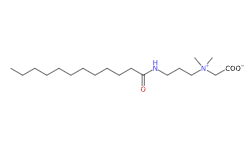
Cocamidopropyl Betaine is made from the fatty acids of coconut oil, primarily lauric acid, which is reacted with 3-dimethylaminopropylamine to form the amide structure. The resulting product is further reacted with chloroacetic acid to produce the betaine portion. Its chemical formula is C19H38N2O3, and the compound contains both a hydrophilic (water-attracting) and hydrophobic (water-repelling) part, which allows it to act as an effective surfactant.
Physical Properties
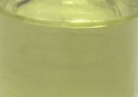
Cocamidopropyl Betaine is typically found as a yellow to pale amber liquid. It is soluble in water, allowing it to mix well with other ingredients in formulations. CAPB is known for being a mild surfactant that helps boost foam formation, making it ideal for use in products that require a rich lather, such as shampoos and body washes.
The name describes the structure of the molecule:
Cocamidopropyl is a compound derived from coconut oil and dimethylaminopropylamine. It contains a long chain of carbon atoms (from coconut oil fatty acids), a nitrogen atom (N) and three hydrogen atoms forming an amine group (-NH2).
betaine is a compound known as zwitterion, which has positive and negative charges but is neutral overall. In Cocamidopropyl betaine, the betaine part of the molecule is derived from the cocamidopropyl part by replacing one of the hydrogen atoms of the amine group with a carboxyl group (-COO-).
The synthesis process takes place in different steps:
- Extraction. The raw materials are coconut oil and betaine. Coconut oil is extracted from ripe coconuts, while betaine is usually obtained from sugar beets.
- Cocamide production. Coconut oil fatty acids are isolated and then reacted with dimethylaminopropylamine to produce cocamidopropylamine.
- Reaction. Cocamidopropylamine is reacted with betaine and an acid catalyst to produce cocamidopropyl betaine.
- Purification. The resulting product, in a series of steps that may include distillation and filtration, is purified to remove all unreacted materials and by-products.
- Quality control. The final product is tested to ensure that it meets quality standards.
It occurs as a clear to pale yellow transparent liquid or as a fine white powder. It dissolves easily in water (10 % solution), has an acid reaction with a pH of 5-7.
What it is used for and where it is used
Cosmetics
It is a surfactant (removes dirt particles) of synthetic origin and is used in cosmetics and body cleansers with an antimicrobial and foaming function. Softens hair and reduces static electricity in conditioners. Thickener in personal care products and detergents. Improves the conditioning functions of other surfactants, performs well against water hardness, is antistatic and biodegradable. Good compatibility with other amphoteric surfactants and cationic, anionic, non-ionic surfactants.
Cocamidopropyl betaine is one of the most common chemical compounds used in cosmetics and personal hygiene in detergents, liquid soaps, shampoos, eye make-up products, make-up removers, bath gels, contact lens solutions, roll-on deodorants. In shampoos the recommended dosage is 3-9%, while in cosmetics 1-2% is sufficient.
It has a significant number of INCI functions:
- Antistatic agent. Static electricity build-up has a direct influence on products and causes electrostatic adsorption. The antistatic ingredient reduces static build-up and surface resistivity on the surface of the skin and hair.
- Cleansing agent. Ingredient that cleanses skin without exploiting the surface-active properties that produce a lowering of the surface tension of the stratum corneum.
- Hair conditioning agent. A large number of ingredients with specific purposes can co-exist in a hair shampoo: cleansers, conditioners, thickeners, mattifying agents, sequestering agents, fragrances, preservatives, special additives. However, the indispensable ingredients are the cleansers and conditioners as they are necessary and sufficient for hair cleansing and manageability. The others act as commercial and non-essential auxiliaries such as: appearance, fragrance, colouring, etc. Hair conditioning agents have the task of increasing shine, manageability and volume, and reducing static electricity, especially after treatments such as colouring, ironing, waving, drying and brushing. They are, in practice, dispersing agents that may contain cationic surfactants, thickeners, emollients, polymers. The typology of hair conditioners includes: intensive conditioners, instant conditioners, thickening conditioners, drying conditioners.
- Skin conditioning agent - Miscellaneous. This ingredient has the task of modifying the condition of the skin when it is damaged or dry by reducing its flakiness and restoring its elasticity.
- Surfactant - Cleansing agent. Cosmetic products used to cleanse the skin utilise the surface-active action that produces a lowering of the surface tension of the stratum corneum, facilitating the removal of dirt and impurities.
- Surfactant - Foam booster. It has the effect of introducing gas bubbles into the water and affects the cleaning process by helping to spread the cleanser. Since sebum has an inhibiting effect on the bubble, more foam is produced in the second shampoo.
- Viscosity control agent. It controls and adapts viscosity to the required level for optimal chemical and physical stability of the product and dosage in gels, suspensions, emulsions, solutions.
However, the presence of salt in solutions containing Cocamidopropyl betaine reduces their ability to lower surface tension, decreases the critical micelle concentration (mol/dm3) and increases absorption parameters (1).
Medical
In medicine and pharmaceuticals it is used in preparations for treating acne, exfoliating and peel-off products, anti-dandruff products etc..
Other uses
- In the detergent industry it is in hand washing detergents, hand dishwashing products.
- In the pesticide industry as a surfactant instead of alkyl polyglycosides (APG) and polyoxyethylene amine surfactants (TAE), which have proven to be quite toxic to the environment and irritating to the human epidermis.
- In the textile industry as a softening agent.
The objectives of this in vitro study were: a) to determine the effects of the waiting period of chlorhexidine (CHX) rinse after the use of fluoride toothpaste and b) to further determine the effect of the surfactant in the toothpaste [sodium dodecyl sulfate (SDS) or Cocamidopropyl betaine (CAPB)] on the remineralisation of the caries lesion associated with CHX rinse. The absence of CHX as an adjunct to fluoride toothpastes resulted in greater remineralisation of enamel lesions than the immediate use of CHX treatment for toothpastes with SDS and CAPB. CAPB toothpastes indicated significantly greater remineralisation than SDS toothpastes and may be recommended for patients at high risk of caries. A waiting time of 30 minutes for CHX treatment is recommended after brushing (2).
Safety
Cocamidopropyl betaine is normally among the least allergenic preservative chemical compounds, however its relative allergenicity appears to be attributed to its impurities dimethylaminopropylamine and cocamidopropyl dimethylamine and typically manifests as hand dermatitis (3).
Repeated and prolonged use of surfactants can cause irritation and allergic contact dermatitis. (4).
The results of this study are discussed in terms of the environmental consequences of the application of CAPB to the control of harmful blooms on algae (5).
Cocamidopropyl betaine (CAPB) and related amidopropylbainins are zwitterions mainly used as surfactants in cosmetics. These ingredients are safe for use as cosmetic ingredients in the use and concentration practices of this safety assessment (6).
The most relevant studies on the subject have been selected with a summary of their contents:
Cocamidopropyl betaine studies
Typical optimal commercial product characteristics Cocamidopropyl betaine
| Appearance | Light yellow clear liquid |
| Melting point | < −10 °C (14 °F; 263 K) -50°C |
| Boiling point | 100°C 120°C |
| Flash point | 94°C |
| Solid Content | 35% ±1% 40% 45% |
| Free amine content | 0.5% max |
| Solid content | 35.0% min. |
| Active matter | 28.0% min. |
| pH value (5% aq.solution, 25℃) | 5-7 |
| Sodium chloride content | 7.0% max |
| PSA | 121.27000 |
| Free monochloroacetic acid | Max.100ppm |
| Sodium chloride | 6.0-7.0% Max |
| Free amine | 0.5% Max |
| Spec.gravity at 20℃ | 1.045-1.070 |
 |  |
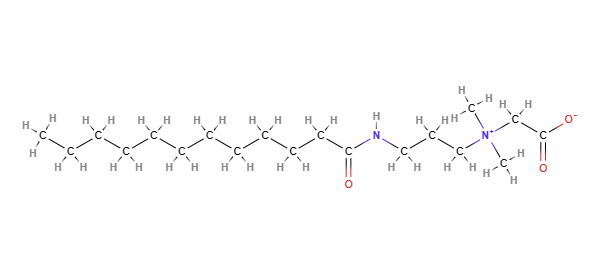 | 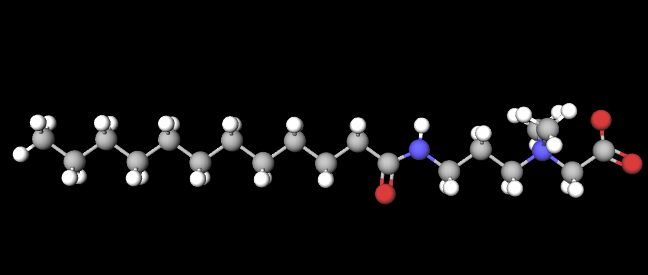 |
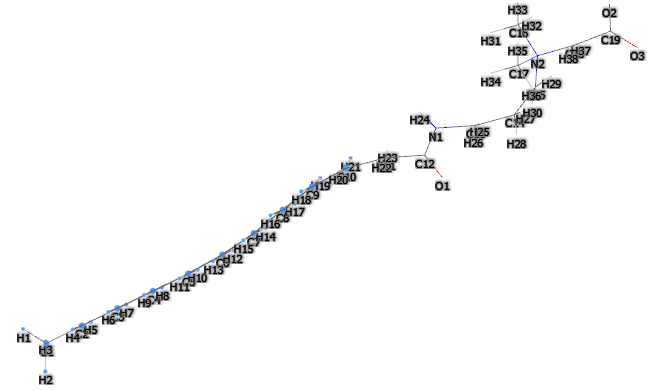
- Molecular Formula C19H38N2O3 RCONH(CH2)3N+(CH3)2CH2COO
- Molecular weight 342.524 g/mol
- Exact Mass 344.27874102
- CAS : 61789-40-0 86438-79-1 4292-10-8
- UNII 23D6XVI233
- EC Number 263-058-8
- DSSTox Substance ID DTXSID6028072 DTXSID4041282
- MDL number MFCD00239947
- PubChem Substance ID
- IUPAC 2-[3-(dodecanoylamino)propyl-dimethylazaniumyl]acetate
- InChI=1S/C19H38N2O3/c1-4-5-6-7-8-9-10-11-12-14-18(22)20-15-13-16-21(2,3)17-19(23)24/h4-17H2,1-3H3,(H-,20,22,23,24)
- InChl Key MRUAUOIMASANKQ-UHFFFAOYSA-N
- SMILES CCCCCCCCCCCC(=O)NCCC[N+](C)(C)CC(=O)[O-]
- SCHEMBL 22684
- NSC 8191
Synonyms :
- Lauroylamide propylbetaine
- EINECS 224-292-6
- Dimethyl(lauramidopropyl)betaine
- Lauroylaminopropyldimethylaminoacetate
- N-Laurylamidopropyl-N,N-dimethylbetaine
- 3-Lauroylamidopropyl betaine
- [3-(Lauroylamino)propyl]dimethylaminoacetic acid
- (3-(Lauroylamino)propyl)dimethylaminoacetic acid
- Cocoamphocarboxypropionate
- 1-Propanaminium, N-(carboxymethyl)-N,N-dimethyl-3-((1-oxododecyl)amino)-, inner salt
- Lauroylamidopropylbetaine
- 1-Propanaminium, N-(carboxymethyl)-N,N-dimethyl- 3-[(1-oxododecyl)amino]-, hydroxide, inner salt
- (3-Laurylaminopropyl)dimethylaminoacetic acid, hydroxide, inner salt
- (3-Lauramidopropyl)dimethylbetaine
- N,N-Dimethyl-N-dodecanoylaminopropylbetaine
- 2-[(3-Dodecanamidopropyl)dimethylaminio]acetate
- N-(Dodecylamidopropyl)-N,N-dimethylammonium betaine
- 2-[3-(dodecanoylamino)propyl-dimethylazaniumyl]acetate
- {[3-(Dodecanoylamino)propyl](dimethyl)ammonio}acetate
- (3-Laurylaminopropyl)dimethylaminoacetic acid, inner salt
- 1-Propanaminium, N-(carboxymethyl)-N,N-dimethyl-3-((1-oxododecyl)amino)-, hydroxide, inner salt
- N-(Carboxymethyl)-N,N-dimethyl-3-[(1-oxododecyl)amino]-1-propanaminium Hydroxide Inner Salt
- Ammonium, (carboxymethyl)(3-lauramidopropyl)dimethyl-, hydroxide, inner salt
- (Carboxymethyl)(3-lauramidopropyl)dimethylammonium Hydroxide Inner Salt
- 1-Propanaminium,N-dimethyl-3-[(1-oxododecyl)amino]-, hydroxide, inner salt
- beta-Alanine, N-(2-aminoethyl)-N-(2-(2-carboxyethoxy)ethyl)-, norcoco acyl derivs., disodium salts
- N-(2-Aminoethyl)-N-(2-(2-carboxyethoxy)ethyl) beta-alanine, norcoco acyl derivs., disodium salts
- N-(Carboxymethyl)-N,N-dimethyl-3-((1-oxococonut)amino)-1-propanam- inium hydroxide, inner salt
- N-(Carboxymethyl)-N,N-dimethyl-3-((1-oxododecyl)amino)-1-propanam- inium hydroxide, inner salt
- Quaternary ammonium compounds, (carboxymethyl)(3-cocoamidopropyl)dimethyl, hydroxides, inner salts

