

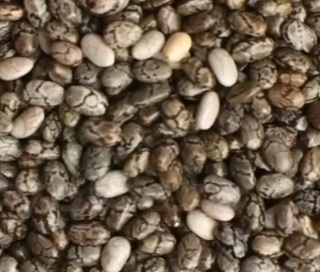
Semi di Chia
Rating : 6
| Evaluation | N. Experts | Evaluation | N. Experts |
|---|---|---|---|
| 1 | 6 | ||
| 2 | 7 | ||
| 3 | 8 | ||
| 4 | 9 | ||
| 5 | 10 |
0 pts from Al222
| Sign up to vote this object, vote his reviews and to contribute to Tiiips.Evaluate | Where is this found? |
| "Descrizione" about Semi di Chia by Al222 (23420 pt) | 2025-Nov-03 18:37 |
| Read the full Tiiip | (Send your comment) |
Chia seeds (Salvia hispanica L.)
Description
Oilseeds from the tropical mint Salvia hispanica L., sold whole, milled, sprouted, or as flour/oil.
Sensory profile: very mild neutral–nutty taste; in water the seeds form a gel thanks to surface mucilage.

Caloric value (per 100 g)
~480–490 kcal; fat ~30–32 g, protein ~16–18 g, carbohydrates ~40–44 g of which fiber ~32–36 g (low net carbs).
Per tablespoon (~12 g): ~55–60 kcal.
Key constituents
Fiber, predominantly soluble (mucilage) with high water-holding capacity.
Lipids with a high share of ALA n-3 (alpha-linolenic acid) and linoleic n-6.
Proteins with good quality (sulfur amino acids are limiting), notable arginine.
Minerals: calcium, magnesium, phosphorus, potassium, iron, zinc.
Phytochemicals: phenolic acids (chlorogenic, caffeic) and flavonols (quercetin, kaempferol).
Production process
Harvest, drying, and sieving; de-stoning and optical sorting.
Derivatives: cold pressing for chia seed oil (press cake → flour/protein), or low-temperature milling for whole-meal flour.
Controls: moisture, metals/mycotoxins/pesticides, low microbial counts (low aw).
Sensory and technological properties
Gelling in water (typical ratio 1:8–1:12 seed:water) → useful for thickening and stabilising.
WBC/OBC are high (water/oil binding) → improves succulence and texture in bakery and plant-based foods.
Milling increases bioavailability and aroma release; whole seeds may pass undigested.
Food applications
Porridge, puddings, overnight oats; smoothies, yogurt, salads.
Bread, crackers, bars, plant-based burgers (as binder/humectant).
Sauces and dressings as a natural stabiliser; crisp topping in cold use.
Nutrition and health
Very high fiber supports satiety and regularity; helps moderate post-prandial glycaemia.
ALA n-3 profile is favourable, though conversion to EPA/DHA is limited; helpful for balancing overall n-6/n-3 intake.
Minerals and vitamin E (tocopherols) provide antioxidant support.
Typical intake: 15–25 g/day within a varied diet.
Fat profile
PUFA — polyunsaturated fatty acids (mainly ALA n-3 and linoleic n-6): potentially beneficial for cardiometabolic profile but more oxidation-prone; avoid prolonged high heat.
MUFA — monounsaturated fatty acids (e.g., oleic n-9): often neutral/beneficial; improve stability.
SFA — saturated fatty acids (e.g., palmitic/stearic): low share; best moderated in the overall diet.
TFA negligible; no meaningful MCT.
Quality and specifications (typical topics)
Moisture ≤ 8–10%, varietal purity, absence of foreign seeds; uniform granulation for flours.
For oil: peroxide value/free acidity; heavy metals/mycotoxins (e.g., aflatoxins) within limits.
Microbiology: low totals and pathogen-free; foreign bodies absent.
Storage and shelf life
Store dark, airtight, and cool (≤ 20 °C); limit oxygen and light.
Shelf life: 18–24 months (whole seeds), 9–12 months (milled/flours); oil should be refrigerated after opening.
Allergens and safety
Naturally gluten-free; not listed among major allergens (rare sensitivities possible).
Choking risk: avoid taking dry seeds followed by large amounts of water; pre-hydrate or consume in wet matrices.
Consider caution with anticoagulant therapy (due to n-3 intake): consult a clinician if needed.
INCI functions in cosmetics
INCI: Salvia Hispanica Seed, Salvia Hispanica Seed Oil, Salvia Hispanica Seed Extract.
Roles: emollient (oil), secondary antioxidant (tocopherols), light texturiser in scrubs and masks.
Troubleshooting
Dry doughs in bakery: increase hydration or pre-gel (slurry).
Oxidation (rancid notes) in flours/oil: use barrier packs, natural tocopherols, and FIFO rotation.
Gel too thick: lower dose or increase water; adjust hydration time.
Whole seeds poorly digested: mill or soak to improve assimilation.
Sustainability and supply chain
Crop with moderate inputs, suitable for rotations and semi-arid regions.
Co-products valorised (oil, press cake → flour/protein); manage effluents toward BOD/COD targets; use opaque/recyclable packs.
Operate under GMP/HACCP with traceability and CCP controls for foreign matter and oxidation.
Labelling
Names: “chia seeds”, “chia seed flour”, “chia seed oil”.
Omega-3/fiber claims allowed when supported by analytical levels and regulations.
Conclusion
Chia seeds combine very high fibre density, a favourable lipid profile (ALA n-3), and technological versatility. With targeted use (dose, form, hydration), they enhance texture, stability, and nutrition across sweet and savoury applications while maintaining safety and consumer appeal.
Mini-glossary
PUFA — Polyunsaturated fatty acids: include ALA n-3 and linoleic n-6; can support cardiometabolic health but are more oxidation-prone.
MUFA — Monounsaturated fatty acids: e.g., oleic n-9; often neutral/beneficial and help heat stability.
SFA — Saturated fatty acids: e.g., palmitic/stearic; advisable to moderate in total diet.
ALA — Alpha-linolenic acid (n-3): precursor to EPA/DHA; limited conversion in adults.
EPA/DHA — Eicosapentaenoic/docosahexaenoic acids (n-3): marine omega-3s with cardiovascular evidence; not significant in chia.
MCT — Medium-chain triglycerides: not significant in chia seeds.
TFA — Trans fatty acids: negligible in non-hydrogenated oils.
WBC/OBC — Water/oil-binding capacity: key for yield and texture.
GMP/HACCP — Good manufacturing practice / hazard analysis and critical control points: preventive hygiene systems with validated CCPs.
BOD/COD — Biochemical/chemical oxygen demand: indicators of effluent impact on wastewater.
References__________________________________________________________________________
Adel A, Ikram R, Wasi N. Salvia hispanica (White chia): A new window for its antidepressant and memory boosting activity.
Pak J Pharm Sci. 2019 May;32(3):1005-1009.
Abstract. To determine the effects of Salvia hispanica on activities related to memory, anxiety and depression. Albino rats as well as albino mice were utilized in the current study. Two groups of animals were made including 10 animals in each group. One was a control group and another was treated group. Neuropharmacological parameters were assessed using Light and Dark box test, Stationary rod activity, Water maze test, Open field activity and Home cage activity. The control group was maintained on water and treated group was fed with approximately 106 mg/kg extract of Salvia hispanica for 30 days. The observations were recorded on 1st day, 15th day and 30th day. The results of current study showed an increased time spent in the light box of Light and Dark box model, reduction in elapsed time utilized by animal to reach platform in Stationary rod and water maze model, reduced number of peripheral square and central square crosses in the open field and decreased number of cage crosses in the home cage activity. Salvia hispanica shows memory enhancement and also shows an antidepressant activity on chronic administration.
Coelho O, Rocha D, da Silva BP, Silva A, Caldas AP, Almeida A, Ribeiro P, Alfenas R. Effect of Chia (Salvia hispanica L.) Flour on Glycemic Response and Energy Intake in Healthy Adults
Curr Dev Nutr. 2019 Jun 13;3(Suppl 1). pii: nzz031.P06-099-19. doi: 10.1093/cdn/nzz031.P06-099-19.
Abstract. Objectives. Postprandial glycemic control is essential in both healthy and diabetic people, as hyperglycemia predisposes to complications associated with diabetes. The consumption of fiber-rich meals help to prevent and control undesirable glycemic changes. This study aimed to evaluate the effect of one-day consumption of chia on glycemic response and energy intake in healthy adults. Methods. Single-blind, randomized, crossover design study involving healthy adults, normal weight (BMI 18.5–24.9 kg/m2), euglycemic (100 mg/dL), with no diabetes family history. They attended to the laboratory after 10–12 h fasting and received either 350 ml of a shake containing 10 g of chia flour (4.44 g of fiber) or 350 ml of a control shake (1.1 g of fiber)- similar in calories and macronutrients, containing 51 g of available carbohydrate - on two non-consecutive days (washout period). At each testing day, 60 minutes after shake intake a glucose solution (25 g) was provided. Capillary blood glucose was measured in fasting state (–60 min), immediately before (0 min), and 15, 30, 45, 60, 90, 120 minutes after glucose load. In addition, food intake was assessed 24-hour dietary recall was performed after each testing day. Habitual dietary intake was estimated using the semi-quantitative QFCA. The study was approved by the Local Ethics Committee. Repeated-measures ANOVA test was used to compare habitual dietary intake and consumption after shake. Two-way repeated measures ANOVA test followed by Bonferroni’s post-hoc was used to assess the differences in postprandial blood glucose. Incremental area under the curve (AUC) of postprandial glycemia was calculated using the trapezoidal rule and paired sample t-test was used to compare them. All analyses were conducted using SPSS software. Statistical significance was set as p < 0.05. Results. Fifteen subjects completed the study (14 female and 1 male). Consumption of chia (10 g of chia flour) did not change the blood glucose (p > 0.05) nor food intake (p > 0.05) among adults (25 ± 1 years), euglycemic (87.88 ± 1.21 mg/dL), normal weight (21.06 ± 0.28 kg/m2 and 23.23 ± 1.19% body fat percentual). Conclusions. The one-day consumption of chia flour did not affect the glycemic response and did not interfere in energy intake in healthy individuals. The long-term effect of chia should be assessed.
Fernández-López J, Lucas-González R, Viuda-Martos M, Sayas-Barberá E, Navarro C, Haros CM, Pérez-Álvarez JA. Chia (Salvia hispanica L.) products as ingredients for reformulating frankfurters: Effects on quality properties and shelf-life.
Meat Sci. 2019 Oct;156:139-145. doi: 10.1016/j.meatsci.2019.05.028
Teoh SL, Lai NM, Vanichkulpitak P, Vuksan V, Ho H, Chaiyakunapruk N. Clinical evidence on dietary supplementation with chia seed (Salvia hispanica L.): a systematic review and meta-analysis.
Nutr Rev. 2018 Apr 1;76(4):219-242. doi: 10.1093/nutrit/nux071.
Abstract. Context: Chia seed is a popular dietary supplement, taken mainly for its high content of alpha-linolenic acid, vegetable protein, and dietary fiber, yet information about its clinical effects is lacking. Objective: This review aims to summarize the clinical evidence regarding the use of chia seed for a wide variety of health conditions. Data sources: A number of databases, including PubMed and Embase, were searched systematically. Study selection: Randomized controlled trials that assessed the clinical effects of chia seed consumption in human participants were included. The quality of trials was assessed using the Cochrane Risk of Bias Tool. Data extraction: Data on study design, blinding status, characteristics of participants, chia seed intervention, comparator, clinical assessment, duration of intake, interval of assessment, and study funding status were extracted. Meta-analysis was performed. Results: Twelve trials were included. Participants included healthy persons, athletes, diabetic patients, and individuals with metabolic syndrome. Pooling of results showed no significant differences except for the following findings of subgroup analysis at higher doses of chia seed: (1) lower postprandial blood glucose level (mean difference [MD] of -33.95 incremental area under the curve [iAUC] [mmol/L × 2 h] [95%CI, -61.85, -6.05] and -51.60 iAUC [mmol/L × 2 h] [95%CI, -79.64, -23.56] at medium doses and high doses, respectively); (2) lower high-density lipoprotein in serum (MD of -0.10 mmol/L [95%CI, -0.20, -0.01]); and (3) lower diastolic blood pressure (MD of -7.14 mmHg [95%CI, -11.08, -3.19]). The quality of all evidence assessed using the Grading of Recommendations Assessment, Development, and Evaluation (GRADE) approach was low or very low. All trials employed only surrogate markers as outcomes. Conclusions: Future trials with improved methodological quality, well-described clinical events, and validated surrogate markers as outcomes are needed to support the potential health benefits of chia seed consumption.
Pellegrini M, Lucas-Gonzalez R, Sayas-Barberá E, Fernández-López J, Pérez-Álvarez JA, Viuda-Martos M. Bioaccessibility of Phenolic Compounds and Antioxidant Capacity of Chia (Salvia hispanica L.) Seeds.
Plant Foods Hum Nutr. 2018 Mar;73(1):47-53. doi: 10.1007/s11130-017-0649-7.
Abstract. The aim of this work was to evaluate (i) the phenol and flavonoid recovery and bioaccessibility indexes and (ii) the antioxidant activity of both types of non-defatted and defatted chia seeds during the in vitro gastrointestinal digestion. The ground samples were subjected to in vitro simulated gastrointestinal digestion, and the resultant fractions were extracted and subjected to spectrophotometric assays. The results pointed to increasing concentrations of polyphenolic compounds during digestion, although only a low-medium percentage of phenols and a low percentage of flavonoids were available for absorption in the intestinal tract. In addition, the high level of fats seemed to have a negative effect on the bioaccessibility of flavonoids. Further studies should be undertaken to better understand the stabilization of the bioactive compounds of chia and to improve their bioaccessibility. Meanwhile, the present study represents a solid base for studying the bioavailability of bioactive compounds of chia seeds.
Safety
Bilgic Y, Demir EA, Bilgic N, Dogan H, Tutuk O, Tumer C. Detrimental effects of chia (Salvia hispanica L.) seeds on learning and memory in aluminum chloride‑induced experimental Alzheimer's disease.
Acta Neurobiol Exp (Wars). 2018;78(4):322-331.
Abstract. Polyphenols and omega‑3 fatty acids are thought to have beneficial effects in Alzheimer's disease, the most common cause of dementia. Seeds of chia (Salvia hispanica L.) are highly rich in these nutrients, and thus, the present study investigated the effects of chia seeds on behavior and cognition in an aluminum‑induced Alzheimer's disease model in rats. Experimental animals received chia supplementation either during the generation of the model (i.e., pretreatment) or after the model was established (i.e., treatment). A battery of behavioral and cognitive tests were performed, including open‑field, elevated plus maze, Porsolt's forced swim, and Morris' water maze, to evaluate anxiety‑ and depression‑like behaviors, and learning and memory. Results showed that chia supplementation was ineffective against Alzheimer's‑related anxiety, whereas depression‑like behaviors were attenuated with both pretreatment and treatment. There was no improvement in learning and memory with chia treatment. Rather, cognitive performance in chia‑pretreated animals was remarkably worse as compared to their non‑treated disease‑induced counterparts. Hippocampal concentrations of amyloid-β42, amyloid precursor protein, and total tau protein were similarly increased in all disease‑induced animals (despite chia supplementation), as compared to the controls. Based on these findings, chia supplementation during the progression of Alzheimer's disease may exacerbate the disease. Although the results presented here emerge from an experimental/preclinical study, we suggest cautious and careful use of chia, especially in early‑stage Alzheimer's patients, until future research in different experimental settings is conducted.
Tomas-Pérez M, Entrala A, Bartolomé B, Caballero ML, Quirce S. Dermatitis Caused by Ingestion of Chia Seeds.
J Investig Allergol Clin Immunol. 2018;28(1):46-47. doi: 10.18176/jiaci.0203.
| Sign up to vote this object, vote his reviews and to contribute to Tiiips.EvaluateClose | (0 comments) |
Read other Tiiips about this object in __Italiano (1)
Content:   Last update:   2025-11-03 18:23:20 | Kcal/100g:   490 Family:   Threat factors:   |

