

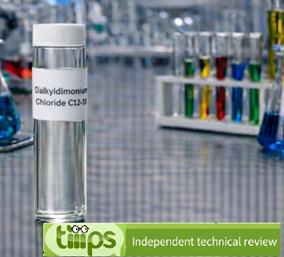
Dialkyldimonium Chloride C12-18: properties, uses, pros, cons, safety, alternatives
Dialkyldimonium Chloride C12-18 is a quaternary ammonium compound primarily used in cosmetic products as a conditioning and antistatic agent. With alkyl chains ranging from C12 to C18, this ingredient is known for its emollient and moisturizing properties, helping to improve the texture of hair and skin, reduce frizz, and enhance smoothness. It is widely used in hair conditioners, anti-frizz treatments, and skincare formulations.

Chemical Composition and Structure
This compound is a cationic compound with a quaternary ammonium group, consisting of C12-C18 alkyl chains and a chloride anion. Its cationic structure allows it to easily adhere to negatively charged surfaces such as hair fibers and skin, reducing static electricity and improving manageability and softness.
Physical Properties
It appears as a liquid or aqueous solution, water-soluble, and slightly opaque. It is easily incorporated into conditioners, shampoos, skincare creams, and other formulations. Its lightweight texture enables even distribution and long-lasting conditioning effects.
Production Process
Dialkyldimonium Chloride C12-18 is produced by reacting alkyl compounds (C12-C18) with quaternary ammonium, followed by conversion to a chloride salt. After the reaction, the compound is purified and stabilized for use in cosmetic products.
Applications
Cosmetics: Dialkyldimonium Chloride C12-18 is widely used in conditioners, shampoos, and hair care products for its conditioning, anti-frizz, and detangling properties. It helps reduce static electricity and keeps hair smooth and soft. In skincare, it is used to enhance hydration and softness.
Cosmetic safety
Restricted cosmetic ingredient as III/65 a Relevant Item in the Annexes of the European Cosmetics Regulation 1223/2009. Substance or ingredient reported: Benzalkonium chloride, bromide and saccharinate.
Maximum concentration in ready for use preparation: 3% (as benzalkonium chloride)
In the final products the concentrations of benzalkonium chloride, bromide and saccharinate with an alkyl chain of C14, or less must not exceed 0.1% (as benzalkonium chloride) For purposes other than inhibiting the development of micro-organismes in the product. This purpose has to be apparent from the presentation of the product
CAS 68391-01-5
EC number 269-919-4
Environmental and Safety Considerations
Dialkyldimonium Chloride C12-18 is generally considered safe for cosmetic use in regulated concentrations. However, its environmental impact is monitored due to its potential ecotoxicity in aquatic systems. Production and use must adhere to safety guidelines to ensure reduced ecological impact and responsible usage.
Alternatives
| Option (INCI) | Product type | Key advantages |
|---|
| Stearamidopropyl Dimethylamine | Amine-based cationic conditioner (fatty-acid derived) | Strong detangling and antistatic benefits with a profile often perceived as milder than benzyl quats; performs best in acidic systems (neutralized with lactic/citric acid). |
| Brassicamidopropyl Dimethylamine | Amine-based conditioner (rapeseed-derived) | More plant-derived positioning, good antistatic effect and combability, suitable for conditioners and masks. |
| Guar Hydroxypropyltrimonium Chloride | Guar-derived cationic biopolymer | Improves slip and combability, reduces frizz and static; can often reduce reliance on higher-concern quats. |
| Inulin Hydroxypropyltrimonium Chloride | Inulin-derived cationic polysaccharide | Adds softness and pleasant sensory feel, stronger natural-origin positioning, useful in gentle and leave-on haircare. |
| Glyceryl Caprylate (and) Glyceryl Undecylenate | Mild antimicrobial support system (non-quat) | If the quat was mainly for preservation/antimicrobial support: a gentler, often “clean-friendly” option; typically needs synergy (pH, chelators, other preservatives) and challenge testing. |
Regulatory process names:
(C12-C18) Alkyldimethylbenzyl ammonium chloride
(C12-C18)Alkylbenzyldimethylammonium chloride
Alkyl (C12-18) dimethylbenzyl ammonium chloride (ADBAC (C12-18))
Alkyl(C12-C18)benzyldimethylammonium chloride
C12-18-Alkyldimethylbenzyl ammonium chlorides
N-Alkyl dimethyl benzyl ammonium chloride (C12-C18)
Quaternary ammonium compounds, benzyl-C12-18-alkyldimethyl, chlorides