

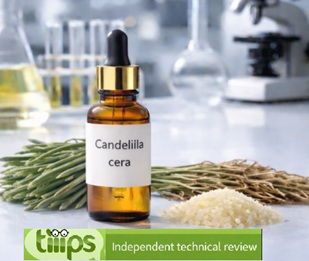
Candelilla cera: properties, uses, pros, cons, safety
Candelilla cera is a waxy product obtained from the shrub Euphorbia cerifera or Euphorbia antisyphilitica, which grows in the desert regions of Mexico and is used to give stability and a solid structure to the products in which it is inserted.

For more information: CANDELILLA
Industrial Production Process
The extraction methods are conventional with sulphuric acid or ecological with citric acid.
- Plant Harvesting. Candelilla plants are harvested in the arid regions of Northern Mexico and the Southwestern United States, where they grow naturally. Harvesting is done by cutting the plants close to the base.
- Wax Extraction. The extraction of the wax is carried out by immersing the plants in boiling water acidified with sulfuric acid or another acidifying agent. The heat and acid help release the wax from the leaves and stems of the plants.
- Wax Collection. Candelilla wax, which floats on water due to its lower density, is collected manually or with the aid of tools. After collection, the wax is cooled and solidified.
- Purification. The crude wax may contain impurities such as plant residues and other substances. Purification is performed through filtration and/or washing with solvents to remove impurities and obtain a higher quality wax.
- Refining. If necessary, the wax can be further refined to improve its color, odor, and purity. This may include processes such as bleaching with hydrogen peroxide or treatment with activated carbon.
- Quality Control. Throughout the production process, quality control checks are performed to ensure that the Candelilla wax meets the required standards in terms of purity, color, and physical properties.

What it is used for and where
Food
It is a complex chemical compound of plant origin, considered GRAS (Generally Recognised As Safe) by the FDA (Food and drug administration) and also used in food as an edible film to prolong product life and form a hydrophobic layer in coatings for the protection of fruit, chocolate, cheese.
Cosmetics
Film-forming agent. It produces a continuous ultra-thin film with an optimal balance of cohesion, adhesion and stickiness on the skin or hair to counteract or limit damage from external phenomena such as chemicals, UV rays and pollution.
Skin conditioning agent - Emollient. Emollients have the characteristic of enhancing the skin barrier through a source of exogenous lipids that adhere to the skin, improving barrier properties by filling gaps in intercorneocyte clusters to improve hydration while protecting against inflammation. In practice, they have the ability to create a barrier that prevents transepidermal water loss. Emollients are described as degreasing or refreshing additives that improve the lipid content of the upper layers of the skin by preventing degreasing and drying of the skin. The problem with emollients is that many have a strong lipophilic character and are identified as occlusive ingredients; they are oily and fatty materials that remain on the skin surface and reduce transepidermal water loss. In cosmetics, emollients and moisturisers are often considered synonymous with humectants and occlusives.
CAS 8006-44-8
EC number 232-347-0
Commercial Applications
Skincare Products. In skincare, Octyldodecyl Stearoyl Stearate is used to improve the texture and application of products such as creams, lotions, and sunscreens. It helps to make these products more spreadable and enhances their moisturizing capabilities, contributing to a smoother, softer skin feel.
Makeup. This ingredient is particularly valued in makeup formulations, including foundations, eyeshadows, blushes, and lipsticks. It acts as a binder that improves the cohesion of powders and pigments, resulting in a more even and durable application. It also imparts a velvety feel to makeup products, making them more pleasant to apply and wear.
Lip Care Products. In lip balms and lipsticks, Octyldodecyl Stearoyl Stearate contributes to the product's creamy texture, ensuring a smooth application without dragging. It also helps to condition the lips, providing a soft and moisturized feel.
Sun Care Products. It is used in sunscreens for its ability to help formulate more aesthetically pleasing and effective products. By improving the spreadability and feel of sunscreens, it encourages more consistent application and, consequently, better sun protection.