



August Strindberg, complete biography, modern theatre, naturalism and symbolism, the Inferno crisis and bibliography
Profile
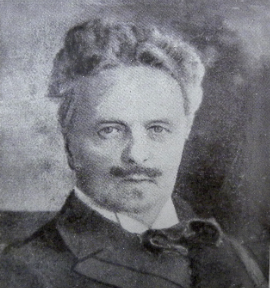
August Strindberg (1849–1912) is one of the most significant Scandinavian writers and dramatists of the modern era. Active as a novelist, playwright, essayist, and visual artist, he contributed decisively to the transformation of European theatre between the late nineteenth and early twentieth centuries, moving across and reworking naturalism, psychological drama, symbolist experimentation, and forms that anticipate modernist theatre.
His work is marked by a strong autobiographical component and a systematic focus on the mechanisms of conflict: in couple relationships, family dynamics, social hierarchies, and the ideological fractures of his time. Strindberg is often read as an author of “crisis” because he stages unstable subjects, identities under strain, contradictory desires, and a constant tension between rationality, impulse, and the search for meaning.
From 1849 to 1879: cultural context and education
Born in Stockholm in 1849, Strindberg is shaped within a Scandinavian context undergoing rapid change, marked by urban modernization, the expansion of the press, and the growing centrality of literary culture in public debate. His early development reflects a dual pressure: an attraction to writing as an instrument of advancement and recognition, and the perception of a stratified society in which status and cultural legitimacy are constantly negotiated.
Intellectually, Strindberg quickly develops a critical attention to institutions (family, school, moral authority) and to the material dimension of life. This orientation prepares his later inclination toward observational realism and the representation of concrete environments, without renouncing an intense psychological reading of characters.
From 1879 to 1886: narrative affirmation and Swedish modernity
His reputation consolidates with The Red Room (Röda rummet, 1879), often regarded as a turning point in modern Swedish narrative for its ability to depict urban society, its opportunisms, and its cultural rhetorics. In this phase Strindberg develops a style that combines satire, social realism, and a strong sensitivity to power mechanisms, with particular attention to the masks of respectability.
In parallel, he intensifies his essayistic and polemical output, establishing himself as a controversial public figure capable of intervening in cultural debate with an assertive and often conflictual tone.
From 1887 to 1889: theatrical naturalism and the “war of the sexes”
In the late nineteenth century Strindberg produces some of the most influential texts of European naturalist theatre. The Father (Fadren, 1887), Miss Julie (Fröken Julie, 1888), and Creditors (Fordringsägare, 1888) stage power relations within the couple and the family, offering an analysis of relationships grounded in dominance, vulnerability, and interpretive conflict.
Strindberg’s naturalism does not merely reproduce a sociological “truth”; it intensifies reality through a dramatic structure in which speech becomes a weapon and the environment a mechanism of pressure. The result is a theatre in which psychology becomes action, and action becomes a clash between incompatible versions of reality.
From 1890 to 1899: the “Inferno” crisis and poetic transformation
The 1890s constitute a period of profound personal instability and artistic reorientation. Strindberg goes through a phase often linked to the so-called “Inferno crisis,” associated with experiences of isolation, anxiety, and intellectual obsessions, with interests that include occultism, alchemy, and reflections of a mystical cast.
This experience flows into Inferno (1896–1897), an autobiographical work that records, in literary form, the relationship between perception, fear, interpretation of the world, and the need to construct an order of meaning. Aesthetic consequences follow: the crisis produces a shift from more recognizable naturalism toward drama and narrative in which reality is filtered through visions, symbols, and psychic discontinuities.
From 1900 to 1912: symbolism, intimate theatre, and modernist experimentation
In the new century Strindberg develops a dramaturgy of notable formal innovation. A Dream Play (Ett drömspel, 1902) proposes a dreamlike and metamorphic logic, in which theatrical time and space are reorganized according to inner states rather than realist causality.
Between 1907 and 1908 he writes the so-called “chamber plays,” conceived for his Intimate Theatre (Intima Teatern) in Stockholm: works built on scenic concentration, symbolic density, and essential conflicts. Within this framework appear titles such as The Ghost Sonata (Spöksonaten) and other texts from the same cycle, reinforcing Strindberg’s reputation as an author able to traverse realism while also anticipating expressionist and modernist sensibilities.
In the same years he continues his essayistic and autobiographical activity, while his public persona remains divisive: his influence grows both for the force of the works and for his capacity to make the stage a place of inquiry into modern consciousness. Strindberg dies in 1912, leaving a broad and heterogeneous corpus, unified by analytical tension and experimental energy.
Narrative and dramaturgical style (discursive analysis)
Strindberg’s writing is recognizable for making conflict the principal engine. Dialogue tends to be tight, competitive, and often configured as a process of attributing blame and redefining the meaning of events. The stage becomes a laboratory of interpretations: what happens matters less than how characters explain it, justify it, or use it to assert a position.
In the naturalist period, concrete environments and a strong social and psychological causality prevail; in later phases, distortions, leaps, condensations, and recurring images appear, making representation closer to a mental logic than to a description of the external world. In both cases, the dramaturgy works through pressure, rhythm, and emotional density, with a notable capacity to transform crisis into form.
Themes and system of ideas
Among the most recurrent themes are the tension between the individual and institutions, competition for moral authority within affective bonds, the relationship between desire and control, and a continuous reflection on the role of truth in relationships. The Strindbergian subject is often an interpreting subject: he is saved or precipitates depending on his capacity to impose order on the signs of the world.
The shift from naturalism to more symbolic forms does not eliminate interest in society, but relocates it: critique is not only directed at an external environment, but at the internal mechanisms through which human beings construct justifications, hierarchies, and narratives of the self.
Bibliography (main)
Novels and prose
The Red Room (Röda rummet, 1879)
The Son of a Servant (Tjänstekvinnans son, 1886–1887)
Married (Giftas, 1884–1886)
Inferno (1896–1897)
Theatre
Master Olof (Mäster Olof, 1872)
The Father (Fadren, 1887)
Miss Julie (Fröken Julie, 1888)
Creditors (Fordringsägare, 1888)
A Dream Play (Ett drömspel, 1902)
To Damascus (Till Damaskus, 1898–1904)
The Ghost Sonata (Spöksonaten, 1907)
“Chamber plays” for the Intimate Theatre (1907–1908), including the texts commonly grouped as a five-play cycle
Legacy and recognition
Strindberg is regarded as a decisive figure in the history of modern theatre because he redefined the relationship between psychology and scenic action, making moral and perceptual crisis representable through new dramaturgical means. His importance concerns both the “high” naturalism of the late nineteenth century and the evolution toward a more symbolic and experimental theatre, in which the stage becomes a space of fractures, metamorphoses, and interrogation of consciousness. His work continues to be studied and performed because it offers a grammar of conflict that remains productive for contemporary sensibility.

