



Fyodor Dostoevsky, complete biography, Russian realism, psychological novels, religious thought and bibliography
Profile
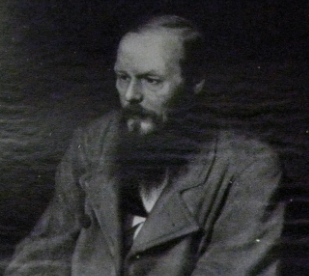
Fyodor Mikhailovich Dostoevsky (1821–1881) is one of the greatest novelists in Russian and European literature. His work, situated within nineteenth-century realism, reshaped the modern novel through a radical representation of inner conflict, moral crises, and social tensions, with a prose style centered on conscience, responsibility, and individual freedom.
His fame is inseparable from a biography marked by traumatic and formative events: arrest for political-intellectual activity, a mock execution and deportation to Siberia, illness (notably epilepsy), economic instability, and direct exposure to the ideological fractures of his time. These elements, however, do not function as mere “background”; they are transformed into narrative and anthropological substance, becoming instruments for probing the limits of the human, the relationship between guilt and redemption, and the ethical resilience of modern societies.
From 1821 to 1843: cultural context and education
Born in Moscow in 1821, Dostoevsky grows up at a time when Russia undergoes uneven modernization, with sharp contrasts between aristocracy, the emerging intelligentsia, and impoverished urban masses. His education at the St Petersburg Institute of Military Engineering provides technical discipline and familiarity with the imperial metropolis, but also strengthens a sense of estrangement from an administrative-military career.
Culturally, the young Dostoevsky stands at the transition between late romanticism and the new realism: on the one hand, an interest in the shadow zones of the psyche and in marginal figures; on the other, attention to social dynamics and the forms of urban poverty. This double tension anticipates the architecture of his mature novels, in which the analysis of the individual becomes a lens for understanding historical and ideological processes.
From 1844 to 1849: literary debut and early recognition
His breakthrough comes with the debut novel Poor Folk (Bednye ljudi, 1846), welcomed as a sign of a new realism attentive to social suffering. In this phase Dostoevsky already tests cores that will later expand: wounded dignity, emotional dependence, and economic vulnerability as a structural condition of existence.
Alongside his debut, he publishes works that point toward a more disturbing and “clinical” direction of realism, such as The Double (Dvojnik, 1846), where the crisis of identity takes on an almost hallucinatory form. The oscillation between social register and psychological fragmentation is not a contradiction but a signature: urban modernity generates both new poverties and new pathologies of consciousness.
From 1849 to 1859: arrest, mock execution, and Siberia
In 1849 Dostoevsky is arrested for his participation in the Petrashevsky Circle. The death sentence is commuted at the last moment after a mock execution, an experience that becomes a biographical and symbolic threshold: life as “granted time,” awareness of death as a moral accelerator, and freedom as a concrete, not abstract, problem.
Deportation follows: years of penal labor and then military service in Siberia. This phase reorients his anthropological and religious outlook: attention to the “defeated” is no longer only social but existential; interest in guilt is not moralism but inquiry into how human beings justify themselves. Siberia also functions as a human archive: coexistence with common criminals, observation of micro-hierarchies in prison, and exposure to violence and compassion as inseparable phenomena.
From 1860 to 1869: return, journalism, and the turn to the major novels
After re-entering literary life in St Petersburg, Dostoevsky interweaves fiction with editorial work. Together with his brother he directs influential periodicals (Vremya, then Epokha), positioning himself within a debate shaped by Westernism, Slavophilism, radicalisms, and conservative reactions. In this phase his writing becomes more polemical and strategic: it aims not only to narrate, but to confront the ideological languages of the time.
The mature turning point is evident in Notes from Underground (Zapiski iz podpol’ja, 1864), a text that challenges rationalist and utilitarian optimism and inaugurates a narrator who self-destructs while arguing. Soon after, Crime and Punishment (Prestuplenie i nakazanie, 1866) establishes a model of psychological and moral fiction: guilt is not only an act but a mental construction, and punishment does not coincide with legal sanction so much as with inner disintegration and the need for meaning.
In the same years Dostoevsky faces financial instability, travels in Europe, and gambling addiction; in his personal life he forms a bond with Anna Grigorievna Snitkina, whom he marries in 1867. The relationship, including its practical and managerial dimension, contributes to a more stable productivity in subsequent years.
From 1870 to 1881: maturity, the ideological novel, and a final synthesis
With The Idiot (Idiot, 1868–1869) and Demons (Besy, 1871–1872), Dostoevsky develops the novel as a stage for embodied ideas. Characters are not schematic “vehicles” for theses: they are figures in whom an idea becomes fate, gesture, obsession, and at times a justification for evil. In Demons political radicalization is analyzed as a psychological and communal phenomenon: nihilism is not only doctrine but group dynamics, seduction, and competition for moral domination.
During the 1870s his journalistic and essayistic work flows into A Writer’s Diary (Dnevnik pisatelja, 1873–1881), a hybrid workshop of reportage, pamphlet, short fiction, and civic reflection. Here the “publicist” Dostoevsky emerges clearly, capable of capturing collective anxieties and transforming them into discursive forms of high emotional and rhetorical intensity.
The most comprehensive synthesis arrives with The Brothers Karamazov (Brat’ja Karamazovy, 1879–1880), a major novel in which the themes of fatherhood as original guilt, personal responsibility, justice, faith, and the contestation of faith converge. The theological problem is inseparable from social experience: the question of God becomes a question about the possibility of loving the real, non-idealized human being. Dostoevsky dies in 1881 in St Petersburg, leaving an oeuvre already perceived by contemporaries as a watershed.
Narrative style and innovations (discursive analysis)
Dostoevsky’s prose is marked by a strong dialogic tension: consciousnesses confront one another in an intense, often conflictual manner, and the author constructs narrative space as a site of collision between reasons and passions. Plot tends to function as a testing device, pushing characters to extremes—economic, moral, affective, metaphysical.
Formally, his writing frequently employs sudden accelerations, confession scenes, interior monologues, and sharp contrasts between the grotesque and the tragic. The urban environment (especially St Petersburg) is not a mere setting but a pressure mechanism: crowding, poverty, anonymity, and symbolic violence become forces that steer choices. In this perspective, realism is “psychological” and “moral” before it is descriptive: external facts matter insofar as they produce consequences within consciousness.
Themes and intellectual framework
Among the most recurrent cores are free will versus determinism, guilt and the need for expiation, the ambivalence between compassion and cruelty, criticism of rationalist utopianism, and a religious reflection that proceeds not through quiet certainties but through crisis. Dostoevsky’s human being is radically responsible and yet fragile: he desires the good, but may choose evil out of pride, revenge, or to prove he cannot be reduced to calculation.
The ideological conflicts of nineteenth-century Russia enter the novels as living material: nihilism, socialism, cultural nationalisms, Orthodox faith, and Westernization are not abstract categories, but forces that move through bodies, families, and relationships. This is why Dostoevsky remains current: in his texts modernity appears as a crisis of moral legitimation and as a struggle to define what is human.
Bibliography (main narrative and non-fiction works)
Novels
Poor Folk (Bednye ljudi, 1846)
The Double (Dvojnik, 1846)
Netochka Nezvanova (Netochka Nezvanova, 1849, unfinished)
The Village of Stepanchikovo and Its Inhabitants (Selo Stepanchikovo i ego obitateli, 1859)
Uncle’s Dream (Djadjuškin son, 1859)
Humiliated and Insulted (Unižennye i oskorblënnye, 1861)
Notes from Underground (Zapiski iz podpol’ja, 1864)
Crime and Punishment (Prestuplenie i nakazanie, 1866)
The Gambler (Igrok, 1866)
The Idiot (Idiot, 1868–1869)
The Eternal Husband (Večnyj muž, 1870)
Demons (Besy, 1871–1872)
The Adolescent (Podrostok, 1875)
The Brothers Karamazov (Brat’ja Karamazovy, 1879–1880)
Essays and journalism
A Writer’s Diary (Dnevnik pisatelja, 1873–1881)
Legacy and recognition
Dostoevsky is a pivotal figure in the history of the novel: he anticipates developments in depth psychology, influences existential philosophy, and provides a narrative model in which ideas are inseparable from human drama. His legacy lies not only in individual themes but in the very structure of his novels: a narrative machine capable of transforming moral conflict into aesthetic experience and, at the same time, into a diagnosis of modernity.

