



Reconstituted milk
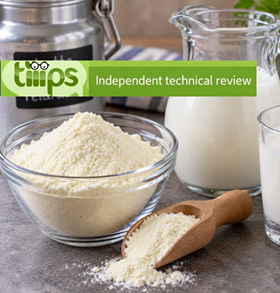
Reconstituted milk is milk produced by adding water back to milk powder in proportions intended to restore a product with characteristics similar to those of the original liquid milk.
Milk powder is produced by removing most of the water from milk through concentration and drying processes, generally after pasteurisation. It may be made from whole, semi-skimmed, or skimmed milk.
During reconstitution, the addition of water restores the volume and reduces nutrient concentration to the levels expected in the reconstituted product.
From a nutritional point of view, it mainly contains milk proteins, lactose, minerals, and, depending on the type, fat.
Its proteins consist mainly of caseins and whey proteins, which are considered high-quality proteins because they provide all essential amino acids.
Milk is also a natural source of calcium and phosphorus and provides vitamins such as vitamin B12 and riboflavin. The content of fat-soluble vitamins depends largely on the fat content and on any fortification.
The drying process may cause some changes in proteins and some loss of heat-sensitive nutrients, but the product generally retains most of the main nutritional characteristics of milk.
Reconstituted milk normally contains lactose, unless a specifically lactose-free or lactose-reduced product is used.
Calories
The calorie content depends on the type of milk powder used and the amount of water added.
When correctly reconstituted, its energy value is generally similar to that of the corresponding liquid milk.
As a general guide:
reconstituted skimmed milk: approximately 34–36 kcal per 100 ml;
reconstituted semi-skimmed milk: approximately 45–50 kcal per 100 ml;
reconstituted whole milk: approximately 60–65 kcal per 100 ml.
The exact value should therefore be determined from the specific formulation.
Uses in Food
Reconstituted milk is used as a substitute or technological equivalent of liquid milk in many food preparations.
It may be used in the production of milk-based drinks, desserts, creams, ice cream, yogurt, and other dairy products.
It is also used in baked goods, biscuits, chocolate, confectionery products, sauces, and prepared foods.
The powdered form facilitates storage, transport, and dosing, allowing milk to be reconstituted when needed.
It may also be used in industrial food production where the content of milk proteins, fat, and milk solids needs to be standardised.
From a nutritional perspective, it can provide the same main nutrients as liquid milk when reconstituted in the correct proportions.
Uses in Cosmetics
Milk, milk proteins, and other dairy-derived ingredients may also be used in cosmetics.
Derivatives of milk proteins may be found in creams, cleansers, soaps, shampoos, conditioners, and skin- and hair-care products.
Milk proteins and peptides may provide conditioning, film-forming, and moisturising properties.
Milk lipids and other components may also contribute to the emollient properties of certain formulations.
Milk powder may also be used in specific bath products, masks, and cosmetic preparations, but food-grade reconstituted milk should not be considered equivalent to a standardised cosmetic ingredient.
Allergens
Reconstituted milk contains milk and milk proteins, which are major food allergens and must be declared on food labels.
It is therefore not suitable for people with cow’s milk protein allergy.
It also normally contains lactose, which may cause symptoms in people with lactose intolerance unless the product has undergone a specific lactose-reduction process.
Milk protein allergy and lactose intolerance are different conditions and should not be confused.
Drying and subsequent reconstitution do not normally eliminate the allergenicity of milk proteins.
Evaluation
An ingredient nutritionally similar to liquid milk when correctly reconstituted, providing high-quality protein, calcium, phosphorus, and B vitamins.
Its nutritional profile varies according to the type of milk used: whole-milk versions contain more fat and saturated fat, while skimmed versions contain much less fat.
Ingredient verdict: a good source of protein and calcium, nutritionally comparable to the corresponding liquid milk when correctly reconstituted; fat and calorie content depend on the type of milk powder used.
Cons: contains milk proteins and normally lactose; whole-milk versions contain higher amounts of saturated fat

