



Hydrolysed wheat protein
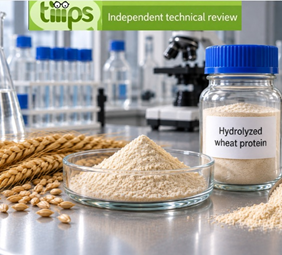
Hydrolysed wheat protein is an ingredient obtained from the proteins of wheat (Triticum spp., family Poaceae) through a process of hydrolysis, which breaks the original proteins down into smaller peptides and amino acids.
Hydrolysis may be carried out using enzymes, acids, or other controlled technological processes. The degree of hydrolysis determines the size of the resulting peptides and influences properties such as solubility, flavour, and technological behaviour.
The raw material may derive mainly from gluten proteins or from other protein fractions of wheat.
From a nutritional point of view, the ingredient consists predominantly of proteins, peptides, and amino acids. Hydrolysis improves dispersibility and changes the structure of the original proteins, but it does not necessarily mean that all immunologically relevant wheat components have been completely removed.
Hydrolysed proteins may have a characteristic savoury and umami flavour, due to the presence of peptides and free amino acids, and for this reason they are also used to enhance the flavour profile of foods.
Composition can vary considerably depending on the raw material, hydrolysis method, and degree of purification.
Calories
Dried hydrolysed wheat protein generally provides approximately 350–400 kcal per 100 g.
The actual value depends on the protein content and on the residual presence of carbohydrates, salts, or other components.
Because the ingredient is normally used in relatively small amounts, its contribution to the calorie content of the final product depends mainly on the quantity used.
Uses in Food
Hydrolysed wheat protein is used in the food industry as a protein source and technological ingredient.
It may be found in soups, broths, sauces, seasonings, savoury preparations, meat products, and processed foods.
Because hydrolysis produces peptides and amino acids, it can contribute to or enhance savoury and umami flavours.
It may also be used in protein products, plant-based formulations, sports nutrition products, and protein-enriched foods.
In some formulations it can provide emulsifying, binding, film-forming, or texture-modifying properties.
It may also be used as a component of flavourings and flavour preparations.
For people with coeliac disease, hydrolysis of wheat proteins does not automatically make the ingredient gluten-free. Suitability depends on the manufacturing process and on the residual gluten content of the final product.
Uses in Cosmetics
Hydrolysed wheat proteins are also widely used in cosmetics, particularly in hair-care products.
They may be found in shampoos, conditioners, hair masks, restructuring treatments, and styling products.
The smaller peptides produced by hydrolysis can help form a thin film on the hair surface, temporarily improving softness, manageability, and appearance.
They are also used in creams, cleansers, and skin-care products for their conditioning and film-forming properties.
Their ability to bind water may also contribute to the moisturising and sensory characteristics of certain formulations.
In sensitised individuals, however, specific hydrolysed wheat proteins may cause skin or allergic reactions, so safety also depends on the degree of hydrolysis and the composition of the product.
Allergens
Wheat is a major food allergen and is subject to mandatory declaration on food labels in the European Union and the United Kingdom.
Hydrolysed wheat protein may retain peptides capable of triggering allergic reactions in people with wheat allergy.
Hydrolysis modifies the original proteins but does not automatically eliminate allergenicity.
Sensitisation to specific forms of hydrolysed wheat protein has also been reported, including reactions associated with food or cosmetic products.
For people with coeliac disease, an ingredient derived from wheat requires particular attention: only a product that meets the applicable requirements for a “gluten-free” claim should be considered suitable on that basis.
Wheat allergy and coeliac disease are different conditions and should not be confused.
Evaluation
A technologically useful protein ingredient composed of wheat-derived peptides and amino acids, with nutritional, flavouring, and functional applications.
Hydrolysis improves solubility and technological performance, but it does not necessarily eliminate concerns related to wheat allergy or residual gluten.
Ingredient verdict: a versatile functional protein ingredient, useful for increasing protein content and improving flavour and technological properties in foods; particular caution is required for people with wheat allergy and those with coeliac disease.
Cons: wheat-derived allergenic ingredient; may contain allergenic peptides and residual gluten and should not automatically be considered suitable for people with coeliac disease

