



Apricot kernel
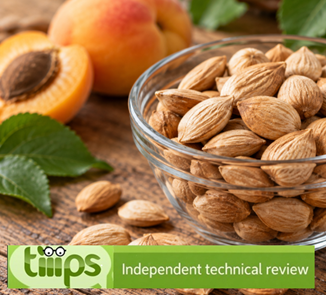
The apricot kernel is the seed found inside the stone of the apricot (Prunus armeniaca, family Rosaceae). Despite its similar appearance, it is not a true almond (Prunus dulcis).
Apricot kernels may be classified as sweet, semi-bitter, or bitter, with important differences mainly related to their content of amygdalin, a naturally occurring cyanogenic glycoside.
From a nutritional point of view, apricot kernels are highly concentrated foods, particularly rich in fat, with significant amounts of plant protein and fibre.
Their lipid fraction consists mainly of unsaturated fatty acids, especially oleic and linoleic acids. They also contain vitamin E, phenolic compounds, and minerals.
The most important safety aspect is their amygdalin content, which is generally much higher in bitter apricot kernels.
During chewing and digestion, amygdalin can release hydrogen cyanide (cyanide), a highly toxic compound. For this reason, raw bitter apricot kernels or products with an uncontrolled cyanogenic glycoside content may pose a significant health risk.
Sweet varieties generally contain lower amounts of amygdalin, but the actual level can vary considerably depending on the cultivar and growing conditions.
Calories
Apricot kernels generally provide approximately 500–600 kcal per 100 g.
Their high energy density is mainly due to their substantial fat content, together with protein and other seed components.
They are normally used in quantities far smaller than 100 g.
Uses in Food
Sweet apricot kernels that have been appropriately selected and meet food-safety requirements may be used in certain food preparations.
They can be used, directly or after processing, in confectionery pastes, baked goods, creams, fillings, and flavouring preparations.
Apricot kernels may also be used to make persipan, a confectionery paste similar to marzipan but traditionally made from apricot or peach kernels rather than almonds.
Some traditional preparations use apricot-kernel derivatives to provide a characteristic bitter-almond-like flavour.
The kernels can also be processed to obtain apricot kernel oil, which may be used in specific food applications when properly produced and refined.
The use of bitter apricot kernels in food requires particular caution because of their possible content of amygdalin and other cyanogenic compounds.
Raw, uncontrolled apricot kernels should therefore not be considered equivalent to ordinary nuts or seeds intended for unrestricted consumption.
Uses in Cosmetics
Apricot kernel oil is widely used in cosmetics as an emollient ingredient.
It is particularly rich in oleic and linoleic acids and may be found in creams, body oils, facial products, balms, cleansers, and hair-care formulations.
It can help improve skin softness and suppleness and is frequently used in products intended for dry or delicate skin.
Apricot kernel oil may also be present in massage oils, lip balms, and hair-care products.
Properly produced and refined cosmetic apricot kernel oil should not be considered equivalent to raw apricot kernels, particularly with regard to cyanogenic compounds.
Allergens
Apricot kernels are not specifically listed among the major food allergens subject to mandatory declaration in the European Union, United Kingdom, or United States.
However, individual allergic reactions are possible, as is cross-reactivity with other members of the Rosaceae family.
The term “apricot kernel” should not be confused with true almonds (Prunus dulcis), which are classified as tree nuts and are subject to allergen labelling requirements.
Processed products should also be checked for any additional allergens present in the formulation.
Evaluation
A nutritionally concentrated seed providing unsaturated fats, protein, and vitamin E, but its overall evaluation is strongly influenced by the possible presence of amygdalin and the resulting release of cyanide.
Controlled sweet varieties and appropriately processed derivatives may be used in food production, whereas raw bitter apricot kernels may present an acute safety risk if their cyanogenic compound content is high.
Ingredient verdict: a nutritionally rich seed that requires particular caution; food use should be limited to products that meet applicable safety requirements and have appropriately controlled levels of cyanogenic compounds.
Cons: may contain amygdalin with potential cyanide release; bitter or inadequately controlled kernels may pose a risk of poisoning

