



Pecorino Romano cheese
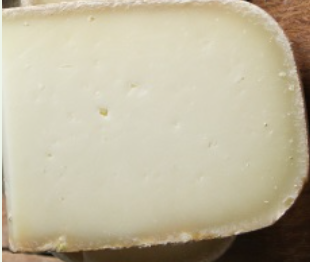
Pecorino Romano is a hard Italian cheese made primarily from sheep’s milk, with a firm texture and a distinctive strong, salty, and aromatic flavour.
Its production involves milk coagulation, curd processing, salting, and subsequent ageing, during which the cheese develops its characteristic compact texture and flavour profile.
From a nutritional point of view, it is a concentrated food, particularly rich in high-quality protein, fat, calcium, and phosphorus.
Milk proteins provide all essential amino acids and contribute to the maintenance of muscle mass and body tissues.
Pecorino Romano is also an important source of calcium, which is essential for bones and teeth, and it also provides phosphorus, vitamin B12, riboflavin, and zinc.
During ageing, water content progressively decreases, resulting in a greater concentration of nutrients. Lactose is largely broken down during maturation, so aged cheeses generally contain very little residual lactose; individual tolerance may nevertheless vary.
One of its most significant nutritional characteristics is its high salt content, which is related to both the traditional production process and its role as an aged grating cheese.
Calories
Pecorino Romano generally provides approximately 380–420 kcal per 100 g.
Its relatively high energy density is mainly due to its fat and protein content and to the low water content typical of aged cheeses.
Portions commonly used as a condiment or grated cheese are usually much smaller than 100 g.
Uses in Food
Pecorino Romano can be eaten as a table cheese or, especially after longer ageing, used as a grating cheese.
It is traditionally used to season pasta, risotto, soups, broths, and vegetable dishes.
It is a characteristic ingredient in several Italian dishes, where its intense and savoury flavour contributes significantly to the final taste.
It can also be used in fillings, meatballs, savoury pies, cheese sauces, spreads, and savoury baked products.
It may be paired with bread, legumes, vegetables, honey, or fruit, depending on the preparation.
Because of its relatively high content of salt and saturated fat, it is generally best consumed in appropriate portions as part of the overall diet.
Uses in Cosmetics
Pecorino Romano as a food product is not normally used directly in cosmetic formulations.
However, proteins, peptides, and other milk-derived ingredients may be used in cosmetics for their conditioning, film-forming, and moisturising properties.
Milk protein derivatives may be found in creams, cleansers, soaps, hair-care products, and skin-care formulations.
Milk-derived lipids and related components may also contribute to the emollient properties of certain cosmetic products.
Food-grade Pecorino Romano should not, however, be considered equivalent to standardised milk proteins, extracts, or cosmetic derivatives.
Allergens
Pecorino Romano contains milk and milk proteins, which are major food allergens and must be declared on food labels.
It is therefore not suitable for people with milk protein allergy.
Ageing greatly reduces the amount of lactose compared with fresh milk and many non-aged dairy products, but milk allergy and lactose intolerance are different conditions.
People who are particularly sensitive to lactose should check the specific information provided by the manufacturer.
Evaluation
A nutritionally concentrated cheese providing high-quality protein, calcium, phosphorus, vitamin B12, and other micronutrients.
Its high protein and mineral content is a positive feature, while its considerable amounts of salt, fat, and saturated fat mean that portion size should be taken into account.
Ingredient verdict: a nutritionally valuable aged cheese, particularly rich in protein and calcium; however, consumption should be moderated because of its high salt content and significant amount of saturated fat.
Cons: high in salt and saturated fat; contains milk and milk proteins

