Papaya
Papaya is the fruit of Carica papaya L., a tropical plant belonging to the Caricaceae family, native to Central America and now cultivated in many tropical and subtropical regions.
The ripe fruit has soft flesh, generally yellow-orange to reddish-orange in colour, with a sweet and aromatic flavour. The central cavity contains numerous dark seeds, which are normally removed before consumption.
Papaya has a high water content and a relatively low energy density.
It mainly provides naturally occurring simple carbohydrates, together with a moderate amount of dietary fibre.
It is particularly notable for its vitamin C content and also provides provitamin A carotenoids, as well as folate, potassium, and various phenolic compounds.
Papaya also contains proteolytic enzymes, particularly papain, which is found in greater amounts in unripe fruit and in the latex of the plant. These enzymes can break down proteins and are also used in food processing and industrial applications.
Its nutrient content varies according to variety, degree of ripeness, and growing conditions.
Calories
Fresh papaya provides approximately 40–45 kcal per 100 g.
It is therefore a relatively low-calorie fruit, largely because of its high water content.
In dried or candied papaya, however, energy density can increase considerably because of water loss and the possible addition of sugars.
Uses in Food
Ripe papaya can be eaten fresh, generally after removing the skin and seeds.
It is used in fruit salads, smoothies, yogurt, desserts, ice cream, sorbets, and fruit-based preparations.
It can also be processed into purées, juices, jams, compotes, and sauces.
Unripe green papaya is used in some traditional cuisines as a vegetable ingredient in salads, curries, soups, and savoury dishes.
Because of its papain content, papaya derivatives can also be used as meat tenderisers and in certain food-processing applications.
Dried papaya may be included in muesli, dried-fruit mixes, snacks, and cereal bars, although these products should be checked for added sugars.
Uses in Cosmetics
Papaya and Carica papaya extracts are also used in cosmetics.
Fruit extracts may be found in creams, cleansers, masks, exfoliating products, and skin-care formulations.
Papain, due to its proteolytic activity, may be used in enzymatic exfoliating products designed to help remove superficial cells from the stratum corneum.
Papaya extracts may also be used for their conditioning and antioxidant properties.
They can also be found in some hair-care products and cosmetic formulations intended to improve the appearance of the skin.
Food-grade papaya should not, however, be considered equivalent to a standardised cosmetic extract or purified papain.
Allergens
Papaya is not among the major food allergens subject to mandatory declaration in the European Union, United Kingdom, or United States.
However, individual allergic reactions are possible.
Cross-reactivity has been reported in some people with natural rubber latex allergy, as part of the so-called latex-fruit syndrome.
Papain may also cause sensitisation or allergic reactions in susceptible individuals, particularly following occupational exposure or contact with concentrated preparations.
Evaluation
A nutritionally interesting fruit providing vitamin C, carotenoids, fibre, potassium, and antioxidant compounds, while remaining relatively low in calories when consumed fresh.
Ingredient verdict: a good fruit with a favourable nutritional profile, particularly rich in vitamin C and carotenoids and suitable as part of a varied and balanced diet; in dried or candied versions, the potentially higher concentration of sugars should be considered.
Cons: possible individual allergic reactions and cross-reactivity with latex; dried or candied versions may have a high sugar content
Studies
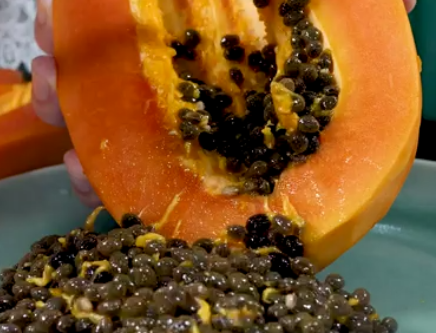
Papaya is mainly diffused in Central America and in Brazil, it has been imported in the Mediterranean countries, in particular in Israel and in Sicily, where it is cultivated in greenhouses.
Variety :
- Solo
- Sunrise
- Maradol
- Kapoho solo
The fruit weighs about 400/450 grams.
Its composition contains polyphenols and flavonoids that have antibacterial and antioxidant action (1). There is a good content of Vitamin A, C, E, pantothenic acid, magnesium and potassium in the pulp and peel.
Moreover, papaya and strawberry contains a good content of carotenoids in the pulp (2) :
- ß-cryptoxanthin 34.2%
- lycopene 8,31%
- β-carotene 6,26%.
Fermented papaya powder has an antioxidant effect against age-related diseases and neurological diseases and may be useful in combating excessive production of free radicals in patients with Alzheimer's disease (3).
The components of oil extracted from papaya seeds, oleic acid, linoleic acid, saponins, anthocyanins, tocopherol, have demonstrated beneficial effects on the cardiovascular system (4).
It can therefore be concluded that this fruit is a nutraceutical.
Papaya studies
Carica papaya
Bibliografia________________________________________________________________________
(1) Asghar N, Naqvi SA, Hussain Z, Rasool N, Khan ZA, Shahzad SA, Sherazi TA, Janjua MR, Nagra SA, Zia-Ul-Haq M, Jaafar HZ. Compositional difference in antioxidant and antibacterial activity of all parts of the Carica papaya using different solvents. Chem Cent J. 2016 Feb 3;10:5. doi: 10.1186/s13065-016-0149-0.
Abstract. Background: Carica papaya is a well known medicinal plant used in the West and Asian countries to cope several diseases. Patients were advised to eat papaya fruit frequently during dengue fever epidemic in Pakistan by physicians. This study was conducted to establish Polyphenols, flavonoids and antioxidant potential profile of extracts of all major parts of the C. papaya with seven major solvents i.e. water, ethanol, methanol, n-butanol, dichloromethane, ethyl acetate, and n-hexane. Results: TPC, TFC, antioxidant and antibacterial potential were determined using different aqueous and organic solvents in addition to the determination of trace element in leaves, pulp and peel of C. papaya. Total soluble phenolics and flavonoids were found in promising quantity (≈66 mg GAE/g) especially in case of methanol and ethanol extracts. Antioxidant activity using DPPH free radical scavenging assay indicated leaves, bark, roots and pulp extracts showed >75.0 % scavenging potential while leaves and pulp showed 84.9 and 80.9 % inhibition of peroxidation, respectively. Reducing power assay showed leaves, pulp and roots extracts active to reduce Fe(3+) to Fe(2+) ions. The antibacterial study showed pulp extract is the best to cope infectious action of bacteria. Conclusion: This study was conducted to test the medicinal profile of all parts of C. papaya by extracting secondary metabolites with organic and aqueous solvents. Ethanol and methanol both were found to be the best solvents of choice to extract natural products to get maximum medicinal benefits and could be used to medicinal formulation against different infectious diseases.Graphical abstractMedicinal evaluation of different parts of C. papaya.
(2) Swada JG, Keeley CJ, Ghane MA, Engeseth NJ. Relationship between pulp structure breakdown and nutritional value of papaya (Carica papaya) and strawberry (Fragaria x ananassa) nectars using alternative thermal and non-thermal processing techniques. J Sci Food Agric. 2016 May;96(7):2514-23. doi: 10.1002/jsfa.7372.
(3) Barbagallo M, Marotta F, Dominguez LJ. Oxidative stress in patients with Alzheimer's disease: effect of extracts of fermented papaya powder. Mediators Inflamm. 2015;2015:624801. doi: 10.1155/2015/624801. Epub 2015 Apr 7. PMID: 25944987;
Abstract. Brain tissue is particularly susceptible to oxidative stress (OS). Increased production of reactive oxygen species (ROS), reduced antioxidant systems, and decreased efficiency in repairing mechanisms have been linked to Alzheimer's disease (AD). Postmortem studies in AD patients' brains have shown oxidative damage markers (i.e., lipid peroxidation, protein oxidative damage, and glycoxidation). Fermented papaya (FPP, a product of Carica papaya Linn fermentation with yeast) is a nutraceutical supplement with favorable effects on immunological, hematological, inflammatory, and OS parameters in chronic/degenerative diseases. We studied 40 patients (age 78.2 ± 1.1 years), 28 AD patients, and 12 controls. Urinary 8-OHdG was measured to assess OS. Twenty AD patients were supplemented with FPP (Immunage, 4.5 grams/day) for 6 months, while controls did not receive any treatment. At baseline, 8-OHdG was significantly higher in patients with AD versus controls (13.7 ± 1.61 ng/mL versus 1.6 ± 0.12 ng/mL, P < 0.01). In AD patients FPP significantly decreased 8-OHdG (14.1 ± 1.7 ng/mL to 8.45 ± 1.1 ng/mL, P < 0.01), with no significant changes in controls. AD is associated with increased OS, and FPP may be helpful to counteract excessive ROS in AD patients.
(4) Santana LF, Inada AC, Espirito Santo BLSD, Filiú WFO, Pott A, Alves FM, Guimarães RCA, Freitas KC, Hiane PA. Nutraceutical Potential of Carica papaya in Metabolic Syndrome. Nutrients. 2019 Jul 16;11(7):1608. doi: 10.3390/nu11071608.
Abstract. Carica papaya L. is a well-known fruit worldwide, and its highest production occurs in tropical and subtropical regions. The pulp contains vitamins A, C, and E, B complex vitamins, such as pantothenic acid and folate, and minerals, such as magnesium and potassium, as well as food fibers. Phenolic compounds, such as benzyl isothiocyanate, glucosinolates, tocopherols (α and δ), β-cryptoxanthin, β-carotene and carotenoids, are found in the seeds. The oil extracted from the seed principally presents oleic fatty acid followed by palmitic, linoleic and stearic acids, whereas the leaves have high contents of food fibers and polyphenolic compounds, flavonoids, saponins, pro-anthocyanins, tocopherol, and benzyl isothiocyanate. Studies demonstrated that the nutrients present in its composition have beneficial effects on the cardiovascular system, protecting it against cardiovascular illnesses and preventing harm caused by free radicals. It has also been reported that it aids in the treatment of diabetes mellitus and in the reduction of cholesterol levels. Thus, both the pulp and the other parts of the plant (leaves and seeds) present antioxidant, anti-hypertensive, hypoglycemic, and hypolipidemic actions, which, in turn, can contribute to the prevention and treatment of obesity and associated metabolic disorders.




