



Whole grain wheat flakes
Whole grain wheat flakes are made from whole grains of wheat (Triticum spp., family Poaceae), generally subjected to steam treatment or cooking and then rolled to obtain their characteristic flattened shape.
The term “whole grain” indicates that the main components of the kernel are retained: bran, endosperm, and germ. Compared with refined cereal products, they therefore retain higher amounts of dietary fibre, vitamins, minerals, and bioactive compounds.
They consist mainly of complex carbohydrates, particularly starch, together with a moderate amount of plant protein and a relatively low fat content.
The fibre fraction is mainly composed of insoluble fibre, concentrated in the bran, which contributes to normal bowel function. Smaller amounts of soluble fibre are also present.
Whole grain wheat flakes naturally provide several micronutrients, including magnesium, phosphorus, manganese, iron, zinc, and B vitamins, although their amounts vary depending on the wheat variety and processing methods.
The germ also contains vitamin E, unsaturated fatty acids, and phenolic compounds.
Like other whole grains, wheat naturally contains phytic acid, which may partly reduce the absorption of certain minerals. Soaking, fermentation, and cooking can reduce its content to some extent.
Calories
Whole grain wheat flakes generally provide approximately 330–360 kcal per 100 g.
The actual value may vary depending on the wheat variety, degree of processing, and the presence of any additional ingredients.
A normal serving is considerably smaller than 100 g, so the actual energy intake depends on portion size and on the foods eaten with the flakes.
Uses in Food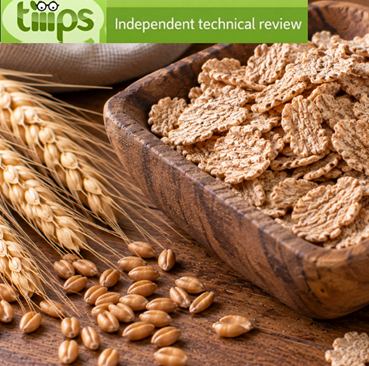
Whole grain wheat flakes are mainly used in breakfast cereals, muesli, porridge, and whole-grain cereal blends.
They can be eaten with milk, yogurt, or plant-based drinks, often combined with fresh fruit, dried fruit, nuts, and seeds.
They are also used in cereal bars, biscuits, bread, crackers, baked goods, and snacks.
They may be incorporated into doughs to increase the content of whole grains and fibre, or used on the surface of breads and other baked products.
After soaking or cooking, they can also be used in savoury preparations such as soups, vegetable patties, fillings, and grain-and-vegetable dishes.
Retaining the whole kernel generally gives them a higher content of fibre and micronutrients than comparable products made from refined wheat.
Uses in Cosmetics
Wheat and wheat-derived ingredients are also used in cosmetics, although food-grade whole grain wheat flakes are not normally used directly as cosmetic ingredients.
Wheat can be processed into hydrolyzed wheat proteins, wheat starch, extracts, wheat germ oil, and other derivatives.
Hydrolyzed wheat proteins may be used in shampoos, conditioners, hair masks, and conditioning products, where they provide film-forming and conditioning properties.
Wheat germ oil is used as an emollient ingredient in creams, body oils, balms, and products for dry skin, due to its content of unsaturated lipids and vitamin E.
Wheat extracts and other derivatives may also be included in cleansing products and formulations for skin and hair care.
Food-grade whole grain wheat flakes should not, however, be considered equivalent to standardized cosmetic extracts, proteins, or oils.
Allergens
Wheat is a major food allergen that must be declared on food labels in the European Union and the United Kingdom.
Whole grain wheat flakes contain gluten and are therefore not suitable for people with coeliac disease.
They may also cause reactions in people with wheat allergy.
Wheat allergy should be distinguished from coeliac disease and from other forms of individual sensitivity, as these are different conditions.
Commercial products may also contain or come into contact with other allergens when wheat flakes are used in cereal blends, muesli, or processed foods.
Evaluation
A useful whole-grain cereal ingredient providing complex carbohydrates, fibre, plant protein, B vitamins, and minerals. Retaining the bran and germ generally gives it a more complete nutritional profile than refined wheat products.
Ingredient verdict: a good whole-grain cereal ingredient and a useful source of complex carbohydrates and fibre; however, its gluten content makes it unsuitable for people with coeliac disease or specific wheat allergy.
Cons: contains gluten; not suitable for people with coeliac disease or wheat allergy

