Pitted apricots
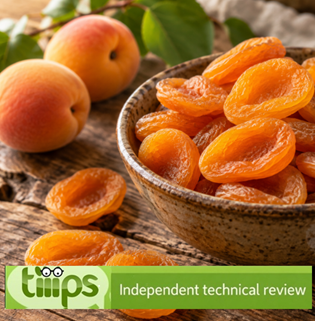
Pitted apricots are the fruits of the apricot tree (Prunus armeniaca, family Rosaceae) with the stone removed.
The term “pitted” simply indicates that the stone has been removed; the product may be fresh, dried or otherwise processed. When apricots are dried, the loss of water causes a substantial concentration of sugars, fiber and micronutrients.
Apricots are naturally rich in carotenoids, particularly beta-carotene, which contributes to their characteristic orange color and acts as a precursor of vitamin A.
They also contain potassium, dietary fiber and phenolic compounds, in amounts that vary according to variety, ripeness and processing.
Fresh apricots have a high water content and therefore a relatively low energy density, whereas dried apricots contain a much higher concentration of naturally occurring sugars.
Dried apricots may also contain sulfites, used to preserve their orange color and limit browning. Untreated dried apricots usually develop a darker color.
Calories
Fresh pitted apricots provide approximately 45–50 kcal per 100 g.
Dried pitted apricots provide approximately 235–250 kcal per 100 g, mainly because of their much lower water content.
The appropriate energy value therefore depends on the actual form of the ingredient.
Uses in Food
Fresh pitted apricots can be eaten directly or used in fruit salads, yogurt, desserts, cakes, tarts and compotes.
Dried versions are commonly used in muesli, breakfast cereals, bars, snacks, baked goods and dried-fruit mixes.
They may be processed into purées, jams, fruit pastes and fillings, taking advantage of their natural sweetness.
They are also used in savory and sweet-and-sour preparations with cereals, cheese, meat and spices.
For dried versions, the higher concentration of natural sugars and calories should be taken into account.
Uses in Cosmetics
Apricot extracts and derivatives of Prunus armeniaca seeds are also used in cosmetics.
In particular, apricot kernel oil is valued as an emollient ingredient because of its content of unsaturated fatty acids.
It may be found in creams, body oils, balms, hair-care products, cleansers and formulations for dry skin.
Fruit extracts may also be used in formulations for their conditioning and antioxidant properties.
Food-grade pitted apricots should not, however, be considered equivalent to a standardized cosmetic extract or oil.
Allergens
Apricots are not among the major food allergens requiring mandatory declaration in the European Union.
Rare individual reactions may nevertheless occur, including possible cross-reactivity with other fruits in the Rosaceae family.
In dried apricots, the possible presence of sulfites should be checked, as these must be declared when present above the applicable threshold.
Assessment
A fruit valued for its content of carotenoids, fiber, potassium and phenolic compounds. Its nutritional profile changes considerably between fresh and dried forms.
Ingredient verdict: a nutritious fruit with a favorable overall profile; in dried versions, the higher concentration of sugars should be considered and the possible presence of sulfites should be checked.
Cons: possible high sugar content in dried versions; possible presence of sulfites
Studies
Apricot kernel oil showed an antimicrobial potential due to the contents of benzaldehyde (90.6%), mandelonitrile (5.2%) and benzoic acid (4.1%). Antimicrobial activity had varying degrees of efficacy against 16 bacteria and two species of yeast (1).
Amygdalin, a cyanogenic glycoside contained in the kernel of apricot, but also in that of almond and peach, has been accredited by scientific literature as having suppressive effects on the development of colon cancer. The daily intake of kernels, based on a "controlled" form of intake, can be considered a chemopreventive agent (2).
Warning: the word "controlled" is underlined because amygdalin contains cyanide, a powerful and lethal poison. This study presents the case of a 3-year-old child with severe intoxication due to ingestion of 3 mango kernels (3). Do-it-yourself treatment is therefore highly not recommended.
Apricot studies
References____________________________________________________________________
(1) Lee HH, Ahn JH, Kwon AR, Lee ES, Kwak JH, Min YH. Chemical composition and antimicrobial activity of the essential oil of apricot seed. Phytother Res. 2014 Dec;28(12):1867-72. doi: 10.1002/ptr.5219
Alajil O, Sagar VR, Kaur C, Rudra SG, Sharma RR, Kaushik R, Verma MK, Tomar M, Kumar M, Mekhemar M. Nutritional and Phytochemical Traits of Apricots (Prunus Armeniaca L.) for Application in Nutraceutical and Health Industry. Foods. 2021 Jun 10;10(6):1344. doi: 10.3390/foods10061344.
Abstract. Apricot (Prunus armeniaca L.) is a nutritious fruit, rich in bioactive compounds, known for their health benefits. The present study attempts to evaluate nutritional (sugars, organic acids, minerals) and nutraceutical traits (total phenolics, flavonoids, carotenoids, antioxidant activity) of six commercial apricot genotypes grown in India. Antioxidant activity was determined using three in-vitro assays, namely CUPRAC (cupric reducing antioxidant capacity), FRAP (ferric reducing antioxidant power) and DPPH (1,1-diphenyl-2-picryl-hydrazyl). Significant (p < 0.05) differences were observed in the genotypes concerning nutritional and nutraceutical traits. Sucrose accounted for more than 60% of total sugars in most genotypes, followed by glucose and fructose. Citric acid accounted for more than 50% of the total organic acids present, followed by malic and succinic acids. Apricot is a good source of potassium (1430.07 to 2202.69 mg/100 g dwb) and iron (2.69 to 6.97 mg/100 g dwb) owing to its mineral composition. Total carotenoids content ranged from 0.44 to 3.55 mg/100 g, with β-carotene accounting for 33-84% of the total content. The results strongly suggest that genotypes 'CITH-A-1' and 'CITH-A-2', which have high dry matter and carotenoids content, are well suited for drying. 'Roxana' and 'CITH-A-3' are great for fresh consumption, while 'Shakarpara' and 'Gold Cot' are excellent for juice processing.
(2) Cassiem W, de Kock M. The anti-proliferative effect of apricot and peach kernel extracts on human colon cancer cells in vitro. BMC Complement Altern Med. 2019 Jan 29;19(1):32. doi: 10.1186/s12906-019-2437-4.
Abstract. Background: Colorectal malignant neoplasms is one of the leading causes of death in both men and women in the developed world and the incidence has recently increased markedly in South Africa. Studies have highlighted the beneficial effects of Amygdalin, a cyanogenic compound found in both peach and apricot kernels, in its ability to suppress the development of colon cancer. The focus of this study was to investigate the potential anti-proliferative properties of various apricot and peach kernels extractions from South Africa and China and to monitor alterations in cell cycle kinetics in colon cancer cells. Methods: Studies were conducted on HT-29 colon cancer cells. The interactive role of three different kernel extractions on the modulation of cell proliferation, apoptosis and cell cycle progression was monitored over 24, 48 and 72 h periods. Results: After 24 h, all extracts of the South African apricot kernels had a dose related bi-phasic proliferative effect on the HT-29 cells. It stimulated cell proliferation at the lowest and highest concentrations while at 500 μg/mL it inhibited cell proliferation. In contrast, after 72 h, the low concentration inhibited cell proliferation while the 500 μg/mL extracts stimulated cell proliferation. Morphological changes were observed in cells incubated with Chinese kernel extracts after 24 h and South African kernel treatment (1000 μg/mL) after 72 h. A possible intra-S-phase block after 24 and 48 h exposure to South African hydrophilic kernel extracts was observed. This transient block that is more concerned with tolerating and accommodating damage during replication rather than repairing it, could explain the initial anti-proliferative effects observed after 24 h exposure to the various Chinese kernel extract concentrations. Conclusion: Abrogation of the block by exhaustion of the cyanide production, most likely allowed the cells to resume the cell cycle and continue into mitosis, whereas low ATP levels caused by the presence of amygdalin in the kernels, can also cause the induction of pycnosis or necrosis. These results highlight the possible mechanisms of growth inhibition by amygdalin containing extracts and may contribute towards the development of dietary anti-cancer therapies.
(3) Dalkiran T, Kandur Y, Ozaslan M, Acipayam C, Olgar S. Role of Hemodialysis in the Management of Cyanide Intoxication From Apricot Kernels in a 3-Year-Old Child. Pediatr Emerg Care. 2018 Nov 5. doi: 10.1097/PEC.0000000000001644.
Abstract. Cyanide (CN) is one among the most potent and rapidly acting lethal poisons, and it may cause death unless immediately diagnosed and treated. We report an unusual case of pediatric CN poisoning after ingestion of apricot kernels containing amygdalin, who survived with antidotal therapy and hemodialysis. A 3-year-old girl presented with respiratory distress and coma following tonic-clonic convulsions after ingestion of 3 apricot kernels. She had severe metabolic acidosis (pH 6.91, bicarbonate [HCO3] 5.6 mEq/L, base excess -26.0 mEq/L). Her blood CN level was measured 3.15 mg/L, 3 hours after ingestion. Hydroxocobalamin could not be administered immediately because it had to be brought from a medical center 4 hours apart. Therefore, a 3-hour hemodialysis session was carried out, following which she showed some clinical improvement. In addition, when hydroxocobalamin was obtained, it was then administered. During follow-up, she was completely asymptomatic with blood pressure, and other hemodynamic parameters normalized. This case presents hemodialysis as a way to correct metabolic derangements from CN poisoning and suggests that it may have a role in select cases of pediatric CN poisoning, especially when CN-scavenging antidotes may be unavailable.
__________________
Bonesi M, Tenuta MC, Loizzo MR, Sicari V, Tundis R. Potential Application of Prunus armeniaca L. and P. domestica L. Leaf Essential Oils as Antioxidant and of Cholinesterases Inhibitors. Antioxidants (Basel). 2018 Dec 21;8(1):2. doi: 10.3390/antiox8010002.
Abstract. The aim of this work is to investigate the in vitro acetylcholinesterase (AChE) and butyrycholinesterase (BChE) inhibitory activities of essential oils obtained by hydrodistillation from the leaves of Prunus armeniaca and P. domestica in relation to their composition, analysed by Gas Chromatography⁻Flame Ionization Detector (GC-FID) and Gas Chromatography-Mass Spectrometry (GC-MS) analyses, at different times. Moreover, considering the role of free radicals in the progression of neurodegenerative disorders, the antioxidant properties of essential oils were investigated by using, 2'-azino-bis(3-ethylbenzothiazoline-6-sulphonic acid) (ABTS), 2,2-diphenyl-1-picrylhydrazyl (DPPH), and β-carotene bleaching tests. The relative antioxidant capacity index (RACI) was used to achieve more comprehensive comparison between analysed antioxidant effects of essential oils. P. armeniaca oils were more active than P. domestica oils against AChE. Against BChE, the most active was the essential oil from P. domestica leaves collected in August with an IC50 value of 95.80 μg/mL. This oil exerted the highest inhibitory activity of lipid peroxidation with IC50 values of 11.15 and 11.39 μg/mL after 30 and 60 min of incubation, respectively. All samples demonstrated a remarkable ABTS radicals scavenging activity, with IC50 values in the range 0.45⁻0.57 μg/mL in comparison to the positive control, ascorbic acid.
Stryjecka M, Kiełtyka-Dadasiewicz A, Michalak M, Rachoń L, Głowacka A. Chemical Composition and Antioxidant Properties of Oils from the Seeds of Five Apricot (Prunus armeniaca L.) Cultivars. J Oleo Sci. 2019 Aug 1;68(8):729-738. doi: 10.5650/jos.ess19121.
Abstract. Oils from five cultivars of apricot (Prunus armeniaca L.) grown in Poland were analysed for characteristics of chemical and biological activity. The extracted oils had an average iodine value (g of I/100 g of oil) of 99.2; a refractive index of (40°C) 1.4675; a saponification value of 189 mg of KOH/g of oil; and 0.68% unsaponifiable matter. As regards the oxidation state, the specific extinction values of the oils at 232 and 268 nm were 2.55 and 0.94, respectively, while the peroxide value was 1.40 meq O2/kg and the p-anisidine value was 1.42. Oleic acid (70.70%) was the predominant fatty acid found in the oils, followed by linoleic (22.41%), palmitic (3.14%), stearic (1.4%), linolenic (0.90%), and palmitoleic (0.70%) acid. The content of α-, γ-, and δ- tocopherols in the oils from the five apricot cultivars was 19.6-40.0, 315.4-502.3, and 28.3-58.5 mg/kg, respectively. The antioxidant capacity of the apricot kernel oils, measured using the FRAP assay, ranged from 1.07 to 1.38 mM Fe2+/L, while total polyphenols and β-carotene content were 0.85-1.22 mM gallic acid/L and 42.3-66.8 μg/g, respectively. The results indicate that among the cultivars tested, the 'Somo' cultivar grown in Poland provides the most oil, with the highest antioxidant activity. The results of our study demonstrate that apricot seeds are a potential source of oil that can have both dietary and cosmetic applications.
Kitic D, Miladinovic B, Randjelovic M, Szopa A, Sharifi-Rad J, Calina D, Seidel V. Anticancer Potential and Other Pharmacological Properties of Prunus armeniaca L.: An Updated Overview. Plants (Basel). 2022 Jul 20;11(14):1885. doi: 10.3390/plants11141885.
Abstract. Prunus armeniaca L. (Rosaceae)-syn. Amygdalus armeniaca (L.) Dumort., Armeniaca armeniaca (L.) Huth, Armeniaca vulgaris Lam is commonly known as the apricot tree. The plant is thought to originate from the northern, north-western, and north-eastern provinces of China, although some data show that it may also come from Korea or Japan. The apricot fruit is used medicinally to treat a variety of ailments, including use as an antipyretic, antiseptic, anti-inflammatory, emetic, and ophthalmic remedy. The Chinese and Korean pharmacopeias describe the apricot seed as an herbal medicinal product. Various parts of the apricot plant are used worldwide for their anticancer properties, either as a primary remedy in traditional medicine or as a complementary or alternative medicine. The purpose of this review was to provide comprehensive and up-to-date information on ethnobotanical data, bioactive phytochemicals, anticancer potential, pharmacological applications, and toxicology of the genus Prunus armeniaca, thus providing new perspectives on future research directions. Included data were obtained from online databases such as PubMed/Medline, Google Scholar, Science direct, and Wiley Online Library. Multiple anticancer mechanisms have been identified in in vitro and in vivo studies, the most important mechanisms being apoptosis, antiproliferation, and cytotoxicity. The anticancer properties are probably mediated by the contained bioactive compounds, which can activate various anticancer mechanisms and signaling pathways such as tumor suppressor proteins that reduce the proliferation of tumor cells. Other pharmacological properties resulting from the analysis of experimental studies include neuroprotective, cardioprotective, antioxidant, immunostimulatory, antihyperlipidemic, antibacterial, and antifungal effects. In addition, data were provided on the toxicity of amygdalin, a compound found in apricot kernel seeds, which limits the long-term use of complementary/alternative products derived from P. armeniaca. This updated review showed that bioactive compounds derived from P. armeniaca are promising compounds for future research due to their important pharmacological properties, especially anticancer. A detailed analysis of the chemical structure of these compounds and their cytotoxicity should be carried out in future research. In addition, translational pharmacological studies are required for the correct determination of pharmacologically active doses in humans.




