



Wheat germ flour
Wheat germ flour is obtained by milling the germ of wheat (Triticum spp., family Poaceae), the embryonic part of the grain from which a new plant can develop.
The germ represents only a small portion of the wheat kernel, but it is nutritionally more concentrated than the endosperm used to produce conventional white flour.
It is a good source of protein, fiber and lipids, with a fat fraction composed largely of unsaturated fatty acids, including linoleic acid.
It is particularly rich in vitamin E, especially tocopherols, and also contains B-group vitamins such as thiamine, folate and vitamin B6.
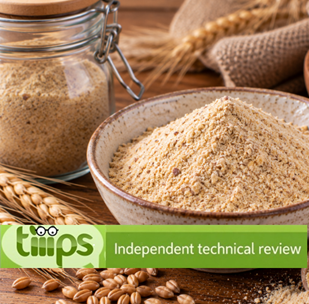
It provides minerals including magnesium, phosphorus, zinc, iron, manganese and potassium, in amounts that vary according to wheat variety and processing.
It also contains plant compounds such as phytosterols and polyphenols, while its unsaturated fat content makes wheat germ more susceptible to oxidation and rancidity than flours produced mainly from the endosperm.
For this reason, wheat germ flour requires careful storage away from heat, light and oxygen.
Partially or fully defatted versions are also available, and their nutritional composition may differ significantly from flour made from whole wheat germ.
Calories
Wheat germ flour generally provides approximately 350–400 kcal per 100 g.
The actual value depends mainly on its fat content and whether the germ has undergone defatting.
Despite its relatively high energy density, it is often used in fairly small amounts in food preparations.
Uses in Food
It can be added to bread, focaccia, biscuits, crackers, cakes and other baked goods to increase their nutrient content and provide a characteristic mildly toasted flavor.
It is also used in breakfast cereals, muesli, bars, smoothies and protein- or fiber-enriched preparations.
It can be mixed with conventional flours to increase the content of protein, fiber, vitamin E and minerals.
The presence of germ lipids and other components may influence dough structure, shelf life and the aromatic profile of the finished product.
Because of its greater susceptibility to oxidation, foods containing significant amounts of wheat germ may have lower storage stability than products made with refined flour.
Uses in Cosmetics
Wheat germ derivatives are also used in cosmetics, especially in the form of wheat germ oil and extracts.
The oil is valued for its content of vitamin E, fatty acids and phytosterols and is used as an emollient and conditioning ingredient.
It may be found in creams, balms, body oils, hair-care products, masks and formulations for dry skin.
Food-grade wheat germ flour itself is much less commonly used directly in cosmetic formulations and should not be considered equivalent to a standardized cosmetic oil or extract.
Allergens
Wheat germ is derived from wheat, which is a gluten-containing cereal and one of the allergen categories requiring mandatory declaration in the European Union.
Wheat germ flour contains wheat proteins and should not be considered naturally gluten-free.
Assessment
A nutritionally valuable ingredient because of its content of protein, fiber, vitamin E, unsaturated fats and minerals, and richer in micronutrients than conventional refined wheat flour.
Ingredient verdict: a nutrient-dense component of the wheat kernel, useful for enriching baked goods and other foods, but relatively calorie-dense and more prone to rancidity because of its unsaturated fat content.
Cons: Allergen; high energy density and greater susceptibility to oxidation

