



Bamboo fiber
Bamboo fiber is an ingredient obtained from the fibrous tissues of various bamboo species, plants belonging to the family Poaceae, subfamily Bambusoideae.
It consists mainly of insoluble dietary fiber, especially cellulose, together with varying amounts of hemicelluloses and lignin. Its actual composition depends on the bamboo species and the purification process.
Unlike bamboo shoots, which are eaten as a food, concentrated bamboo fiber is used primarily for its structural and technological properties.
It is not digested by enzymes in the small intestine and therefore contributes to total dietary fiber intake.
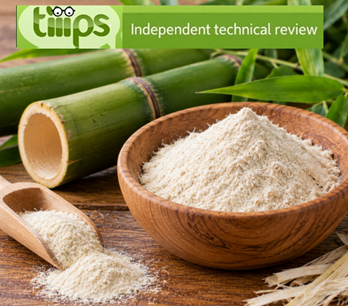
Its insoluble fraction absorbs water and may help increase stool bulk and support normal bowel regularity.
Bamboo fiber also has good water-binding and swelling properties, making it useful in food formulations.
When highly purified, it is generally not a significant source of protein, fat, sugars, vitamins or minerals.
Compared with whole bamboo or bamboo shoots, it should therefore be considered mainly a concentrated fiber ingredient, rather than a complete food.
High intakes may cause bloating, fullness or changes in bowel habits, particularly when dietary fiber intake is increased rapidly.
Calories
If the ingredient consists almost entirely of dietary fiber, an energy value of approximately 200 kcal per 100 g may be used as a general reference under European nutrition-labeling conventions, which assign dietary fiber an energy value of 2 kcal per gram.
The actual value may vary according to purity, moisture and the presence of other components.
Uses in Food
Bamboo fiber is used in bread, baked goods, biscuits, snacks, meat products, plant-based preparations and fiber-enriched foods.
It can increase the dietary fiber content of a product without strongly affecting flavor.
Because of its water-binding capacity, it may improve texture, softness, yield and stability.
It can also act as a structuring agent, particularly in foods where reducing moisture loss during cooking or storage is desirable.
It is used in some gluten-free formulations, where it can help improve dough structure and water management.
Its neutral taste and technological properties make it particularly suitable for products in which additional fiber is required without substantially changing the sensory profile.
Uses in Cosmetics
Bamboo powders and derivatives are also used in cosmetics as abrasive, absorbent and texturizing ingredients.
Powders obtained from bamboo stems may be used for their smoothing and exfoliating action in skincare or oral-care products.
Bamboo-derived ingredients may also occur in creams, masks, deodorants, body powders and hair-care products.
Food-grade bamboo fiber should not automatically be considered equivalent to a purified and standardized cosmetic ingredient.
Allergens
Bamboo is not among the major food allergens requiring mandatory declaration in the European Union.
Rare individual reactions are nevertheless possible, and any other ingredients present in the commercial preparation should be considered separately.
Assessment
A mainly functional ingredient valued for its high content of insoluble fiber and for its ability to improve structure and water retention in foods.
Ingredient verdict: a useful concentrated plant-fiber ingredient, nutritionally simple but technologically effective for increasing fiber content and improving product texture.
Cons: possible gastrointestinal discomfort with high intake

