



Amarena cherry
Amarena cherry is the fruit of the sour cherry tree (Prunus cerasus, family Rosaceae), closely related to the sweet cherry but characterised by a more tart and aromatic flavour.
The fruit consists mainly of water and carbohydrates, particularly naturally occurring sugars such as glucose and fructose, while containing very little fat or protein.
It provides a useful amount of dietary fibre and contains vitamin C, potassium, copper and other micronutrients in varying amounts.
Its characteristic dark red colour is mainly due to anthocyanins, pigments belonging to the polyphenol family and known for their antioxidant activity.
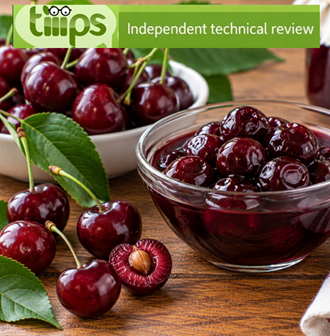
It also contains phenolic acids, flavonoids and other bioactive plant compounds, whose concentration varies according to variety, ripeness and processing.
Its tart flavour is due to naturally occurring organic acids, particularly malic acid.
Fresh Amarena cherries have a relatively low energy density, while commercial preparations in syrup, candied products or preserves may contain very high amounts of added sugar.
Calories
Fresh Amarena cherries provide approximately 45–55 kcal per 100 g, with an average value close to 50 kcal per 100 g.
In syrup, candied or preserve forms, the calorie content may increase substantially because of added sugar.
Uses in Food
Amarena cherries may be eaten fresh or used in preserves, compotes, syrups, ice cream, yoghurt, desserts and baked goods.
They are widely used in cakes, tarts, biscuits, chocolates, creams and fillings, where their characteristic tartness helps balance sweetness.
They can also be used in sauces and sweet-and-sour preparations served with cheese or meat.
Amarena cherry juice and concentrate are used in beverages, toppings and fruit-flavoured preparations.
In processed products, it is important to distinguish the fruit’s naturally occurring sugars from any added sugars.
Uses in Cosmetics
Amarena cherry and other Prunus fruit extracts may be used in cosmetics because of their content of anthocyanins, polyphenols and antioxidant compounds.
They may be found in creams, serums, masks, cleansers and skincare products.
Extracts or oils obtained from the seeds may also be used in some formulations for their emollient and conditioning properties.
Natural pigments may additionally contribute to the colour of certain cosmetic formulations.
Food-grade Amarena cherry should not be considered equivalent to a purified and standardised cosmetic extract.
Allergens
Amarena cherry is not among the major food allergens requiring mandatory declaration in the European Union.
Rare individual reactions may nevertheless occur, including possible cross-reactivity with other fruits in the Rosaceae family, particularly in people sensitive to birch pollen.
Assessment
A relatively low-calorie fruit valued for its anthocyanins, polyphenols, vitamin C and fibre, with a characteristic tart flavour.
Ingredient verdict: a useful fruit rich in antioxidant plant compounds; in processed forms, the main factor to check is the amount of added sugar.
Cons: possible high sugar content in syrup-preserved or candied versions

