



Apple cider vinegar
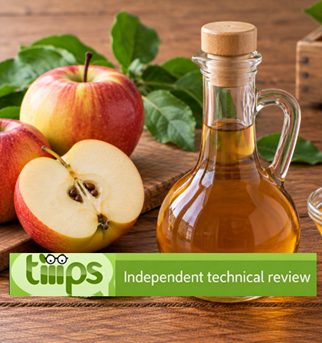
Apple cider vinegar is obtained through the fermentation of apple juice or cider made from apple (Malus domestica, family Rosaceae).
Production generally takes place in two stages: yeasts convert the naturally occurring sugars into ethyl alcohol, and acetic acid bacteria then convert the alcohol mainly into acetic acid.
It consists primarily of water and acetic acid, together with small amounts of organic acids, minerals and apple-derived compounds.
Compared with spirit vinegar, it has a more complex aromatic profile, with characteristic fruity, acidic and mildly sweet notes.
Unfiltered and unpasteurised versions may contain the so-called “mother of vinegar”, consisting of acetic acid bacteria and fermentation-derived material.
It may contain small amounts of polyphenols originating from apples, but it should not be considered nutritionally equivalent to whole fruit, as it provides very little fibre and only limited amounts of micronutrients.
Acetic acid may help moderate the glycaemic response to a carbohydrate-rich meal, but apple cider vinegar should not be considered a treatment for diabetes, excess weight or other metabolic conditions.
Its high acidity may cause gastric or oesophageal irritation in sensitive individuals and, when frequently consumed undiluted, may contribute to erosion of tooth enamel.
Calories
Apple cider vinegar provides approximately 20–25 kcal per 100 ml, with variations depending on residual sugar content and formulation.
At normal seasoning amounts, its actual caloric contribution is therefore very low.
Uses in Food
It is used as a seasoning, acidifying agent and preservative in salads, sauces, marinades, vegetables, chutneys and sweet-and-sour preparations.
It is particularly suitable for vinaigrettes and dressings because of its fruitier flavour compared with spirit vinegar.
It can also be used in pickles and preserved vegetables, where its acidity contributes to preservation.
In some baked preparations, the acid can react with baking soda, helping produce carbon dioxide.
When consumed as a drink, it should be properly diluted to reduce the irritating effects of its acidity.
Uses in Cosmetics
Apple cider vinegar is also used in some hair and scalp preparations, mainly as an acidifying rinse.
Its acidity may temporarily help make the hair surface feel smoother and shinier.
It may also be found in cleansers, toners or cosmetic formulations where it helps with pH adjustment.
Food-grade vinegar should not be applied undiluted to the skin or scalp because it may cause irritation or burning.
It should also not be considered equivalent to a purified and standardised cosmetic ingredient.
Allergens
Apple is not among the major food allergens requiring mandatory declaration in the European Union.
Rare individual reactions to apple may nevertheless occur, including cross-reactivity in people sensitive to birch pollen.
Any sulfites or other added ingredients should be assessed from the specific product label.
Assessment
A versatile, low-calorie condiment valued mainly for its characteristic fruity flavour and acidity, with limited amounts of apple-derived plant compounds.
Ingredient verdict: a useful, low-calorie acidic condiment for flavouring and preservation, but it should not be consumed undiluted or in excessive amounts because of its high acidity.
Cons: high acidity; possible gastrointestinal and dental irritation if consumed undiluted

