RECENSIONE
Recensione

Al222 (26685 pt) • 28-Sep-2026 09:42
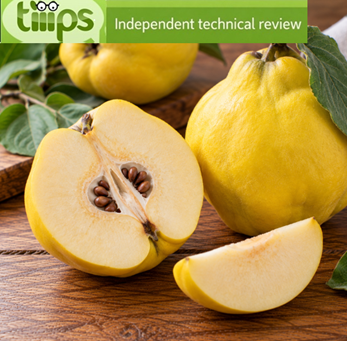
Mela cotogna
La mela cotogna, o cotogna, è il frutto del cotogno (Cydonia oblonga, famiglia Rosaceae), albero originario dell’Asia occidentale e coltivato da secoli anche nell’area mediterranea.
Il frutto maturo presenta una caratteristica forma simile a una mela o a una pera, buccia gialla e polpa compatta, aromatica e generalmente molto astringente quando consumata cruda.
È costituito prevalentemente da acqua e carboidrati, soprattutto zuccheri naturalmente presenti, mentre contiene quantità molto basse di grassi e proteine.
Apporta una discreta quantità di fibre alimentari, tra cui una quota importante di pectine, fibre solubili particolarmente abbondanti nella polpa e nella buccia.
Contiene inoltre vitamina C, potassio, rame e altri micronutrienti, in quantità variabili secondo varietà, maturazione e lavorazione.
La cotogna contiene diversi polifenoli e tannini, responsabili in parte del gusto astringente e dotati di attività antiossidante.
La cottura ammorbidisce la polpa, riduce l’astringenza e sviluppa un aroma più dolce e intenso, rendendo il frutto molto più gradevole al consumo.
Grazie all’elevato contenuto naturale di pectina, durante la cottura forma facilmente gel, caratteristica tradizionalmente sfruttata nella preparazione di confetture e gelatine.
Calorie
La mela cotogna cruda apporta indicativamente circa 55–60 kcal per 100 g, con un valore medio vicino a 57 kcal per 100 g.
Il valore aumenta notevolmente nelle preparazioni come cotognata, confetture e gelatine quando vengono aggiunte quantità elevate di zucchero.
Utilizzi in Alimentazione
La cotogna viene consumata soprattutto cotta, poiché da cruda è generalmente dura e molto astringente.
È utilizzata per preparare cotognata, confetture, gelatine, composte, marmellate, dessert e frutta cotta.
Può essere impiegata anche in torte, crostate, ripieni e prodotti da forno, dove conferisce un aroma intenso e caratteristico.
Nelle preparazioni salate può accompagnare formaggi, carni, selvaggina e piatti agrodolci.
L’elevato contenuto di pectina la rende utile anche per migliorare naturalmente la consistenza e la gelificazione di confetture ottenute da altri frutti poveri di pectina.
Può essere trasformata anche in succhi, puree e concentrati, sebbene questi prodotti abbiano un profilo nutrizionale diverso dal frutto intero.
Utilizzi in Cosmetica
Estratti di cotogna possono essere utilizzati in cosmetica per le loro proprietà condizionanti, antiossidanti e idratanti.
Particolarmente interessanti sono le mucillagini ottenute dai semi di cotogna, ricche di polisaccaridi capaci di assorbire acqua e formare gel.
Questi derivati possono comparire in creme, gel, maschere, prodotti lenitivi e formulazioni per capelli.
Le mucillagini possono contribuire a creare un film morbido e idratante sulla superficie della pelle.
Il frutto alimentare e i suoi semi non devono comunque essere considerati equivalenti a un ingrediente cosmetico purificato e standardizzato.
Allergeni
La mela cotogna non rientra tra i principali allergeni alimentari soggetti a dichiarazione obbligatoria nell’Unione europea.
Sono comunque possibili rare reazioni individuali, anche per possibile reattività crociata con altri frutti appartenenti alla famiglia Rosaceae.
Valutazione
Frutto poco calorico e interessante soprattutto per il contenuto di fibre, pectine, polifenoli e composti aromatici, anche se viene consumato prevalentemente dopo cottura.
Verdetto ingrediente: frutto aromatico e ricco di pectina, particolarmente valido nelle preparazioni cotte; nei prodotti trasformati è opportuno considerare soprattutto l’eventuale aggiunta di zuccheri.
Contro: nessuno specifico nel frutto; possibili zuccheri elevati nelle preparazioni dolci
Bibliografia________________________________________________________________________
Fukushima R, Yamada R, Izawa C, Shibata M. Surfactant-Free Pickering Emulsification Using Chinese Quince Fruit Fiber. J Oleo Sci. 2023;72(6):605-612. doi: 10.5650/jos.ess23002.
Abstract. Quince fruit powder can be obtained from the waste of the edible product. In this study, we modified the powder with various solvents and investigated its application in Pickering emulsification. The crushed Chinese quince fruit possessed excellent Pickering emulsifying abilities when the water-soluble components were removed. In addition to cellulose, the powder contains hydrophilic pectin and hydrophobic lignin fibers. Similarly, a powder consisting of cellulose and a small amount of lignin without pectin, which was obtained by further solvent treatment, also showed high emulsification performance. Although these two powders had different fiber compositions, their water contact angles were almost equal, and their surface hydrophilicity was lower than that of the cellulose-only powder without emulsification ability.
Najman K, Adrian S, Sadowska A, Świąder K, Hallmann E, Buczak K, Waszkiewicz-Robak B, Szterk A. Changes in Physicochemical and Bioactive Properties of Quince (Cydonia oblonga Mill.) and Its Products. Molecules. 2023 Mar 29;28(7):3066. doi: 10.3390/molecules28073066.
Abstract. Quince (Cydonia oblonga Miller) is a plant that is commonly cultivated around the world, known for centuries for its valuable nutritional and healing properties. Although quince fruit are extremely aromatic, due to their high hardness and sour, astringent, and bitter taste, they are not suitable for direct consumption in an unprocessed form. However, they are an important raw material in fruit processing, e.g., in the production of jams, jellies, and juices. Quince fruits fall under the category of temperate fruits, so their shelf life can be predicted. Considering that technological processing affects not only the organoleptic properties and shelf life but also the functional properties of fruits, the aim of this research was to determine the impact of various types of technological treatments on the physicochemical and bioactive properties of quince fruit. In fresh, boiled, and fried fruits and in freshly squeezed quince fruit juice, basic parameters, such as the content of dry matter, moisture, soluble solids (°Brix), pH, total acidity, water activity, and color parameters (L*a*b*) were determined. The content of key bioactive ingredients, i.e., tannins, carotenoids, flavonoids, phenolic acids, and total polyphenols, was also determined, as well as the antioxidant activity of raw and technologically processed (cooked, fried, and squeezed) quince fruits. The conducted research showed that fresh quince fruit and processed quince products can be a very good source of bioactive ingredients in the diet, such as tannins (3.64 ± 0.06 mg/100 g in fresh fruit; from 2.22 ± 0.02 mg/100 g to 5.59 ± 0.15 g/100 g in products), carotenoids (44.98 ± 0.18 mg/100 g in fresh fruit; from 141.88 ± 0.62 mg/100 g to 166.12 ± 0.62 mg/100 g in products), and polyphenolic compounds (246.98 ± 6.76 mg GAE/100 g in fresh fruit; from 364.53 ± 3.76 mg/100 g to 674.21 ± 4.49 mg/100 g in products). Quince fruit and quince products are also characterized by high antioxidant properties (452.41 ± 6.50 µM TEAC/100 g in fresh fruit; 520.78 ± 8.56 µM TEAC/100 g to 916.16 ± 6.55 µM TEAC/100 g in products). The choice of appropriate technological processing for the quince fruit may allow producers to obtain high-quality fruit preserves and act a starting point for the development of functional products with the addition of quince fruit in its various forms, with high health-promoting values and a wide range of applications in both the food and pharmaceutical industries.
Shimada U, Izawa C, Shibata M. Optimizing Quince Fruit Powder Particle Size for Sustainable Pickering Emulsions. J Oleo Sci. 2025;74(5):487-493. doi: 10.5650/jos.ess25006.
Abstract. Pickering emulsification, which utilizes solid particles instead of surfactants to stabilize emulsions, offers advantages such as improved safety and environmental sustainability. This study explores the potential of quince fruit powder, a plant-derived material rich in fibers such as cellulose, lignin, and pectin, as a stabilizing agent for Pickering emulsification. Quince powder, a byproduct of fruit processing, was optimized for particle size using sieving to enhance its emulsification performance.The emulsification efficiency of powders classified by particle size was evaluated through turbidity measurements, oil droplet size analysis, and Cryo-SEM observations. The results revealed that smaller particles (< 10 μm) exhibited superior emulsification performance, forming fine droplets with smooth surfaces. Medium-sized particles showed performance comparable to untreated powders, while larger particles resulted in lower turbidity and larger droplet sizes.This simple and eco-friendly particle classification method, sieving, demonstrates potential for improving the performance of Pickering emulsification.
Herrera-Rocha KM, Manjarrez-Juanes MM, Larrosa M, Barrios-Payán JA, Rocha-Guzmán NE, Macías-Salas A, Gallegos-Infante JA, Álvarez SA, González-Laredo RF, Moreno-Jiménez MR. The Synergistic Effect of Quince Fruit and Probiotics (Lactobacillus and Bifidobacterium) on Reducing Oxidative Stress and Inflammation at the Intestinal Level and Improving Athletic Performance during Endurance Exercise. Nutrients. 2023 Nov 13;15(22):4764. doi: 10.3390/nu15224764.
Abstract. Endurance exercise promotes damage at the intestinal level and generates a variety of symptoms related to oxidative stress processes, inflammatory processes, microbiota dysbiosis, and intestinal barrier damage. This study evaluated the effects of quince (Cydonia oblonga Mill.) and probiotics of the genera Lactobacillus and Bifidobacterium on intestinal protection and exercise endurance in an animal swimming model. Phytochemical characterization of the quince fruit demonstrated a total dietary fiber concentration of 0.820 ± 0.70 g/100 g and a fiber-bound phenolic content of 30,218 ± 104 µg/g in the freeze-dried fruit. UPLC-PDA-ESI-QqQ analyses identified a high content of polyphenol, mainly flavanols, hydroxycinnamic acids, hydroxybenzoic acids, flavonols, and, to a lesser extent, dihydrochalcones. The animal model of swimming was performed using C57BL/6 mice. The histological results determined that the consumption of the synbiotic generated intestinal protection and increased antioxidant (catalase and glutathione peroxidase enzymes) and anti-inflammatory (TNF-α and IL-6 and increasing IL-10) activities. An immunohistochemical analysis indicated mitochondrial biogenesis (Tom2) at the muscular level related to the increased swimming performance. These effects correlated mainly with the polyphenol content of the fruit and the effect of the probiotics. Therefore, this combination of quince and probiotics could be an alternative for the generation of a synbiotic product that improves exercise endurance and reduces the effects generated by the practice of high performance sports.




