Cavolo rosso
Il cavolo rosso, chiamato anche cavolo viola, è un ortaggio appartenente alla specie Brassica oleracea var. capitata, famiglia Brassicaceae.
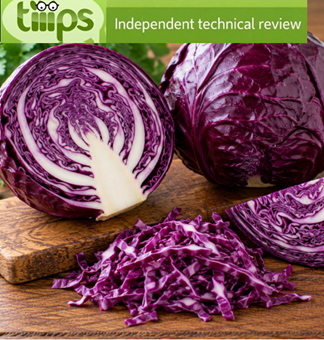
È caratterizzato da foglie compatte di colore rosso-violaceo, dovuto soprattutto alla presenza di antociani, pigmenti vegetali appartenenti alla famiglia dei polifenoli.
È costituito prevalentemente da acqua e presenta una densità calorica molto bassa.
Apporta fibre, carboidrati e piccole quantità di proteine, mentre il contenuto di grassi è praticamente trascurabile.
È una buona fonte di antociani, vitamina C e vitamina K e contiene folati, potassio, manganese e altri micronutrienti in quantità variabili.
Oltre agli antociani, contiene glucosinolati, composti caratteristici delle Brassicaceae che possono essere trasformati in sostanze come gli isotiocianati durante taglio e masticazione.
Il contenuto di fibre contribuisce alla normale funzione intestinale e può favorire il senso di sazietà.
Gli antociani sono sensibili al pH: in ambiente acido il colore tende al rosso, mentre in ambiente alcalino può assumere tonalità bluastre o verdastre.
La cottura prolungata può ridurre parte della vitamina C e di alcuni composti vegetali sensibili al calore.
Calorie
Il cavolo rosso crudo apporta indicativamente circa 30–35 kcal per 100 g, con un valore medio vicino a 31 kcal per 100 g.
La cottura senza aggiunta di grassi modifica poco l’apporto calorico complessivo.
Utilizzi in Alimentazione
Può essere consumato crudo, marinato, fermentato, stufato, saltato o cotto al forno.
È utilizzato in insalate, contorni, zuppe, panini, piatti con carne, preparazioni agrodolci e verdure fermentate.
Da crudo mantiene meglio la croccantezza, la vitamina C e parte degli antociani.
L’aggiunta di aceto, limone o altri ingredienti acidi aiuta a mantenere una colorazione rossa più intensa durante la preparazione.
Può essere sottoposto a fermentazione lattica, come avviene in alcune preparazioni simili ai crauti.
Utilizzi in Cosmetica
Estratti di cavolo rosso possono essere utilizzati in alcune formulazioni cosmetiche per il contenuto di antociani, polifenoli e altri composti antiossidanti.
Possono comparire in maschere, creme, sieri e prodotti botanici per la cura della pelle.
I pigmenti del cavolo rosso possono essere studiati anche come coloranti di origine vegetale, sebbene la loro stabilità dipenda molto dal pH e dalla formulazione.
Il cavolo alimentare non deve comunque essere considerato equivalente a un estratto cosmetico purificato e standardizzato.
Allergeni
Il cavolo rosso non rientra tra i principali allergeni alimentari soggetti a dichiarazione obbligatoria nell’Unione europea.
Sono comunque possibili rare reazioni individuali alle Brassicaceae.
Valutazione
Ortaggio molto poco calorico e nutrizionalmente interessante per il contenuto di fibre, vitamina C, antociani e glucosinolati.
Verdetto ingrediente: ottima verdura a bassa densità calorica, particolarmente interessante per gli antociani e gli altri composti vegetali caratteristici.
Contro: possibile gonfiore intestinale nei soggetti sensibili
Bibliografia__________________________________________________________________________
Mattioli R, Francioso A, Mosca L, Silva P. Anthocyanins: A Comprehensive Review of Their Chemical Properties and Health Effects on Cardiovascular and Neurodegenerative Diseases. Molecules. 2020 Aug 21;25(17):3809. doi: 10.3390/molecules25173809.
Abstract. Anthocyanins are a class of water-soluble flavonoids widely present in fruits and vegetables. Dietary sources of anthocyanins include red and purple berries, grapes, apples, plums, cabbage, or foods containing high levels of natural colorants. Cyanidin, delphinidin, malvidin, peonidin, petunidin, and pelargonidin are the six common anthocyanidins. Following consumption, anthocyanin, absorption occurs along the gastrointestinal tract, the distal lower bowel being the place where most of the absorption and metabolism occurs. In the intestine, anthocyanins first undergo extensive microbial catabolism followed by absorption and human phase II metabolism. This produces hybrid microbial-human metabolites which are absorbed and subsequently increase the bioavailability of anthocyanins. Health benefits of anthocyanins have been widely described, especially in the prevention of diseases associated with oxidative stress, such as cardiovascular and neurodegenerative diseases. Furthermore, recent evidence suggests that health-promoting effects attributed to anthocyanins may also be related to modulation of gut microbiota. In this paper we attempt to provide a comprehensive view of the state-of-the-art literature on anthocyanins, summarizing recent findings on their chemistry, biosynthesis, nutritional value and on their effects on human health.
Jean Wilson E, Sirpu Natesh N, Ghadermazi P, Pothuraju R, Prajapati DR, Pandey S, Kaifi JT, Dodam JR, Bryan JN, Lorson CL, Watrelot AA, Foster JM, Mansell TJ, Joshua Chan SH, Batra SK, Subbiah J, Rachagani S. Red Cabbage Juice-Mediated Gut Microbiota Modulation Improves Intestinal Epithelial Homeostasis and Ameliorates Colitis. Int J Mol Sci. 2023 Dec 30;25(1):539. doi: 10.3390/ijms25010539.
Abstract. Gut microbiota plays a crucial role in inflammatory bowel diseases (IBD) and can potentially prevent IBD through microbial-derived metabolites, making it a promising therapeutic avenue. Recent evidence suggests that despite an unclear underlying mechanism, red cabbage juice (RCJ) alleviates Dextran Sodium Sulfate (DSS)-induced colitis in mice. Thus, the study aims to unravel the molecular mechanism by which RCJ modulates the gut microbiota to alleviate DSS-induced colitis in mice. Using C57BL/6J mice, we evaluated RCJ's protective role in DSS-induced colitis through two cycles of 3% DSS. Mice were daily gavaged with PBS or RCJ until the endpoint, and gut microbiota composition was analyzed via shotgun metagenomics. RCJ treatment significantly improved body weight (p ≤ 0.001), survival in mice (p < 0.001) and reduced disease activity index (DAI) scores. Further, RCJ improved colonic barrier integrity by enhancing the expression of protective colonic mucins (p < 0.001) and tight junction proteins (p ≤ 0.01) in RCJ + DSS-treated mice compared to the DSS group. Shotgun metagenomic analysis revealed an enrichment of short-chain fatty acids (SCFAs)-producing bacteria (p < 0.05), leading to increased Peroxisome Proliferator-Activated Receptor Gamma (PPAR-γ) activation (p ≤ 0.001). This, in turn, resulted in repression of the nuclear factor κB (NFκB) signaling pathway, causing decreased production of inflammatory cytokines and chemokines. Our study demonstrates colitis remission in a DSS-induced mouse model, showcasing RCJ as a potential modulator for gut microbiota and metabolites, with promising implications for IBD prevention and treatment.
Kut K, Sitarz O, Kapusta I, Bartosz G, Sadowska-Bartosz I. Interaction of Red Cabbage Extract with Exogenous Antioxidants. Int J Mol Sci. 2025 Nov 14;26(22):11011. doi: 10.3390/ijms262211011.
Abstract. Interactions between antioxidants are of interest, mainly for understanding their action in complex biological and food systems. This study aimed to evaluate interactions between the anthocyanin-rich aqueous red cabbage extract and several natural (ascorbic acid, gallic acid, and glutathione) and synthetic (Trolox and TEMPOL) antioxidants as a function of reaction time, concentration, and extract/antioxidant ratio in the ABTS• decolorization and FRAP antioxidant activity assays. The measured interaction type showed dependence on assay type, reaction time, and the extract/antioxidant ratio, but no general dependence on the concentrations of the extract and the antioxidants over a 6-fold concentration range. In the ABTS• decolorization assay, the interactions between the red cabbage extract and exogenous antioxidants were additive (Trolox), weakly antagonistic (ascorbic acid, gallic acid, and glutathione), and definitely antagonistic for TEMPOL. In the FRAP assay, the interactions were additive (ascorbic acid and Trolox), weakly antagonistic (gallic acid and TEMPOL), and definitely synergistic for glutathione. These results suggest the need for a series of assays covering a range of conditions to demonstrate a deviation from additivity in the interactions between antioxidants. The synergy of the interaction of glutathione with the extract in the FRAP assay indicates the possibility of a higher reactivity of this compound in Fe3+ reduction in complex systems than in an assay of the pure compound.
Jean Wilson E, Sirpu Natesh N, Ghadermazi P, Pothuraju R, Shanmugam M, Prajapati DR, Pandey S, Kaifi JT, Dodam JR, Bryan J, Lorson CL, Watrelot AA, Foster JM, Mansel TJ, Joshua Chan SH, Batra SK, Subbiah J, Rachagani S. Red cabbage juice-mediated gut microbiota modulation improves intestinal epithelial homeostasis and ameliorates colitis. bioRxiv [Preprint]. 2023 Aug 24:2023.08.23.554560. doi: 10.1101/2023.08.23.554560. Update in: Int J Mol Sci. 2023 Dec 30;25(1):539. doi: 10.3390/ijms25010539.
Abstract. Gut microbiota plays a crucial role in inflammatory bowel disease (IBD) and has therapeutic benefits. Thus, targeting the gut microbiota is a promising therapeutic approach for IBD treatment. We recently found that red cabbage juice (RCJ) ameliorates dextran sulfate sodium (DSS)-induced colitis in mice. However, the underlying mechanisms remain unknown. The current study investigated the modulation of gut microbiota in response to treatment with RCJ to ameliorate the DSS colitis. The initial results demonstrated that mice treated with DSS + RCJ showed increased body weight and decreased diarrhea and blood in feces compared to the DSS alone group. RCJ ameliorated colitis by regulating the intestinal barrier function by reducing the number of apoptotic cells, improving colonic protective mucin, and increasing tight junction protein in RCJ + DSS groups compared to the DSS group. Short-gun metagenomic analysis revealed significant enrichment of short-chain fatty acid (SCFAs)-producing bacteria (Butyrivibrio, Ruminococcaceae, Acetatifactor muris, Rosburia Sp. CAG:303 , Dorea Sp. 5-2) increased PPAR-© activation, leading to repression of the nuclear factor κB (NFκB) signaling pathway, thus decreasing the production of crucial inflammatory cytokines and chemokines in the RCJ + DSS groups compared to the DSS group. Pathway abundance analysis showed an increased abundance of the SCFA pathway, reduced histidine degradation ( Bacteroides sartorii, and Bacteroides caecimuris ), and LCFA production in the RCJ+DSS treated group, suggesting the promotion of good colonic health. Furthermore, increased T-reg (FOXP3+) cells in the colon were due to SCFAs produced by the gut microbiota, which was corroborated by an increase in IL-10, a vital anti-inflammatory cytokine. Thus, our study provides the first evidence that RCJ ameliorates colonic inflammation by modulating the gut microbiota.
Garcia-Ibañez P, Roses C, Agudelo A, Milagro FI, Barceló AM, Viadel B, Nieto JA, Moreno DA, Carvajal M. The Influence of Red Cabbage Extract Nanoencapsulated with Brassica Plasma Membrane Vesicles on the Gut Microbiome of Obese Volunteers. Foods. 2021 May 10;10(5):1038. doi: 10.3390/foods10051038.
Abstract. The aim of the study was to evaluate the influence of the red cabbage extracts on the bioaccessibility of their isothiocyanates, and their effect on the intestinal microbiota using a dynamic model of human digestion treated with the gut microbiome of obese adults. The elicitation of red cabbage plants with methyl jasmonate (MeJA) duplicated the content of glucosinolates (GSLs) in the plant organs used for elaborating the encapsulated formula. The use of plasma membrane vesicles, according to a proper methodology and technology, showed a high retention of sulforaphane (SFN) and indol-3-carbinol (I3C) over the course of the 14-day digestion study. The microbiome was scarcely affected by the treatments in terms of microbiota composition or the Bacteroidetes/Firmicutes ratio, but a 3 to 4-fold increase was observed in the production of butyric acid with the encapsulated extract treatment. Based on our pilot red cabbage extract study, the consumption of this extract, mainly encapsulated, may play a potential role in the management of obesity in adults.




