Fagioli cannellini
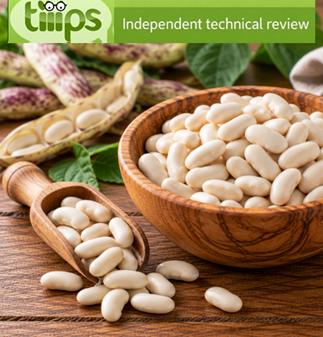
I fagioli cannellini sono una varietà di fagiolo comune (Phaseolus vulgaris, famiglia Fabaceae), caratterizzata da semi bianchi, allungati e dal sapore delicato.
Sono una buona fonte di proteine vegetali, carboidrati complessi e fibre, con un contenuto di grassi naturalmente molto basso.
Apportano quantità interessanti di folati, ferro, magnesio, fosforo, potassio, manganese e zinco.
Le proteine dei cannellini forniscono diversi aminoacidi essenziali, ma sono relativamente povere di alcuni aminoacidi solforati, come la metionina; l’abbinamento con cereali migliora quindi la complementarità proteica del pasto.
Contengono inoltre amido resistente e fibre fermentescibili, che possono contribuire alla normale funzione intestinale e al senso di sazietà.
Come altri legumi, contengono naturalmente fitati, lectine e oligosaccaridi fermentescibili.
L’ammollo e soprattutto una cottura completa riducono fortemente l’attività delle lectine e parte dei composti antinutrizionali.
Gli oligosaccaridi possono invece provocare gonfiore e flatulenza nelle persone più sensibili.
Calorie
I fagioli cannellini secchi apportano indicativamente circa 330–350 kcal per 100 g.
Una volta cotti e reidratati, apportano generalmente circa 110–125 kcal per 100 g, soprattutto per l’elevata quantità di acqua assorbita.
Utilizzi in Alimentazione
Sono utilizzati in zuppe, minestre, insalate, stufati, contorni e piatti a base di cereali o verdure.
La loro consistenza morbida e cremosa li rende particolarmente adatti alla preparazione di creme di legumi, vellutate, puree e hummus alternativi.
Sono molto utilizzati nella cucina italiana in preparazioni come pasta e fagioli, zuppe toscane e piatti con pomodoro, erbe aromatiche e olio d’oliva.
Possono essere impiegati anche in burger vegetali, polpette, ripieni e piatti pronti per aumentare il contenuto di proteine e fibre.
L’ammollo dei fagioli secchi, seguito dall’eliminazione dell’acqua e da una cottura adeguata, può contribuire a migliorarne la digeribilità.
Utilizzi in Cosmetica
I fagioli cannellini in quanto tali non sono un ingrediente cosmetico di uso comune.
Proteine, amidi ed estratti ottenuti da Phaseolus vulgaris possono tuttavia essere utilizzati in alcune formulazioni come ingredienti condizionanti, assorbenti o texturizzanti.
Possono comparire occasionalmente in maschere, detergenti, creme o prodotti per capelli.
Il fagiolo alimentare non deve comunque essere considerato equivalente a un ingrediente cosmetico purificato e standardizzato.
Allergeni
I fagioli cannellini non rientrano tra i principali allergeni alimentari soggetti a dichiarazione obbligatoria nell’Unione europea.
Sono comunque possibili rare reazioni allergiche individuali e fenomeni di reattività crociata con altri legumi.
Valutazione
Legume nutrizionalmente interessante per il buon contenuto di proteine vegetali, fibre, folati e minerali, con un apporto di grassi molto basso.
Verdetto ingrediente: ottima fonte vegetale di proteine e fibre, particolarmente valida in una dieta equilibrata quando adeguatamente ammollata e cotta.
Contro: possibili gonfiore e flatulenza nei soggetti sensibili
Bibliografia________________________________________________________________________
Muzaffar H, Jehangir M, Hu J, Yu Y, Yu M, Hu Y. Therapeutic Potential of White Kidney Beans (Phaseolus vulgaris) for Weight Management. Foods. 2025 Nov 18;14(22):3940. doi: 10.3390/foods14223940.
Abstract. The escalating global prevalence of obesity underscores the need for effective and sustainable nutritional interventions. Functional foods, especially white kidney beans (Phaseolus vulgaris), show a promising avenue to link fundamental biochemical insights with clinically feasible interventions, supporting their potential as an adjunct dietary strategy for managing and preventing obesity. This review critically examines the mechanistic roles of white kidney bean in weight regulation, which includes suppression of starch digestion, attenuation of postprandial glycemia, modulation of appetite and satiety, and hypolipidemic effects. Clinical and preclinical evidence supports the potential of white kidney bean as a nutraceutical for metabolic health, demonstrating consistent reductions in body fat mass, glycemic excursion, and overall weight. Nevertheless, significant limitations persist, including heterogeneity in trial designs, absence of dose standardization, and inadequate long-term safety assessments. Furthermore, this review addresses food fortification, advancements in supplement formulation, and cooking techniques that enhance both consumer acceptability and the bioactivity of white kidney bean (WKB), along with the significance of regulatory standards to ensure safety and quality. Future research should integrate clinical, molecular and food technology methods to improve the translation of experimental findings into precision nutritional strategies for obesity management.
Lee YH, Hong JH, Park KH, Kim SH, Kim JC, Kim DH, Park YH, Lee KW, Kim JK, Kim KH. Phytochemical Investigation of Bioactive Compounds from White Kidney Beans (Fruits of Phaseolus multiflorus var. Albus): Identification of Denatonium with Osteogenesis-Inducing Effect. Plants (Basel). 2021 Oct 17;10(10):2205. doi: 10.3390/plants10102205.
Abstract. Phaseolus multiflorus var. albus (Leguminosae), commonly known as "white kidney bean", is a twining perennial vine whose fruit has been used as a popular food worldwide owing to its high nutritional content, in terms of proteins, carbohydrates, fats, and vitamins. As part of our ongoing study to investigate novel bioactive components from various natural resources, a phytochemical investigation of the extract of P. multiflorus var. albus fruits resulted in the isolation of three phenolic compounds (1-3) and one dipeptide (4). The chemical structures of the compounds (1-4) were determined through 1D and 2D nuclear magnetic resonance spectroscopy and high-resolution-liquid chromatography-mass spectrometry; they were identified as denatonium (1), trans-ferulic acid ethyl ester (2), eugenin (3), and α-L-glutamyl-L-Leucine (4). Intriguingly, denatonium (1) is known to be the most bitter chemical compound. To the best of our knowledge, denatonium (1) was identified from natural sources for the first time, and compounds 2-4 were reported for the first time from P. multiflorus var. albus in this study; however, compound 2 turned out to be an artifact produced by an extraction with ethanol. The isolated compounds 1-4 were tested for their regulatory effects on the differentiation between osteogenesis and adipogenesis of mesenchymal stem cells (MSCs). Compound 4 slightly suppressed the adipogenic differentiation of MSCs, and compounds 1 and 4 stimulated osteogenic differentiation, unlike the negative control. These findings provide experimental evidence that compounds 1 and 4 may induce the osteogenesis of MSCs and activate bone formation.
Feng Q, Niu Z, Zhang S, Wang L, Dong L, Hou D, Zhou S. Protective Effects of White Kidney Bean (Phaseolus vulgaris L.) against Diet-Induced Hepatic Steatosis in Mice Are Linked to Modification of Gut Microbiota and Its Metabolites. Nutrients. 2023 Jul 4;15(13):3033. doi: 10.3390/nu15133033.
Abstract. Disturbances in the gut microbiota and its derived metabolites are closely related to the occurrence and development of hepatic steatosis. The white kidney bean (WKB), as an excellent source of protein, dietary fiber, and phytochemicals, has recently received widespread attention and might exhibit beneficial effects on a high-fat diet (HFD)-induced hepatic steatosis via targeting gut microbiota and its metabolites. The results indicated that HFD, when supplemented with WKB for 12 weeks, could potently reduce obesity symptoms, serum lipid profiles, and glucose, as well as improve the insulin resistance and liver function markers in mice, thereby alleviating hepatic steatosis. An integrated fecal microbiome and metabolomics analysis further demonstrated that WKB was able to normalize HFD-induced gut dysbiosis in mice, thereby mediating the alterations of a wide range of metabolites. Particularly, WKB remarkably increased the relative abundance of probiotics (Akkermansiaceae, Bifidobacteriaceae, and norank_f_Muribaculaceae) and inhibited the growth of hazardous bacteria (Mucispirillum, Enterorhabdus, and Dubosiella) in diet-induced hepatic steatosis mice. Moreover, the significant differential metabolites altered by WKB were annotated in lipid metabolism, which could ameliorate hepatic steatosis via regulating glycerophospholipid metabolism. This study elucidated the role of WKB from the perspective of microbiome and metabolomics in preventing nonalcoholic fatty liver disease, which provides new insights for its application in functional foods.
Houghton D, Shannon OM, Chater PI, Wilcox MD, Pearson JP, Stanforth K, Jordan C, Avery L, Blain AP, Joel A, Jeffers R, Nolan R, Nelson A, Stewart CJ, Malcomson FC. White kidney bean extract as a nutraceutical: effects on gut microbiota, alpha-amylase inhibition, and user experiences. Gut Microbiome (Camb). 2023 Jun 1;4:e8. doi: 10.1017/gmb.2023.5.
Wang S, Chen L, Yang H, Gu J, Wang J, Ren F. Regular intake of white kidney beans extract (Phaseolus vulgaris L.) induces weight loss compared to placebo in obese human subjects. Food Sci Nutr. 2020 Feb 5;8(3):1315-1324. doi: 10.1002/fsn3.1299. Erratum in: Food Sci Nutr. 2020 Sep 30;8(10):5763. doi: 10.1002/fsn3.1912.




