



Powdered herb extracts
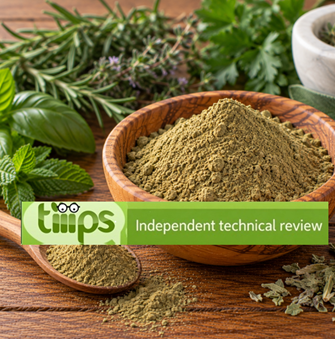
Powdered herb extracts are preparations obtained from aromatic or medicinal plants by extracting their soluble components, followed by concentration and drying, often through spray-drying.
They may be derived from leaves, flowers, seeds, roots or other plant parts and can include extracts from species belonging to many different botanical families.
Their composition therefore varies considerably depending on the herbs used, extraction solvent and manufacturing process.
They may contain polyphenols, flavonoids, terpenes, phenolic acids and other bioactive plant compounds, often at higher concentrations than in simply dried and ground herbs.
Unlike dried powdered herbs, a powdered extract mainly contains the substances transferred during extraction and may contain much less insoluble plant fibre.
To convert liquid extracts into powder, carriers such as maltodextrin, gum arabic or starches are often used to improve stability, solubility and flow properties.
Their nutritional value therefore depends strongly on the actual proportion of extract and the amount of carrier present.
Calories
There is no standard caloric value.
A highly concentrated extract may be used in very small amounts and contribute practically no calories to the finished product, while powders containing large amounts of maltodextrin or other carbohydrates may provide approximately 300–400 kcal per 100 g.
Uses in Food
They are used in sauces, soups, stocks, baked goods, snacks, seasonings, beverages, supplements and ready meals.
They provide a consistent and concentrated herbal flavour and allow better flavour standardisation than the direct use of fresh herbs.
They may also be used to provide specific plant compounds or antioxidants when the extract is standardised for those substances.
The powdered form facilitates dosing, transport, storage and incorporation into dry mixtures.
In industrial foods, it is important to distinguish genuinely concentrated extracts from preparations in which a significant proportion of the powder consists of the carrier.
Uses in Cosmetics
Powdered herb extracts are also widely used in cosmetics for their antioxidant, conditioning, soothing, astringent or fragrancing properties, depending on the plant species involved.
They may be incorporated into creams, masks, serums, cleansers, shampoos, scalp products and powdered formulations.
Dry extracts are particularly useful because they generally provide good stability and ease of dosing.
Some herbs may, however, contain irritating or sensitising substances, especially when highly concentrated.
A food-grade extract should therefore not automatically be considered equivalent to a purified and standardised cosmetic ingredient.
Allergens
The generic term “powdered herb extracts” does not by itself identify the allergen profile.
The risk depends on the actual plant species used and any carriers present. If allergenic ingredients such as celery or mustard are included, they must be considered according to the applicable regulations.
Assessment
A mainly aromatic and technological ingredient with nutritional characteristics that vary considerably depending on the actual composition and carriers used.
Ingredient verdict: a useful concentrated and easily dosed form of plant extracts, but quality and nutritional value depend strongly on the herbs present and the proportion of carrier.
Cons: possible allergens or sensitisation; possible significant presence of maltodextrin or other carriers

