Date
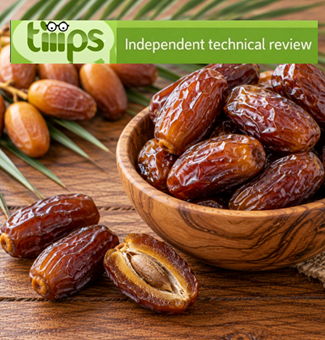
A date is the fruit of the date palm (Phoenix dactylifera, family Arecaceae), cultivated mainly in the hot, dry regions of North Africa and the Middle East.
Dates may be eaten fresh, semi-dried or dried, but commercially available dates generally have a relatively low water content, resulting in a high concentration of sugars and energy.
They consist mainly of carbohydrates, particularly naturally occurring sugars such as glucose and fructose, with varying amounts of sucrose depending on the variety and stage of ripeness.
They also provide a useful amount of dietary fibre, which supports normal bowel function and may partly slow sugar absorption.
Dates contain minerals such as potassium, magnesium, copper and manganese, while their fat content is naturally very low.
They also provide polyphenols, carotenoids and other bioactive plant compounds, whose concentrations vary according to variety, ripeness and processing.
A date is not nutritionally equivalent to refined sugar because it also provides fibre and micronutrients, but it remains a food with a high sugar and energy density.
Calories
Dried dates provide approximately 275–285 kcal per 100 g.
The energy value of a single fruit varies considerably according to size and variety; large dates such as Medjool provide significantly more calories per fruit than smaller varieties.
Uses in Food
Dates are eaten directly as dried fruit or used in desserts, biscuits, bars, muesli, porridge and breakfast products.
Because of their soft texture and very sweet flavour, they can be processed into date paste, purée or syrup and used as a natural sweetening ingredient.
They are also used in fillings, creams, desserts, energy products and plant-based preparations, contributing both sweetness and texture.
In Middle Eastern and North African cuisines, dates are also combined with cereals, cheese, nuts, meat and savoury dishes.
Because they contain readily available sugars, they may also be used in foods intended to provide rapid energy.
Uses in Cosmetics
Date extracts and date-palm derivatives may be used in cosmetics for their antioxidant, conditioning and moisturising properties.
Date seed oil contains fatty acids and other lipid-soluble compounds and is used in some formulations for skin and hair care.
Fruit extracts may be found in creams, masks, serums, shampoos and nourishing or emollient products.
Food-grade dates should not be considered equivalent to a purified and standardised cosmetic extract or oil.
Allergens
Dates are not among the major food allergens requiring mandatory declaration in the European Union.
Rare individual reactions may nevertheless occur. In processed products, added ingredients or cross-contamination with nuts, sesame or other allergens should also be considered.
Assessment
A nutritionally interesting fruit because of its fibre, potassium and plant compounds, but characterised by a high concentration of naturally occurring sugars.
Ingredient verdict: a nutritious, energy-dense fruit that is best consumed in moderate amounts because it is a concentrated source of sugars.
Cons: high sugar content
References_________________________________________________________________________
Tang ZX, Shi LE, Aleid SM. Date fruit: chemical composition, nutritional and medicinal values, products. J Sci Food Agric. 2013 Aug 15;93(10):2351-61. doi: 10.1002/jsfa.6154.
Abstract. Date fruit has served as a staple food in the Arab world for centuries. Worldwide production of date fruit has increased almost threefold over the last 40 years, reaching 7.68 million tons in 2010. Date fruit can provide many essential nutrients and potential health benefits to the consumer. Date fruit goes through four ripening stages named kimri, khalal, rutab and tamer. The main chemical components of date fruit include carbohydrates, dietary fibre, enzymes, protein, fat, minerals, vitamins, phenolic acids and carotenoids. The chemical composition of date fruit varies according to ripening stage, cultivar, growing environment, postharvest conditions, etc. The nutritional and medicinal activities of date fruit are related to its chemical composition. Many studies have shown that date fruit has antioxidant, antimutagenic, anti-inflammatory, gastroprotective, hepatoprotective, nephroprotective, anticancer and immunostimulant activities. Various date fruit-based products such as date syrup, date paste, date juice and their derived products are available. Date by-products can be used as raw materials for the production of value-added products such as organic acids, exopolysaccharides, antibiotics, date-flavoured probiotic-fermented dairy produce, bakery yeasts, etc. In this paper the chemical composition and nutritional and medicinal values of date fruit as well as date fruit-based products are reviewed. © 2013 Society of Chemical Industry.
Vayalil PK. Date fruits (Phoenix dactylifera Linn): an emerging medicinal food. Crit Rev Food Sci Nutr. 2012;52(3):249-71. doi: 10.1080/10408398.2010.499824.
Abstract. Date palm is one of the oldest trees cultivated by man. In the folk-lore, date fruits have been ascribed to have many medicinal properties when consumed either alone or in combination with other herbs. Although, fruit of the date palm served as the staple food for millions of people around the world for several centuries, studies on the health benefits are inadequate and hardly recognized as a healthy food by the health professionals and the public. In recent years, an explosion of interest in the numerous health benefits of dates had led to many in vitro and animal studies as well as the identification and quantification of various classes of phytochemicals. On the basis of available documentation in the literature on the nutritional and phytochemical composition, it is apparent that the date fruits are highly nutritious and may have several potential health benefits. Although dates are sugar-packed, many date varieties are low GI diet and refutes the dogma that dates are similar to candies and regular consumption would develop chronic diseases. More investigations in these areas would validate its beneficial effects, mechanisms of actions, and fully appreciate as a potential medicinal food for humans all around the world. Therefore, in this review we summarize the phytochemical composition, nutritional significance, and potential health benefits of date fruit consumption and discuss its great potential as a medicinal food for a number of diseases inflicting human beings.
Muñoz-Tebar N, Viuda-Martos M, Lorenzo JM, Fernandez-Lopez J, Perez-Alvarez JA. Strategies for the Valorization of Date Fruit and Its Co-Products: A New Ingredient in the Development of Value-Added Foods. Foods. 2023 Mar 29;12(7):1456. doi: 10.3390/foods12071456.
Abstract. Date palm trees (Phoenix dactylifera L.) are traditionally cultivated in South-West Asia and North Africa for date fruit consumption, although in recent years, its consumption has increased worldwide, and its cultivation has spread to other areas of America, sub-Saharan Africa, Oceania, and Southern Europe. During date fruit processing, several types of by-products are generated, such as low-quality dates or seeds, which along with date fruit, represent an excellent source of dietary fiber and bioactive compounds such as flavonoids, tannins, carotenoids, tocopherols, and tocotrienols. Therefore, this review provides information on the processing of dates fruit and the value-added by-products generated from them as well as their applications in different types of foods for the development of foods with an enhanced nutritional and functional profile. The incorporation of date fruit and their co-products in food formulations will help to cover the current consumer demands for foods made with ingredients of natural origin and with health properties beyond the merely nutritional.
Alkhoori MA, Kong AS, Aljaafari MN, Abushelaibi A, Erin Lim SH, Cheng WH, Chong CM, Lai KS. Biochemical Composition and Biological Activities of Date Palm (Phoenix dactylifera L.) Seeds: A Review. Biomolecules. 2022 Nov 3;12(11):1626. doi: 10.3390/biom12111626.
Abstract. Date palm (Phoenix dactylifera L.) is an essential agricultural crop in most Middle Eastern countries, and its fruit, known as dates, is consumed by millions of people. Date seeds, a by-product of the date fruit processing industry, are a waste product used as food for domestic farm animals. Date seeds contain abundant sources of carbohydrates, oil, dietary fiber, and protein; they also contain bioactive phenolic compounds that may possess potential biological properties. In addition, its rich chemical composition makes date seeds suitable for use in food product formulation, cosmetics, and medicinal supplements. This review aims to provide a discourse on the nutritional value of date seeds. The latest data on the cytotoxicity of date seed compounds against cancer cell lines, its ability to combat diabetes, antioxidant potential, antimicrobial effect, and anti-inflammatory activity will be provided, considering its potential to be a nutritional therapeutic agent for chronic diseases. Application of date seeds in the form of powder and oil will also be discussed.
Qadir A, Shakeel F, Ali A, Faiyazuddin M. Phytotherapeutic potential and pharmaceutical impact of Phoenix dactylifera (date palm): current research and future prospects. J Food Sci Technol. 2020 Apr;57(4):1191-1204. doi: 10.1007/s13197-019-04096-8.
Abstract. Phoenix dactylifera (date palm) is a member of the genus Phoenix belonging to family Arecaceae. It is widely cultivated for its edible fruits and kernels. Dates have been used for both dietary purposes as well as for their phytomedicinal impacts against the variety of diseases. Date fruits are rich in alkaloids, protein, carbohydrate, fatty acid (linoleic, lauric, palmitic, and stearic acid), carotenoids, vitamins, polyphenolic compounds, flavonoids, and tannins along with different types of nutrients like potassium, calcium, magnesium, and phosphorus. Due to the presence of the variety of phytochemicals, they have greater impact on human health. They have strong antioxidant potential. It has been proposed now as a potential source of several unique medical and industrial products. In literature, much information is available on botanical descriptions, agriculture technology, and utilization in therapeutic intervention, but a little description is accessible on phytochemical relevance, formulation strategies, nutritional impact, and bioprocess technology. Therefore, the present review provides comprehensive information on the phytochemical relevance, pharmacology/bioactivity, pharmaceutical impact, their scope in bioprocess technology and nutraceutical values of date palm. According to all collected information, every portion of the plant has some beneficial properties that can serve as a source of medicine and nutraceutical. © Association of Food Scientists & Technologists (India) 2019




