Dattero
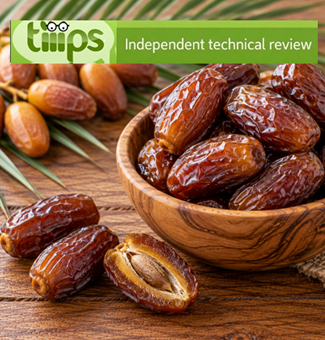
Il dattero è il frutto della palma da dattero (Phoenix dactylifera, famiglia Arecaceae), coltivata soprattutto nelle regioni calde e aride del Nord Africa e del Medio Oriente.
Può essere consumato fresco, semisecco o essiccato, ma i datteri normalmente commercializzati presentano in genere un contenuto d’acqua relativamente basso e quindi una notevole concentrazione di zuccheri ed energia.
È costituito prevalentemente da carboidrati, soprattutto zuccheri naturalmente presenti come glucosio e fruttosio, con quantità variabili di saccarosio secondo varietà e grado di maturazione.
Contiene inoltre una discreta quantità di fibre alimentari, che contribuiscono alla normale funzione intestinale e possono rallentare in parte l’assorbimento degli zuccheri.
Apporta minerali come potassio, magnesio, rame e manganese, mentre il contenuto di grassi è naturalmente molto basso.
Sono presenti anche polifenoli, carotenoidi e altri composti vegetali bioattivi, la cui concentrazione varia secondo varietà, maturazione e lavorazione.
Il dattero non è nutrizionalmente equivalente allo zucchero raffinato, poiché apporta anche fibre e micronutrienti, ma rimane un alimento a elevata densità zuccherina e calorica.
Calorie
I datteri essiccati apportano mediamente circa 275–285 kcal per 100 g.
Il valore di un singolo frutto varia molto secondo dimensione e varietà; i datteri grandi, come i Medjool, apportano sensibilmente più calorie per pezzo rispetto alle varietà più piccole.
Utilizzi in Alimentazione
Il dattero viene consumato direttamente come frutta essiccata oppure utilizzato in dolci, biscotti, barrette, muesli, porridge e prodotti per la prima colazione.
Grazie alla consistenza morbida e al sapore molto dolce può essere trasformato in pasta, purea o sciroppo e utilizzato come dolcificante naturale.
È impiegato anche in ripieni, creme, dessert, prodotti energetici e preparazioni vegetali, contribuendo contemporaneamente a dolcezza e consistenza.
Nelle cucine mediorientali e nordafricane viene abbinato anche a cereali, formaggi, frutta a guscio, carni e preparazioni salate.
Grazie agli zuccheri facilmente disponibili può essere utilizzato anche in prodotti destinati al rapido apporto energetico.
Utilizzi in Cosmetica
Estratti di dattero e derivati della palma da dattero possono essere utilizzati in cosmetica per proprietà antiossidanti, condizionanti e idratanti.
L’olio ricavato dai semi di dattero contiene acidi grassi e altri componenti liposolubili ed è impiegato in alcune formulazioni per pelle e capelli.
Estratti del frutto possono comparire in creme, maschere, sieri, shampoo e prodotti emollienti o nutrienti.
Il dattero alimentare non deve comunque essere considerato equivalente a un estratto cosmetico o a un olio purificato e standardizzato.
Allergeni
Il dattero non rientra tra i principali allergeni alimentari soggetti a dichiarazione obbligatoria nell’Unione europea.
Sono comunque possibili rare reazioni individuali. Nei prodotti trasformati è opportuno verificare eventuali ingredienti aggiunti o contaminazioni con frutta a guscio, sesamo o altri allergeni.
Valutazione
Frutto nutrizionalmente interessante per il contenuto di fibre, potassio e composti vegetali, ma caratterizzato da una concentrazione elevata di zuccheri naturali.
Verdetto ingrediente: frutto nutriente ed energetico, valido soprattutto in quantità moderate, ma da considerare una fonte concentrata di zuccheri.
Contro: zuccheri elevati
Bibliografia_________________________________________________________________________
Tang ZX, Shi LE, Aleid SM. Date fruit: chemical composition, nutritional and medicinal values, products. J Sci Food Agric. 2013 Aug 15;93(10):2351-61. doi: 10.1002/jsfa.6154.
Abstract. Date fruit has served as a staple food in the Arab world for centuries. Worldwide production of date fruit has increased almost threefold over the last 40 years, reaching 7.68 million tons in 2010. Date fruit can provide many essential nutrients and potential health benefits to the consumer. Date fruit goes through four ripening stages named kimri, khalal, rutab and tamer. The main chemical components of date fruit include carbohydrates, dietary fibre, enzymes, protein, fat, minerals, vitamins, phenolic acids and carotenoids. The chemical composition of date fruit varies according to ripening stage, cultivar, growing environment, postharvest conditions, etc. The nutritional and medicinal activities of date fruit are related to its chemical composition. Many studies have shown that date fruit has antioxidant, antimutagenic, anti-inflammatory, gastroprotective, hepatoprotective, nephroprotective, anticancer and immunostimulant activities. Various date fruit-based products such as date syrup, date paste, date juice and their derived products are available. Date by-products can be used as raw materials for the production of value-added products such as organic acids, exopolysaccharides, antibiotics, date-flavoured probiotic-fermented dairy produce, bakery yeasts, etc. In this paper the chemical composition and nutritional and medicinal values of date fruit as well as date fruit-based products are reviewed. © 2013 Society of Chemical Industry.
Vayalil PK. Date fruits (Phoenix dactylifera Linn): an emerging medicinal food. Crit Rev Food Sci Nutr. 2012;52(3):249-71. doi: 10.1080/10408398.2010.499824.
Abstract. Date palm is one of the oldest trees cultivated by man. In the folk-lore, date fruits have been ascribed to have many medicinal properties when consumed either alone or in combination with other herbs. Although, fruit of the date palm served as the staple food for millions of people around the world for several centuries, studies on the health benefits are inadequate and hardly recognized as a healthy food by the health professionals and the public. In recent years, an explosion of interest in the numerous health benefits of dates had led to many in vitro and animal studies as well as the identification and quantification of various classes of phytochemicals. On the basis of available documentation in the literature on the nutritional and phytochemical composition, it is apparent that the date fruits are highly nutritious and may have several potential health benefits. Although dates are sugar-packed, many date varieties are low GI diet and refutes the dogma that dates are similar to candies and regular consumption would develop chronic diseases. More investigations in these areas would validate its beneficial effects, mechanisms of actions, and fully appreciate as a potential medicinal food for humans all around the world. Therefore, in this review we summarize the phytochemical composition, nutritional significance, and potential health benefits of date fruit consumption and discuss its great potential as a medicinal food for a number of diseases inflicting human beings.
Muñoz-Tebar N, Viuda-Martos M, Lorenzo JM, Fernandez-Lopez J, Perez-Alvarez JA. Strategies for the Valorization of Date Fruit and Its Co-Products: A New Ingredient in the Development of Value-Added Foods. Foods. 2023 Mar 29;12(7):1456. doi: 10.3390/foods12071456.
Abstract. Date palm trees (Phoenix dactylifera L.) are traditionally cultivated in South-West Asia and North Africa for date fruit consumption, although in recent years, its consumption has increased worldwide, and its cultivation has spread to other areas of America, sub-Saharan Africa, Oceania, and Southern Europe. During date fruit processing, several types of by-products are generated, such as low-quality dates or seeds, which along with date fruit, represent an excellent source of dietary fiber and bioactive compounds such as flavonoids, tannins, carotenoids, tocopherols, and tocotrienols. Therefore, this review provides information on the processing of dates fruit and the value-added by-products generated from them as well as their applications in different types of foods for the development of foods with an enhanced nutritional and functional profile. The incorporation of date fruit and their co-products in food formulations will help to cover the current consumer demands for foods made with ingredients of natural origin and with health properties beyond the merely nutritional.
Alkhoori MA, Kong AS, Aljaafari MN, Abushelaibi A, Erin Lim SH, Cheng WH, Chong CM, Lai KS. Biochemical Composition and Biological Activities of Date Palm (Phoenix dactylifera L.) Seeds: A Review. Biomolecules. 2022 Nov 3;12(11):1626. doi: 10.3390/biom12111626.
Abstract. Date palm (Phoenix dactylifera L.) is an essential agricultural crop in most Middle Eastern countries, and its fruit, known as dates, is consumed by millions of people. Date seeds, a by-product of the date fruit processing industry, are a waste product used as food for domestic farm animals. Date seeds contain abundant sources of carbohydrates, oil, dietary fiber, and protein; they also contain bioactive phenolic compounds that may possess potential biological properties. In addition, its rich chemical composition makes date seeds suitable for use in food product formulation, cosmetics, and medicinal supplements. This review aims to provide a discourse on the nutritional value of date seeds. The latest data on the cytotoxicity of date seed compounds against cancer cell lines, its ability to combat diabetes, antioxidant potential, antimicrobial effect, and anti-inflammatory activity will be provided, considering its potential to be a nutritional therapeutic agent for chronic diseases. Application of date seeds in the form of powder and oil will also be discussed.
Qadir A, Shakeel F, Ali A, Faiyazuddin M. Phytotherapeutic potential and pharmaceutical impact of Phoenix dactylifera (date palm): current research and future prospects. J Food Sci Technol. 2020 Apr;57(4):1191-1204. doi: 10.1007/s13197-019-04096-8.
Abstract. Phoenix dactylifera (date palm) is a member of the genus Phoenix belonging to family Arecaceae. It is widely cultivated for its edible fruits and kernels. Dates have been used for both dietary purposes as well as for their phytomedicinal impacts against the variety of diseases. Date fruits are rich in alkaloids, protein, carbohydrate, fatty acid (linoleic, lauric, palmitic, and stearic acid), carotenoids, vitamins, polyphenolic compounds, flavonoids, and tannins along with different types of nutrients like potassium, calcium, magnesium, and phosphorus. Due to the presence of the variety of phytochemicals, they have greater impact on human health. They have strong antioxidant potential. It has been proposed now as a potential source of several unique medical and industrial products. In literature, much information is available on botanical descriptions, agriculture technology, and utilization in therapeutic intervention, but a little description is accessible on phytochemical relevance, formulation strategies, nutritional impact, and bioprocess technology. Therefore, the present review provides comprehensive information on the phytochemical relevance, pharmacology/bioactivity, pharmaceutical impact, their scope in bioprocess technology and nutraceutical values of date palm. According to all collected information, every portion of the plant has some beneficial properties that can serve as a source of medicine and nutraceutical. © Association of Food Scientists & Technologists (India) 2019




