Cauliflower
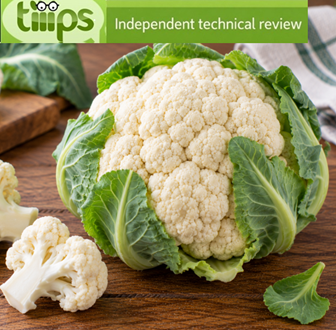
Cauliflower is a vegetable belonging to the species Brassica oleracea var. botrytis, family Brassicaceae.
The part commonly eaten is the immature inflorescence, made up of numerous compact flower buds, usually white but also available in green, purple or orange varieties.
It consists mainly of water and has a very low energy density.
It provides fibre, small amounts of protein and carbohydrates, while its fat content is negligible.
It is a good source of vitamin C, vitamin K, folate and vitamin B6, and also provides potassium, manganese and other minerals in varying amounts.
Like other Brassicaceae vegetables, it contains glucosinolates, plant compounds that can be converted during chopping and chewing into substances such as isothiocyanates and indoles.
It also contains flavonoids, phenolic acids and other antioxidant compounds.
Its fibre content contributes to normal bowel function and may help promote satiety.
Prolonged cooking may reduce some vitamin C and other heat-sensitive compounds, while brief steaming tends to preserve a greater proportion.
In sensitive individuals, it may cause bloating or intestinal gas, particularly when consumed in large amounts.
Calories
Raw cauliflower provides approximately 25 kcal per 100 g.
Cooking without added fats has little effect on its overall energy content.
Uses in Food
Cauliflower can be eaten raw, boiled, steamed, roasted, sautéed or baked au gratin.
It is used in soups, side dishes, salads, purées, bakes and oven-cooked preparations.
It can be finely chopped and used as a vegetable alternative to rice, or as a base for preparations containing fewer cereals.
Its relatively mild flavour pairs well with spices, herbs, cheese, legumes and sauces.
Brief steaming helps preserve texture, colour and micronutrients.
Uses in Cosmetics
Cauliflower itself is not a common cosmetic ingredient.
Extracts of Brassica oleracea may nevertheless be used in some formulations because of their antioxidant and conditioning compounds.
They may occasionally be found in creams, masks, serums and botanical skincare products.
Food-grade cauliflower should not be considered equivalent to a purified and standardised cosmetic extract.
Allergens
Cauliflower is not among the major food allergens requiring mandatory declaration in the European Union.
Rare individual reactions to Brassicaceae vegetables may nevertheless occur.
Assessment
A very low-calorie vegetable with a useful content of fibre, vitamin C, folate and glucosinolates.
Ingredient verdict: an excellent low-energy vegetable rich in micronutrients and plant compounds, suitable for frequent consumption as part of a varied diet.
Cons: possible intestinal bloating in sensitive individuals
References__________________________________________________________________________
Vega-Galvez A, Pasten A, Uribe E, Mejias N, Araya M, Vidal RL, Valenzuela-Barra G, Delporte C. Comprehensive Assessment of Anti-Inflammatory, Antiproliferative and Neuroprotective Properties of Cauliflower after Dehydration by Different Drying Methods. Foods. 2024 Oct 4;13(19):3162. doi: 10.3390/foods13193162.
Abstract. Cauliflower (Brassica oleraceae L. var. Botrytis Linnaeus) has various health benefits due to its rich bioactive compound content. However, this fresh vegetable faces challenges related to its perishability and short shelf life. This study explores the effect of five drying methods, namely vacuum drying (VD), convective drying (CD), infrared drying (IRD), low-temperature vacuum drying (LTVD) and vacuum freeze-drying (VFD), on the bioactive compounds and health-promoting properties of cauliflower. Analyses of amino acids, hydroxycinnamic acid and its derivatives, glucosinolates, and isothiocyanates, as well as evaluations of their anti-inflammatory, antiproliferative, and neuroprotective properties, were conducted based on these five drying methods. The results revealed that samples treated with VFD and IRD had a higher content of amino acids involved in GSL anabolism. Moreover, VFD samples retained hydroxycinnamic acid derivatives and glucosinolates to a greater extent than other methods. Nonetheless, the CD and VD samples exhibited higher antiproliferative and neuroprotective effects, which were correlated with their high sulforaphane content. Overall, considering the retention of most bioactive compounds from cauliflower and the topical inflammation amelioration induced in mice, VFD emerges as a more satisfactory option.
Cartea ME, Francisco M, Soengas P, Velasco P. Phenolic compounds in Brassica vegetables. Molecules. 2010 Dec 30;16(1):251-80. doi: 10.3390/molecules16010251.
Abstract. Phenolic compounds are a large group of phytochemicals widespread in the plant kingdom. Depending on their structure they can be classified into simple phenols, phenolic acids, hydroxycinnamic acid derivatives and flavonoids. Phenolic compounds have received considerable attention for being potentially protective factors against cancer and heart diseases, in part because of their potent antioxidative properties and their ubiquity in a wide range of commonly consumed foods of plant origin. The Brassicaceae family includes a wide range of horticultural crops, some of them with economic significance and extensively used in the diet throughout the world. The phenolic composition of Brassica vegetables has been recently investigated and, nowadays, the profile of different Brassica species is well established. Here, we review the significance of phenolic compounds as a source of beneficial compounds for human health and the influence of environmental conditions and processing mechanisms on the phenolic composition of Brassica vegetables.
Zhou T, Zhou M, Tong C, Zhuo M. Cauliflower bioactive compound sulforaphane inhibits breast cancer development by suppressing NF-κB /MMP-9 signaling pathway expression. Cell Mol Biol (Noisy-le-grand). 2022 Apr 30;68(4):134-143. doi: 10.14715/cmb/2022.68.4.17.
Abstract. In recent years, anti-cancer plant food development and research have received increasing attention, and cauliflower is one of the vegetables with anti-cancer effects. Sulforaphane (SFN) is one of the main anti-cancer components in cauliflower. In this study, the mechanism of action of SFN in anti-breast cancer was investigated using SFN, a bioactive compound extracted from cauliflower. For this purpose, SFN was extracted from cauliflower using rotary evaporation and silica gel chromatography, and the extracted SFN was used for in vitro and in vivo experiments. Breast cancer cells MCF-7, MDA-MB-231 and MDA-MB-231 xenograft tumor model mice were treated with SFN, pcDNA3.1-MMP-9, Si-RNA- MMP-9 and Si-RNA-NF-κB, respectively, and the corresponding saline treatment or blank plasmid treatment was used as control. The gene expression of NF-κB and MMP-9 in each group was detected by RT-PCR, and the protein phosphorylation level of MMP-9 was measured by Western bloting assay. WST 1 assay, MTT assay and flow cytometric analysis were used to detect the activity, proliferation and apoptosis levels of breast cancer cells. The tumor histopathology of the xenograft tumor model mice after SFN treatment was examined by HE staining. Results showed that Breast cancer cells treated with SFN showed reduced cell proliferation, decreased cell activity, increased apoptosis ratio, and inhibited gene expression and protein phosphorylation of MMP-9 as well as gene expression of NF-κB (P < 0.05). The same effect occurred with transfection of Si-RNA- MMP-9 and Si-RNA-NF-κB in breast cancer cells, while transfection of pcDNA3.1-MMP-9 plasmid significantly redeemed the inhibitory effect of SFN on breast cancer cells (P < 0.05). MDA-MB-231 xenograft tumor model mice treated with SFN showed significant improvement in the pathological condition of the tumor tissue. Then, SFN may inhibit breast cancer development by regulating the NF-κB /MMP-9 signaling pathway.
Collado-González J, Piñero MC, Otálora G, Del Amor FM, Wojdyło A. Analysis of polyphenolic compounds in purple cauliflower reveals the antioxidant potential of its by-products. Food Chem. 2026 May 1;510:148636. doi: 10.1016/j.foodchem.2026.148636.




