Cavolfiore
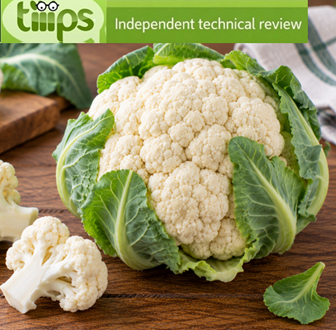
Il cavolfiore è un ortaggio appartenente alla specie Brassica oleracea var. botrytis, famiglia Brassicaceae.
La parte comunemente consumata è l’infiorescenza immatura, formata da numerosi piccoli boccioli compatti, generalmente bianchi ma disponibili anche in varietà verdi, viola o arancioni.
È costituito soprattutto da acqua e presenta una densità calorica molto bassa.
Apporta fibre, piccole quantità di proteine e carboidrati, mentre il contenuto di grassi è trascurabile.
È una buona fonte di vitamina C, vitamina K, folati e vitamina B6, oltre a fornire potassio, manganese e altri minerali in quantità variabili.
Come le altre Brassicaceae contiene glucosinolati, composti vegetali che possono essere trasformati, durante taglio e masticazione, in sostanze come isotiocianati e indoli.
Contiene inoltre flavonoidi, acidi fenolici e altri composti antiossidanti.
Il contenuto di fibre contribuisce alla normale funzione intestinale e al senso di sazietà.
La cottura prolungata può ridurre parte della vitamina C e di altri composti sensibili al calore; cotture brevi al vapore tendono a conservarne una quota maggiore.
In soggetti sensibili può provocare gonfiore o formazione di gas intestinali, soprattutto se consumato in quantità elevate.
Calorie
Il cavolfiore crudo apporta indicativamente circa 25 kcal per 100 g.
La cottura senza aggiunta di grassi modifica poco l’apporto energetico complessivo.
Utilizzi in Alimentazione
Il cavolfiore può essere consumato crudo, lessato, al vapore, arrostito, saltato o gratinato.
È utilizzato in zuppe, minestre, contorni, insalate, puree, sformati e preparazioni al forno.
Può essere tritato finemente e utilizzato come alternativa vegetale al riso, oppure impiegato come base per impasti e preparazioni a ridotto contenuto di cereali.
Il sapore relativamente delicato consente di abbinarlo facilmente a spezie, erbe aromatiche, formaggi, legumi e salse.
La breve cottura al vapore aiuta a mantenere meglio consistenza, colore e micronutrienti.
Utilizzi in Cosmetica
Il cavolfiore in quanto tale non è un ingrediente cosmetico di uso comune.
Estratti di Brassica oleracea possono tuttavia essere impiegati in alcune formulazioni per il contenuto di composti antiossidanti e condizionanti.
Possono comparire occasionalmente in creme, maschere, sieri e prodotti botanici per la cura della pelle.
Il cavolfiore alimentare non deve comunque essere considerato equivalente a un estratto cosmetico purificato e standardizzato.
Allergeni
Il cavolfiore non rientra tra i principali allergeni alimentari soggetti a dichiarazione obbligatoria nell’Unione europea.
Sono comunque possibili rare reazioni individuali alle Brassicaceae.
Valutazione
Ortaggio molto poco calorico e nutrizionalmente interessante per il contenuto di fibre, vitamina C, folati e glucosinolati.
Verdetto ingrediente: ottima verdura a bassa densità calorica, ricca di micronutrienti e composti vegetali, adatta a un consumo frequente nell’ambito di una dieta varia.
Contro: possibile gonfiore intestinale nei soggetti sensibili
Bibliografia__________________________________________________________________________
Vega-Galvez A, Pasten A, Uribe E, Mejias N, Araya M, Vidal RL, Valenzuela-Barra G, Delporte C. Comprehensive Assessment of Anti-Inflammatory, Antiproliferative and Neuroprotective Properties of Cauliflower after Dehydration by Different Drying Methods. Foods. 2024 Oct 4;13(19):3162. doi: 10.3390/foods13193162.
Abstract. Cauliflower (Brassica oleraceae L. var. Botrytis Linnaeus) has various health benefits due to its rich bioactive compound content. However, this fresh vegetable faces challenges related to its perishability and short shelf life. This study explores the effect of five drying methods, namely vacuum drying (VD), convective drying (CD), infrared drying (IRD), low-temperature vacuum drying (LTVD) and vacuum freeze-drying (VFD), on the bioactive compounds and health-promoting properties of cauliflower. Analyses of amino acids, hydroxycinnamic acid and its derivatives, glucosinolates, and isothiocyanates, as well as evaluations of their anti-inflammatory, antiproliferative, and neuroprotective properties, were conducted based on these five drying methods. The results revealed that samples treated with VFD and IRD had a higher content of amino acids involved in GSL anabolism. Moreover, VFD samples retained hydroxycinnamic acid derivatives and glucosinolates to a greater extent than other methods. Nonetheless, the CD and VD samples exhibited higher antiproliferative and neuroprotective effects, which were correlated with their high sulforaphane content. Overall, considering the retention of most bioactive compounds from cauliflower and the topical inflammation amelioration induced in mice, VFD emerges as a more satisfactory option.
Cartea ME, Francisco M, Soengas P, Velasco P. Phenolic compounds in Brassica vegetables. Molecules. 2010 Dec 30;16(1):251-80. doi: 10.3390/molecules16010251.
Abstract. Phenolic compounds are a large group of phytochemicals widespread in the plant kingdom. Depending on their structure they can be classified into simple phenols, phenolic acids, hydroxycinnamic acid derivatives and flavonoids. Phenolic compounds have received considerable attention for being potentially protective factors against cancer and heart diseases, in part because of their potent antioxidative properties and their ubiquity in a wide range of commonly consumed foods of plant origin. The Brassicaceae family includes a wide range of horticultural crops, some of them with economic significance and extensively used in the diet throughout the world. The phenolic composition of Brassica vegetables has been recently investigated and, nowadays, the profile of different Brassica species is well established. Here, we review the significance of phenolic compounds as a source of beneficial compounds for human health and the influence of environmental conditions and processing mechanisms on the phenolic composition of Brassica vegetables.
Zhou T, Zhou M, Tong C, Zhuo M. Cauliflower bioactive compound sulforaphane inhibits breast cancer development by suppressing NF-κB /MMP-9 signaling pathway expression. Cell Mol Biol (Noisy-le-grand). 2022 Apr 30;68(4):134-143. doi: 10.14715/cmb/2022.68.4.17.
Abstract. In recent years, anti-cancer plant food development and research have received increasing attention, and cauliflower is one of the vegetables with anti-cancer effects. Sulforaphane (SFN) is one of the main anti-cancer components in cauliflower. In this study, the mechanism of action of SFN in anti-breast cancer was investigated using SFN, a bioactive compound extracted from cauliflower. For this purpose, SFN was extracted from cauliflower using rotary evaporation and silica gel chromatography, and the extracted SFN was used for in vitro and in vivo experiments. Breast cancer cells MCF-7, MDA-MB-231 and MDA-MB-231 xenograft tumor model mice were treated with SFN, pcDNA3.1-MMP-9, Si-RNA- MMP-9 and Si-RNA-NF-κB, respectively, and the corresponding saline treatment or blank plasmid treatment was used as control. The gene expression of NF-κB and MMP-9 in each group was detected by RT-PCR, and the protein phosphorylation level of MMP-9 was measured by Western bloting assay. WST 1 assay, MTT assay and flow cytometric analysis were used to detect the activity, proliferation and apoptosis levels of breast cancer cells. The tumor histopathology of the xenograft tumor model mice after SFN treatment was examined by HE staining. Results showed that Breast cancer cells treated with SFN showed reduced cell proliferation, decreased cell activity, increased apoptosis ratio, and inhibited gene expression and protein phosphorylation of MMP-9 as well as gene expression of NF-κB (P < 0.05). The same effect occurred with transfection of Si-RNA- MMP-9 and Si-RNA-NF-κB in breast cancer cells, while transfection of pcDNA3.1-MMP-9 plasmid significantly redeemed the inhibitory effect of SFN on breast cancer cells (P < 0.05). MDA-MB-231 xenograft tumor model mice treated with SFN showed significant improvement in the pathological condition of the tumor tissue. Then, SFN may inhibit breast cancer development by regulating the NF-κB /MMP-9 signaling pathway.
Collado-González J, Piñero MC, Otálora G, Del Amor FM, Wojdyło A. Analysis of polyphenolic compounds in purple cauliflower reveals the antioxidant potential of its by-products. Food Chem. 2026 May 1;510:148636. doi: 10.1016/j.foodchem.2026.148636.




