



Psyllium fibre
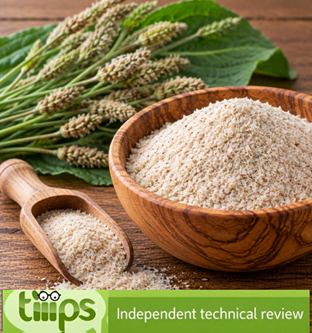
Psyllium fibre is obtained mainly from the husks of the seeds of Plantago ovata, a plant belonging to the Plantaginaceae family.
It consists largely of viscous soluble fibre, capable of absorbing a large amount of water and forming a gel.
This property makes psyllium particularly interesting from both a nutritional and technological point of view.
When mixed with water, the fibre increases considerably in volume and helps increase stool bulk and softness, supporting normal bowel regularity.
The viscosity of the gel may also partially slow carbohydrate absorption and contribute to a more gradual glycaemic response as part of a meal.
Regular consumption of soluble psyllium fibre may also help support the maintenance of normal blood cholesterol levels as part of an appropriate diet.
Psyllium contains very little available sugar or fat, and its nutritional value derives almost entirely from its dietary fibre content.
Fermentation by the gut microbiota is relatively moderate compared with some other fibres, although large amounts may still cause bloating, gas or changes in bowel habits.
Psyllium should be consumed with an adequate amount of fluid, especially when used as a supplement or concentrated fibre source.
Calories
Psyllium fibre provides approximately 180–200 kcal per 100 g, taking into account the energy value attributed to its fermentable fibre fraction.
At normal food-use levels, usually only a few grams, its actual caloric contribution is modest.
Uses in Food
Psyllium is used in bread, baked goods, biscuits, bars, high-fibre preparations and gluten-free foods.
It is particularly useful in gluten-free formulations because it absorbs water and forms a viscous structure that can improve elasticity, texture and dough cohesion.
It can help retain moisture and keep baked products softer for longer.
It is also used in fibre drinks and supplements, particularly for supporting bowel regularity.
Its gel-forming capacity also makes it useful as a thickener and structuring agent in certain food preparations.
Uses in Cosmetics
Psyllium and Plantago-derived polysaccharides may be used in some cosmetic formulations for their gelling, film-forming, moisturising and texturising properties.
They may be found in gels, masks, creams, hair-care products and moisturising formulations.
Its mucilage can help retain water and form a soft protective film on the skin surface.
Food-grade psyllium fibre should not, however, automatically be considered equivalent to a purified and standardised cosmetic ingredient.
Allergens
Psyllium is not among the major food allergens requiring mandatory declaration in the European Union.
Rare individual allergic reactions have nevertheless been reported, particularly in people with frequent occupational exposure to psyllium dust.
Assessment
A particularly useful plant fibre because of its strong ability to absorb water, form gels and support bowel regularity, as well as its important technological role in gluten-free foods.
Ingredient verdict: an excellent concentrated source of soluble fibre and an effective structuring ingredient, particularly useful in gluten-free products and for increasing fibre intake.
Cons: possible bloating and gastrointestinal discomfort at high intakes; requires adequate fluid intake

