



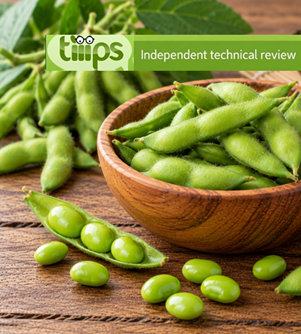
Edamame soybeans
Edamame soybeans are the young, green seeds of soybean (Glycine max, family Fabaceae), harvested before full maturity.
Unlike mature dried soybeans, edamame contains more water, has a softer texture and a mildly sweet, vegetal flavour.
It is a good source of high-quality plant protein, with a more complete essential amino acid profile than many other legumes.
It also provides fibre, carbohydrates and predominantly unsaturated fats, while its saturated fat content is relatively low.
Edamame contains useful amounts of folate, vitamin K, iron, magnesium, phosphorus, potassium and manganese.
Soybeans naturally contain isoflavones, particularly genistein and daidzein, plant compounds belonging to the phytoestrogen group.
Its combination of protein and fibre helps promote satiety and makes edamame particularly useful in predominantly plant-based diets.
Like other legumes, raw soybeans contain trypsin inhibitors, lectins and phytates. Cooking greatly reduces enzyme inhibitors and lectins, although some phytates may remain.
Edamame should therefore be consumed properly cooked, as is normally the case with fresh, frozen or ready-to-eat products.
Calories
Cooked shelled edamame provides approximately 120–140 kcal per 100 g.
The value varies according to variety, maturity and preparation; sauces and seasonings can substantially increase both calorie and sodium content.
Uses in Food
Edamame is generally eaten boiled or steamed, often directly from the pod.
Shelled beans are used in salads, bowls, soups, rice dishes, noodles, vegetable dishes and Asian-style preparations.
They can also be made into spreads, edamame hummus, plant-based burgers, fillings and high-protein foods.
The combination of protein, fibre and unsaturated fats makes edamame a useful alternative to other legumes and some animal protein sources.
In seasoned versions or when served with soy sauce, the salt content should also be considered.
Uses in Cosmetics
Edamame itself is not a particularly common cosmetic ingredient, while soy-derived ingredients are widely used.
Soybean oil, hydrolysed soy proteins and Glycine max extracts may be found in creams, serums, cleansers, hair-care products and emollient formulations.
Soybean oil is mainly used for its emollient and conditioning properties, thanks to its unsaturated fatty acid content.
Soy proteins and extracts may also help improve the feel and conditioning of skin and hair.
Food-grade edamame should not, however, be considered equivalent to a purified and standardised cosmetic ingredient.
Allergens
Soy is a major food allergen requiring mandatory declaration in the European Union.
Edamame should therefore be avoided by people with soy allergy, even when cooked.
Assessment
A nutritionally valuable legume because of its high-quality plant protein, fibre, unsaturated fats, folate and mineral content.
Ingredient verdict: an excellent plant source of protein and fibre, nutritious and relatively low in calories compared with dried soybeans, provided it is properly cooked.
Cons: Allergen

