



Rice vinegar
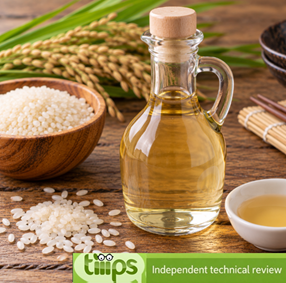
Rice vinegar is a condiment obtained through the fermentation of rice (Oryza sativa, family Poaceae), involving an initial fermentation that produces alcohol followed by acetic fermentation, which converts the alcohol mainly into acetic acid.
It is particularly common in East Asian cuisines and generally has a milder, softer and slightly sweeter flavour than wine vinegar or spirit vinegar.
It consists mainly of water and acetic acid, with very small amounts of protein and fat and a variable amount of residual carbohydrates.
Its composition depends on the type of rice used and the production process. White, red and black rice vinegars are available, each with a different aromatic profile.
Plain rice vinegar should not be confused with seasoned rice vinegar, which may contain added sugar, salt or other ingredients.
Its acidity contributes to food preservation and can modify the pH, flavour and texture of preparations.
From a nutritional point of view, its contribution of vitamins, minerals and fibre is generally modest.
Calories
Unseasoned rice vinegar provides approximately 15–25 kcal per 100 ml.
Seasoned versions may be significantly higher in calories because of added sugars.
Uses in Food
It is particularly well known for preparing sushi rice, to which it contributes its characteristic mildly acidic and slightly sweet flavour.
It is also used in salad dressings, marinades, sauces, pickles, rice dishes, vegetables, noodles and sweet-and-sour preparations.
Its relatively mild flavour makes it useful when acidity is needed without overpowering other ingredients.
It can also help balance foods rich in fat or sugar and contribute to the preservation of certain preparations.
Uses in Cosmetics
Rice vinegar itself is not a particularly common cosmetic ingredient, but fermented rice derivatives and solutions containing organic acids may be used in some formulations for their acidifying and conditioning properties.
They may be found in hair-care products, cleansers and skincare preparations, particularly to help regulate pH.
Food-grade rice vinegar should not be considered equivalent to a standardised cosmetic ingredient, and undiluted application may cause irritation.
Allergens
Rice is not among the major food allergens requiring mandatory declaration in the European Union, and plain rice vinegar is normally gluten-free.
Commercial products should nevertheless be checked for added ingredients, especially seasoned or flavoured versions.
Assessment
A low-calorie condiment valued mainly for its mild acidity and culinary versatility.
Ingredient verdict: a useful, low-calorie condiment with a delicate flavour; in seasoned versions, added sugar and salt should be checked.
Cons: possible added sugars and salt in seasoned versions

