



Hazelnut
The hazelnut is the fruit of the hazel tree (Corylus avellana, family Betulaceae), widely cultivated in temperate regions of Europe and Asia.
It is a high-energy food, composed mainly of fat, but with a nutritionally favourable lipid profile.
Its fats are predominantly monounsaturated, particularly oleic acid, together with smaller amounts of polyunsaturated and saturated fats.
Hazelnuts also provide a good amount of plant protein and fibre, while their available carbohydrate content is relatively low compared with many other energy-dense plant foods.
They are particularly rich in vitamin E, an important fat-soluble antioxidant, and also provide folate and other B vitamins.
They contain useful amounts of magnesium, phosphorus, copper, manganese, potassium and iron.
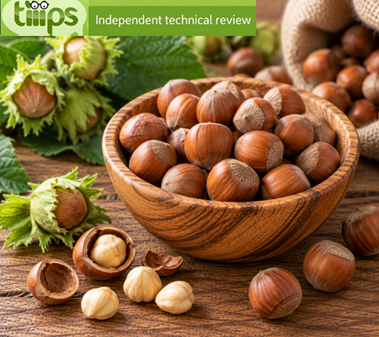
Hazelnuts also contain polyphenols and other antioxidant compounds, especially in the thin brown skin surrounding the kernel.
Roasting develops flavour and crunchiness and can improve some sensory characteristics, although it may reduce certain heat-sensitive compounds.
Calories
Hazelnuts provide approximately 620–630 kcal per 100 g, mainly because of their high fat content.
A 30 g portion provides approximately 185–190 kcal.
Uses in Food
Hazelnuts are eaten whole, raw or roasted, or used as chopped nuts, flour, paste or cream.
They are widely used in chocolate, spreads, pralines, biscuits, cakes, ice cream, muesli and baked goods.
Hazelnut flour can be used to increase flavour, unsaturated fat and protein content in desserts and cereal-free preparations.
Pure hazelnut paste is widely used in confectionery and ice cream to provide flavour, texture and creaminess.
Hazelnut oil can also be used as a dressing, particularly uncooked, thanks to its delicate flavour and high oleic acid content.
Uses in Cosmetics
Hazelnut oil is used in cosmetics for its emollient, conditioning and nourishing properties.
It may be found in creams, body oils, hair-care products, conditioners, massage products and formulations for dry skin.
Thanks to its oleic acid and vitamin E content, it can contribute to skin softness and support of the skin barrier.
It may also be used as a carrier oil for other fat-soluble ingredients.
In people with hazelnut allergy, however, the use of insufficiently refined hazelnut-derived ingredients may require particular caution.
Allergens
Hazelnut is a major food allergen requiring mandatory declaration in the European Union and belongs to the tree-nut category.
It can cause severe reactions in people with hazelnut allergy. Cross-reactivity with birch pollen may also occur and can cause oral allergy syndrome in some individuals.
Assessment
A nutritionally valuable tree nut because of its high content of monounsaturated fats, vitamin E, fibre, protein and minerals, although it is also highly caloric.
Ingredient verdict: a nutrient-dense food rich in unsaturated fats and micronutrients, particularly valuable when consumed in moderate amounts.
Cons: Allergen

